
(Patria) - From 01/22/2024, when the Public Health Institute of Sarajevo Canton received the first three reports of measles infections, up to May 13, 2,615 disease reports have been received in Sarajevo Canton.
According to data published by the Sarajevo Canton Public Health Institute, the highest number of measles infections occurred in the week of May 6 to 12, with 416 cases reported. As of May 13, another 101 cases have been reported this week.
Since the beginning of the epidemic, the highest number of infections has been in the age group of 1 to 4 years (958), 5 to 9 years (756 cases), 10 to 14 years (354 cases), and 30 to 65 years (220 cases).
The Institute announced that there have been no deaths in the first five months of the epidemic. In addition to the measles epidemic, there is also a whooping cough epidemic in Sarajevo Canton. In Sarajevo Canton, 6,354 children have been vaccinated in less than four months.
Regarding the epidemiological situation in the Federation of Bosnia and Herzegovina, according to data from the Public Health Institute of FBiH, the largest number of recorded infections is in Sarajevo Canton, followed by Tuzla Canton and Zenica-Doboj Canton with significantly fewer cases. Infections have not been recorded in Posavina Canton and West Herzegovina Canton.
In Republika Srpska, 93 cases of measles have been reported, with the majority in Bijeljina (65) and Banja Luka (16), according to data from the Institute of Public Health of RS.
Three cases have been reported in Ugljevik, two each in East Sarajevo and Pale, and one each in Laktaši, Prnjavor, Kotor Varoš, Istočna Ilidža, Mrkonjić Grad, and Prnjavor. The largest number of affected individuals are between one and four years old, with as many as 40 children.
Among the infected are three babies younger than one year old, as well as 25 children aged five to nine, and 11 individuals over 30 years old. An epidemic of measles was declared in the Bijeljina area at the beginning of February, while the Banja Luka Health Center reported an epidemic on March 8.
HOW TO RECOGNIZE SYMPTOMS
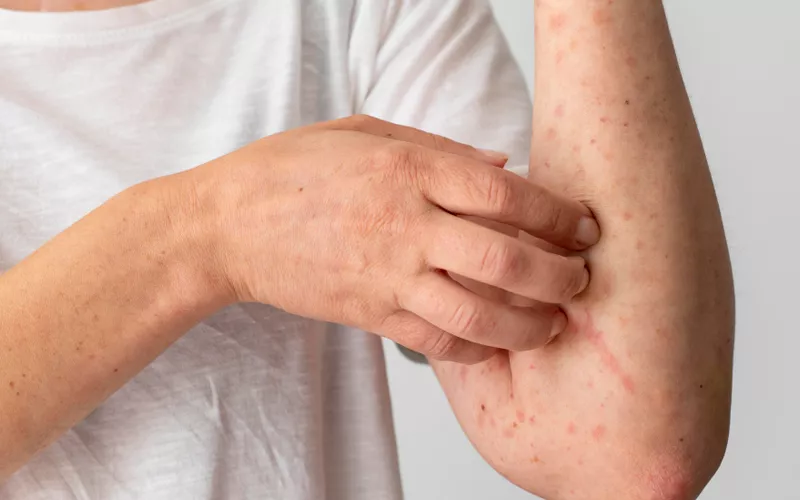
Measles symptoms usually begin 10-14 days after exposure to the virus. A prominent rash is the most visible symptom. Early symptoms typically last 4-7 days. They include: runny nose, cough, red and watery eyes, small white spots on the inside of the cheeks (Koplik's spots).
The rash usually begins about 7-18 days after exposure, typically starting on the face and upper neck. It spreads over the body for about 3 days, reaching the arms and feet. It usually lasts 5-6 days before fading.
Measles is one of the most contagious diseases in the world and is transmitted through contact with infected nasal or throat secretions (by coughing or sneezing) or by inhaling air near an infected person. The virus remains active and contagious in the air or on infected surfaces for up to two hours. One infected person can infect nine out of 10 of their unvaccinated close contacts. An infected person can transmit it from four days before the rash appears to four days after the rash breaks out.
Treatment
There is no specific treatment for measles. Care should focus on relieving symptoms and preventing complications. Drinking enough fluids and treating dehydration can replace fluids lost due to diarrhea or vomiting. A healthy diet is also important. Doctors may prescribe antibiotics to treat pneumonia and ear and eye infections, and vitamin A.
Prevention
Vaccinating children against measles is a key public health strategy in controlling this disease, both domestically and internationally. The safe and effective MMR vaccine (measles, rubella, and mumps vaccine) has been in use in Bosnia and Herzegovina for almost forty years. Parental cooperation in understanding and accepting vaccination is a priority in achieving and maintaining high immunization coverage and preventing potential epidemics. According to the Immunization Program in the Federation of Bosnia and Herzegovina, two doses of the MMR vaccine are scheduled, at 12 months of age and at six years of age, and all missed vaccinations can be caught up.
Komentari (0)
Prijavite se za komentiranje
PrijavaJos nema komentara. Budite prvi!
Minuta
Sve →Iz drugih kategorija

High Representative Not Elected: Germans, French and British Sabotaged Americans, New Attempt at End of June

ČOVIĆ WITHOUT MERCY: How Those Who Brought Ademović to Office Created a Political Hell for Him



Sunny Saturday, quite warm



Tragedy in Albanian resort: Two minors drown












