
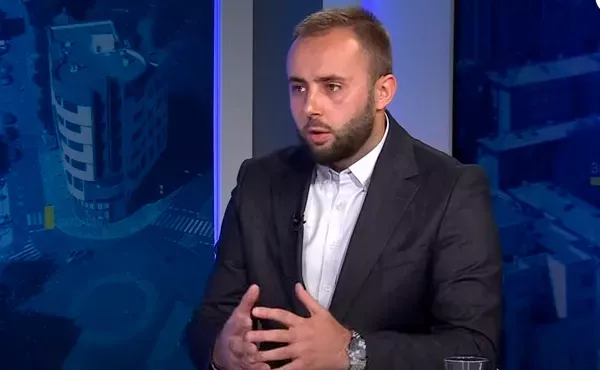
Written by: Kenan Hodžić, Senior Assistant at the Faculty of Criminalistics, Criminology and Security Studies and member of the Political Council of the Guardians of Bosnia
Energy security, as the foundation of a stable society and development, today faces increasingly complex challenges arranged along coordinates ranging from dependence on fossil fuel imports to the vulnerability of critical mineral supply chains.
The International Energy Agency (IEA), as a global authority in this field, has presented an extensive catalogue of energy policy developments, titled the “Global Energy Policies Hub,” covering more than 85 countries over the past 55 years. This overview contains important lessons for Bosnia and Herzegovina as well. Statistics from the analysis reveal strong global progress in establishing protection mechanisms, where 98% of analysed countries that import, for example, oil, have some form of strategic reserves, while coverage of mandatory gas storage has nearly tripled from 2015 to 2025. At the same time, in various variations of energy policies, almost all have developed clear energy efficiency policies, while 40% of electricity generation in 2024 comes from renewable and nuclear sources. The IEA emphasises the “three golden rules” of energy security: diversification, predictability, and cooperation. Urgent alignment with principles and standards are lessons for those who understand. These lessons require investments in resilient infrastructure, timely reserve planning due to potential disruptions, and accompanying transparency.
For Bosnia and Herzegovina, which is highly exposed to geopolitical, market, and climate risks, this data represents both an alarm and an opportunity. Although BiH possesses relatively significant hydropower and mineral resources, its strategic responses to new threats, such as cyber attacks, climate stresses, and volatility in critical mineral supply chains, are almost non-existent or fragmented. The system of strategic oil and gas reserves, as well as digital resilience and modernisation of the electricity grid, are becoming increasingly important issues. In the context of the growing concentration of the critical minerals market, where the three largest producers in 2024 control 86% of the market, the lack of diversification in supply and storage capacity further increases overall vulnerability.
The energy policy catalogue offers 50 different types of energy policies. Bosnia and Herzegovina’s transition must not be a copy-paste of foreign models but must be shaped by the local context, capacities, and societal needs. The essence of energy policy is the energy transition, which raises a series of questions about the actual dynamics and its (in)compatibility with the realities of countries like Bosnia and Herzegovina. A globally recognised authority in energy, Daniel Yergin, reminds us that past energy transitions were not replacements but additions. Perhaps in Bosnia and Herzegovina, this should be clearly defined as such.
For example, even today, the world consumes more coal than in the 1960s. Given that BiH lacks sufficient adequate institutional capacity, investment and fiscal space for renewable energy capacities, but has significant coal reserves, the question arises of how sustainable and fair it is to introduce strict transition replacement targets without clear mechanisms for maintaining security of supply or for economic and social compensation. Without coordinated policies, investments, and strategic planning capacities, the energy transition can become a source of additional instability.
Energy security, which the war in Ukraine has brought back into focus, is not a luxury but a foundation for survival, especially in a country with an underdeveloped market and a lack of diversification. While UN climate change conferences, known as COPs, promote a shift away from fossil fuels and send various political declarations, demand for oil and gas in developing countries is apparently still growing and will likely peak only after 2030.
Key figures, such as the fact that the share of fossil fuels in global energy consumption has fallen from 85% in 1990 to just 80% today, suggest that the transition is proceeding significantly slower than is often publicly portrayed. Moreover, oil and coal consumption reached record levels in 2024, while CO2 emissions are rising, reaching 37.4 gigatons, instead of falling towards the target of 21.2 by 2030.
On the other hand, of course, one should not overlook the increasing and faster entry of renewable energy sources, which is certainly promising, but currently far from the envisioned pace. With tariff wars and globalisation in decline, supply chains are increasingly becoming geopolitical issues, and are particularly relevant for small economies like BiH. According to the European Union’s RMIS (Raw Materials Information System) project, our country ranks 88th out of 183 countries on the Mining Contribution Index, with a moderate but diverse contribution to global production of raw materials such as aluminium, copper, bentonite, kaolin, salt, gypsum, etc.
For instance, the importance of metals like copper or lithium is well known. BiH still lacks a strategy for mining policy in the context of the green transition, despite possessing enviable reserves of critical raw materials. Utilising these resources requires careful regulation and control of environmental and local community impacts, in order to bridge mistrust and prevent the destruction of valuable ecosystems. The growing demand for rare critical materials for clean energy technologies opens up space for BiH’s strategic positioning in the processing and logistics of these resources, if it successfully integrates into new supply chains.
For Bosnia and Herzegovina, these global trends have direct implications. First, countries like BiH that rely on coal-fired power plants face dual pressure: on one hand, demands for decarbonisation, and on the other, the need to preserve energy security and social peace. In a situation where nearly half the population in developing countries uses less electricity than an average refrigerator, the issue of energy justice becomes crucial, especially in regions like Southeast Europe.
Ultimately, the energy transition cannot be an ideological project; it must be grounded in reality. Security of supply, energy affordability, and development priorities must remain in focus. For BiH, this means the need for a pragmatic approach, modernisation of existing thermal power capacities alongside parallel investment in renewable sources and regional energy integration. Without this, the transition can become a source of political and social instability, rather than sustainable development.
Komentari (0)
Prijavite se za komentiranje
PrijavaJos nema komentara. Budite prvi!
Minuta
Sve →Iz drugih kategorija

High Representative Not Elected: Germans, French and British Sabotaged Americans, New Attempt at End of June

ČOVIĆ WITHOUT MERCY: How Those Who Brought Ademović to Office Created a Political Hell for Him



Sunny Saturday, quite warm



Tragedy in Albanian resort: Two minors drown












