
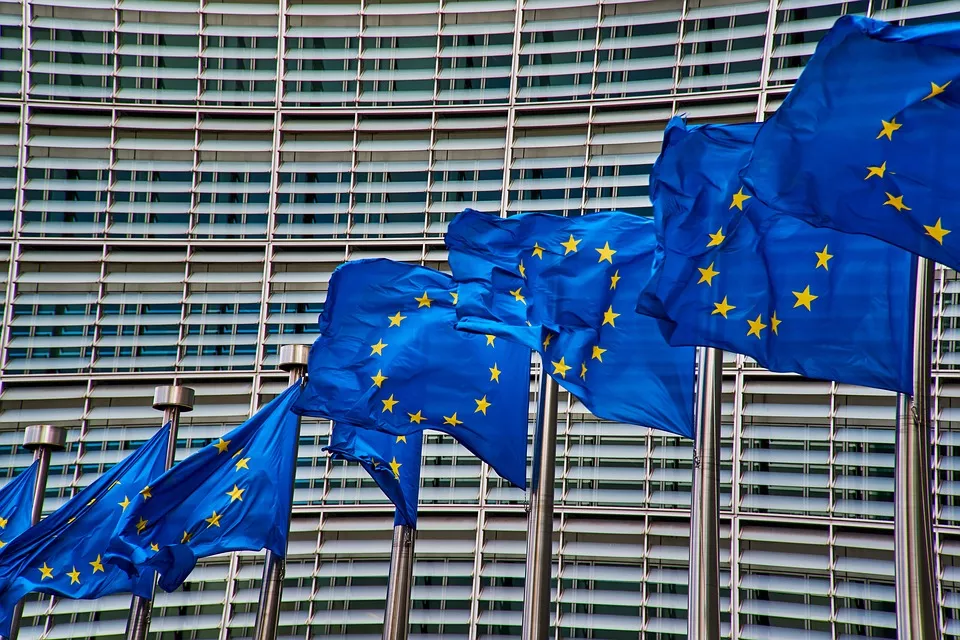
SARAJEVO, (Patria) - The European Commission today presented a proposal to improve the EU accession process to make it more credible, dynamic, and predictable, and to have stronger political leadership.
Commissioner for Neighbourhood and Enlargement Olivér Várhelyi stated that the European Union's enlargement to the Western Balkans is one of the Commission's main priorities.
"Our work is focused on three areas. First, today we are proposing concrete steps to improve the accession process. We are strengthening and improving it, but accession and full membership in the EU remain its ultimate goals. Second, in parallel with this, the Commission continues to stand by its recommendations for opening accession negotiations with North Macedonia and Albania and will soon publish the latest information on the progress these countries have made. Third, ahead of the EU and Western Balkans summit to be held in Zagreb in May, the Commission will present a plan for the economic development of the region and investment in it."
Improving the accession process – A credible EU perspective for the Western Balkans
More credible process: The accession process should be based on credibility, mutual trust, and clear commitments from the European Union and the Western Balkan countries. Credibility should be increased by a stronger focus on fundamental reforms, starting with the rule of law, the functioning of democratic institutions and public administration, and the economy of candidate countries. When a partner country meets the objective criteria, Member States agree on moving to the next phase of the process based on merit.
Stronger political leadership: The political nature of the accession process requires stronger political leadership and engagement at the highest levels. The Commission wants to increase opportunities for political dialogue and high-level policy dialogue, e.g., at regular EU and Western Balkans summits and through enhanced ministerial contacts. Furthermore, Member States should be more systematically involved in monitoring and reviewing the accession process. All bodies covered by the Stabilisation and Association Agreement will focus more on key political issues and reforms, and intergovernmental conferences will ensure stronger political leadership in negotiations.
More dynamic process: To increase the dynamism of the negotiation process, the Commission proposes grouping negotiation chapters into six thematic clusters: fundamental issues; internal market; competitiveness and inclusive growth; green agenda and sustainable connectivity; resources, agriculture and cohesion; and external relations. Instead of opening individual chapters, after meeting the benchmarks for opening, negotiations on each cluster will be opened as a whole. Negotiations on fundamental issues will be opened first and closed last, as progress on these issues will determine the pace of negotiations. The timeframe between the opening of clusters and the closing of individual chapters should be limited, preferably to a maximum of one year, depending on reform progress.
More predictable process: The Commission will clarify what the EU expects from enlargement countries at different stages of the process. It will become clearer what positive results progress in reforms can bring and what the negative consequences will be if progress is not achieved.
To encourage demanding reforms, the Commission will better define the conditions for candidates' progress and will provide clear and concrete incentives of direct interest to citizens. Incentives could include accelerated integration and inclusion in individual EU policies, markets, and programmes, while ensuring a level playing field for all stakeholders, and increasing funding and investment. Progress in implementing reforms will mean progress in the process for candidates. On the other hand, the Commission also proposes more decisive measures to sanction any serious or prolonged stagnation or backsliding in the implementation of reforms and the fulfillment of accession process conditions. Negotiations in certain areas could be paused, or even completely suspended, and already closed chapters could be reopened; benefits that can be achieved through better integration, e.g., access to EU programmes, could also be paused or withdrawn, and the scope and intensity of EU funding could be reduced.
Next steps
The Commission hopes that Member States will support its proposal alongside the opening of accession negotiations with North Macedonia and Albania ahead of the European Union and Western Balkans summit in Zagreb on May 6 and 7. In preparation for this meeting, the Commission will consider how to improve investment, socio-economic integration, and the rule of law in the Western Balkan region.
Komentari (0)
Prijavite se za komentiranje
PrijavaJos nema komentara. Budite prvi!
Minuta
Sve →Iz drugih kategorija

High Representative Not Elected: Germans, French and British Against Americans, New Attempt at End of June

ČOVIĆ WITHOUT MERCY: How Those Who Brought Ademović to Office Created a Political Hell for Him



Sunny Saturday, quite warm



Tragedy in Albanian resort: Two minors drown












