
By Dean Džebić
"A big red dog is digging in our yard and we can justifiably shoot it." - these were the words of General Curtis LeMay addressed to President J.F. Kennedy at the zenith of the Cuban Missile Crisis. This line, like many iconic ones from Stanley Kubrick's film "Thirteen Days," undoubtedly resonates today in several prominent U.S. think tanks.
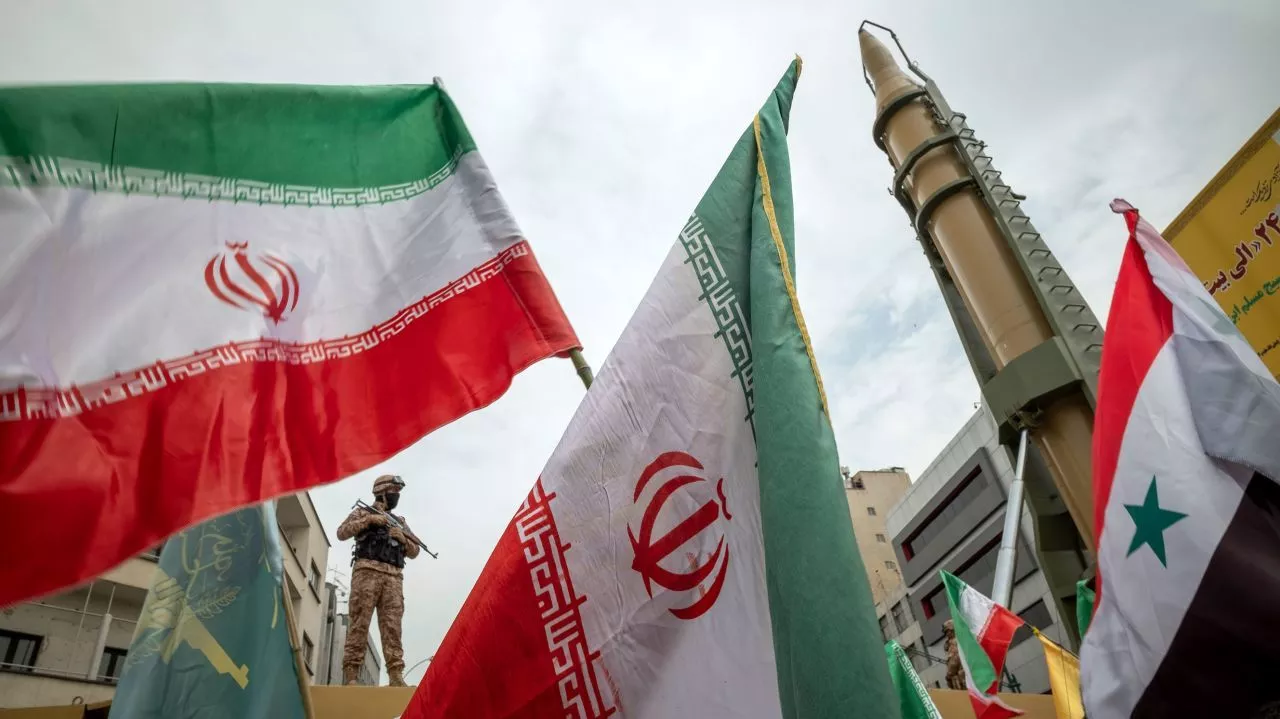
It would be interesting today to pull Robert McNamara out of a wormhole just to see how he would ride Iran, he would probably use some American destroyer hitting a torpedo from fast Iranian torpedo boats cruising the Strait of Hormuz as a cassus belli. Collin Powell would probably, without any shame or embarrassment, lie to a million-strong audience while sloshing some liquid intended to imitate biological poison, while Brzezinski and Kissinger would, for the umpteenth time, manage to revise their initial hypotheses just before the fateful moment.
It is difficult to find a parallel to the complexity of U.S.-Iranian relations, given that in chronological order, these relations resemble a love story that abruptly transitions into the horror genre. If we say that the United States initiated the famous "Iranian nuclear program" through the "Atoms for Peace" program, we would at least surprise today's observers of Middle Eastern affairs.
Džebić: But what truly separates the case of Iran from Pakistan the most?
Besides the first experimental nuclear reactor, the United States secretly supported Iran during the eight-year Iran-Iraq war, even after Khomeini's declaration of war on communism and capitalism, proclaiming a "third way."
However, what if Kenneth Waltz was right when he proposed in the nineties that Iran be allowed nuclear proliferation, or as we journalists like to say: that Iran get a nuclear bomb.
Although a neorealist hawk, and in a way its father, two emerging antagonistic regional powers should be permanently prevented from conventional war by creating nuclear parity. As a very stretched example, Waltz cited Pakistan and India, although the specifics of that Asian antagonism have little in common with the Israeli-Iranian antagonism.
First of all, geography prevents conventional war between Iran and Israel, while unconditional U.S. support for Israel reduces it to a low probability. Additionally, India and Iran have agreed to the formation of composite nuclear forces, meaning the separation of components of the nuclear dyad, i.e., the practical separation of warheads and missiles.
But what truly separates the case of Iran from Pakistan the most? Both countries have had and have proxy forces as an element of their foreign and security policy, through which they have successfully exported their interpretation of cultural-religious patterns, offering them as an imperative within their sphere of interest. However, the Pakistani case indicates that Pakistan, in a way, agreed under U.S. pressure to exhaust its proxy forces, thereby preserving its status as a limited regional power, or to face war with the United States.
The concept of a limited regional power would represent an inherent phenomenon of U.S. foreign policy, as a desirable model for regional powers, even nuclear ones, whose power projection capabilities are limited. What Al-Qaeda was for Pakistan (in whose development the U.S. also played a significant role for a period), Hezbollah and the Houthi movement are for Iran. The danger of continental domination is directly proportional to the ability of regional actors to transform from limited regional powers into first-tier regional powers.
Precisely because of this, the United States might hypothetically even allow Iran to acquire nuclear weapons and lift the rigorous sanctions of the P5+1 group of countries if Tehran were to renounce the Houthis and Hezbollah.
It is significant to note that Iran, as a non-nuclear country, has managed to exploit all possibilities of power projection to the maximum and exhaust the non-nuclear package of regional empowerment and establishment.
The current and near future stability of the Middle East largely depends on the trilateral agreement between Israel-U.S.-Iran, where each, according to the law of defensive realism, gives something and gains something through division. The path to such an agreement is long, and the Israeli-Palestinian conflict is its code.
In fact, the events in Palestine are a way of communication and negotiation between Tehran and Washington, and this is not just a crisis but a new way of communication between two regimes and two systems, and even two presidents, as Robert McNamara says in 13 Days. What is certain is the necessary compromise, where everyone gives up something, publicly or secretly. Just as in Cuba, everyone considered the crisis an American victory because the Soviets withdrew, and everyone forgets that a few months later, based on a secret agreement, the United States withdrew Jupiter ballistic missiles from Turkey. This is how negotiations used to be conducted only with the Soviet Union; today, Iran also has its seat at the table.
Komentari (0)
Prijavite se za komentiranje
PrijavaJos nema komentara. Budite prvi!
Minuta
Sve →Iz drugih kategorija

High Representative Not Elected: Germans, French and British Sabotaged Americans, New Attempt at End of June

ČOVIĆ WITHOUT MERCY: How Those Who Brought Ademović to Office Created a Political Hell for Him



Sunny Saturday, quite warm



Tragedy in Albanian resort: Two minors drown












