
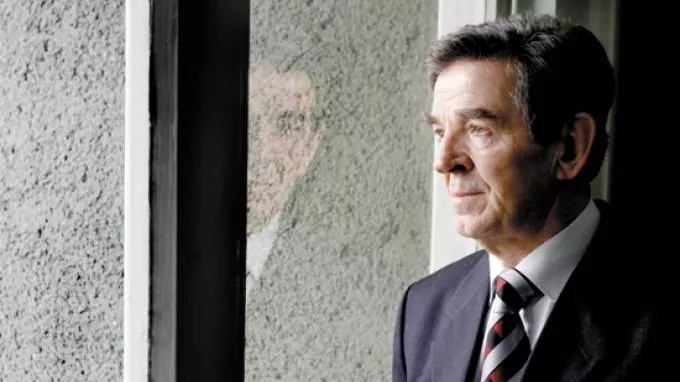
By: Esad Duraković/Depo
In the relationship between political leaders and the public that objectively gives them power (even if that public, or a part of it, later feels betrayed), special attention should be paid to what I could call a dramatic discrepancy between leadership rhetoric and reality.
Political leaders – to be precise, it is worth insisting on this phrase – their spokespersons in particular, are aware that their success largely depends on their oratorical abilities, towards which the public generally shows a certain weakness, or inclination. This is a kind of collective, simultaneous "aesthetic consumption" that takes place, as is known, in large halls, sometimes even in stadiums, on TV screens, etc. Political leaders count on this very seriously and reasonably.
However, the problem is that there is often no alignment between practice, "reality," and its presentation through (political) oratory. Moreover, in extreme cases, the experience of the people/nations has formed, over time, a "figure of indignation," or a "figure of rejection," expressed in words: "...don't you lecture me with politics..." and the like. This is a collective and age-old experience that should be taken extremely seriously.
All those electoral or other party, party-political oratorical performances contain significant elements of the carnival and the cathartic simultaneously. Politics is necessarily, and to a certain extent, a kind of deception, especially in societies that lack democratic mechanisms for exposing and sanctioning that deception.
One is intellectual power that draws strength from a valid understanding of reality and an unwavering struggle for its validity, and another type of power is the political/politician's power that draws strength from the instruments of power, from administrative bureaucratic apparatuses, etc. – all the way to the use of power against intellectuals.
The real problem arises when the public notices that between the oratorically attractively packaged goals, programs, their mimetic presentation, etc., on the one hand, and the real-world effects, on the other hand, there are serious gaps, even rifts – to use a geological term. This is where the force of society that we call intellectuals comes into play, a force that political leaders fundamentally fear, knowing their ability and their socio-ethical instinct, the urge to mark these rifts and present them fully articulated to the public, and this is already a serious threat to the power of politicians.
In other words, two types of power confront each other here: one is intellectual power that draws strength from a valid understanding of reality and an unwavering struggle for its validity, and the other type of power is the political/politician's power that draws strength from the instruments of power, from administrative bureaucratic apparatuses, etc. – all the way to the use of power against intellectuals.
The former is completely based on freedom, even on liberation, while the latter is always close to coercion, or is already in action of coercion, which it may or may not try to justify through the deception of political rhetoric. Even when the intellectual is helpless in their action, they are intellectually and morally superior, because their action is driven by concern for a better world, not for particular interests. The intellectual is a Subject in the full sense of the word, who validly understands the complex relationships of reality and the contexts that are always extremely important for valid analysis and action. (Although it may seem like a digression, it is worth pointing out at this point the meaninglessness of the frequent phrase "independent intellectuals." There are no "independent intellectuals"; there are only intellectuals. Their independence, impartiality, objectivity, incorruptibility at all costs, is inherent to their title and action to the extent without which they cannot exist as intellectuals. People very often confuse the terms educated person and intellectual: someone can be an academic and not be an intellectual because they do not act socially and ethically correctly, or they do not act at all – they are passive in a social sense, and that is complicity. The term intellectual should always be restored to its full content and dignity.)
Even when the intellectual is helpless in their action, they are intellectually and morally superior, because their action is driven by concern for a better world, not for particular interests.
Of course, in the complex creation of social reality, the media play a significant role, to which the attribute of independence is already attached, because many of them are dependent in a degrading way since they are paid by certain political power structures, demanding appropriate promotional services from them. The trouble is all the greater because it is normal to expect the media to act as intellectuals do – correctively and incorruptibly – but when they do not act that way, then the defeat of their ethics (and professionalism, of course) is total and humiliating. But, about the media, on another occasion.
Intellectuals are, in fact, and ultimately, obliged – in the domain of their concern for society, and not just for the profession or science for which they are profiled – to point out, with the authority of their impartiality and education, all serious, and very often socially dangerous, deformations of the political mind and the ethics of the political/politician's character, since these deformations, or peculiar ailments, have far-reaching socially negative consequences. Intellectuals are aware of the risks – most often existential – from job loss to physical liquidation.
This is where the sublimity of their action lies. At the same time, this shows another important difference between an intellectual and a political leader: the political leader's struggle is, mostly, particularistic since they always fight for the dominance and interests of their party, while the intellectual always fights for the general interest. This is where their intellectual and moral superiority lies, no matter how much political leaders believe that things are otherwise:
They, if they are already "ill," have lost contact with reality anyway.
Komentari (0)
Prijavite se za komentiranje
PrijavaJos nema komentara. Budite prvi!
Minuta
Sve →Iz drugih kategorija

High Representative Not Elected: Germans, French and British Sabotaged Americans, New Attempt at End of June

ČOVIĆ WITHOUT MERCY: How Those Who Brought Ademović to Office Created a Political Hell for Him



Sunny Saturday, quite warm



Tragedy in Albanian resort: Two minors drown












