
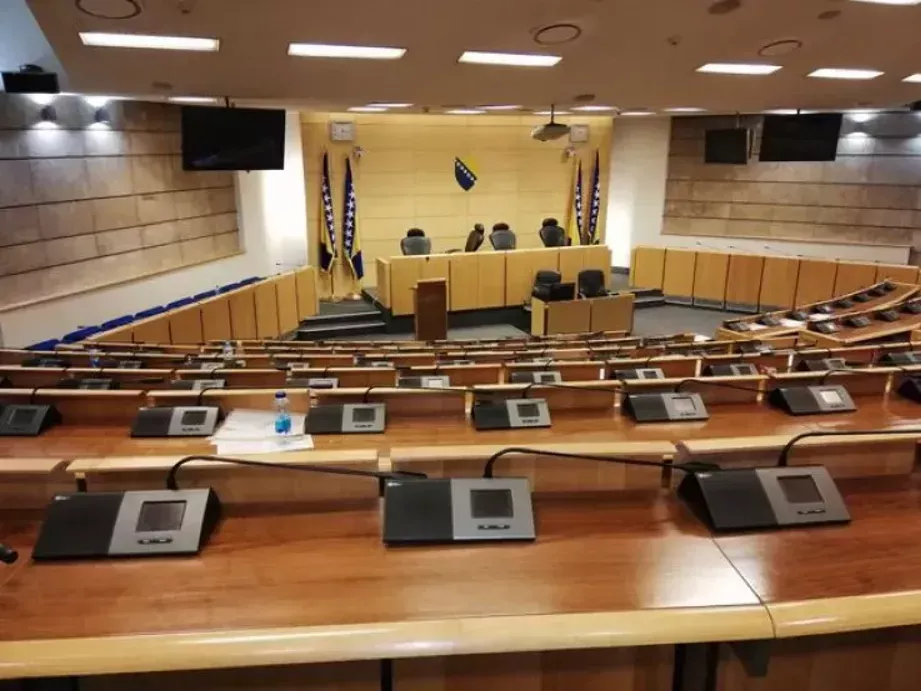
(Patria) - A real drama is unfolding ahead of the regular session of the House of Representatives of the Parliament of the FBiH.
While over 100,000 workers in retail and their families expect the adoption of the law that provides for the introduction of a non-working Sunday in the territory of the Federation of BiH, the HDZ BiH has decided to surprise its partners and, at the very finish, bring down the law, Vijesti.ba reports.
Namely, the announced agenda includes the Proposal of the Law on Internal Trade, which provides for the introduction of a non-working Sunday. The proposal has already received support from the entire Government of the FBiH as the proposer, retail workers and employers, and was also supported by consumers through the Consumer Association. The draft received support from the representatives, and today everything was supposed to be just a formality.
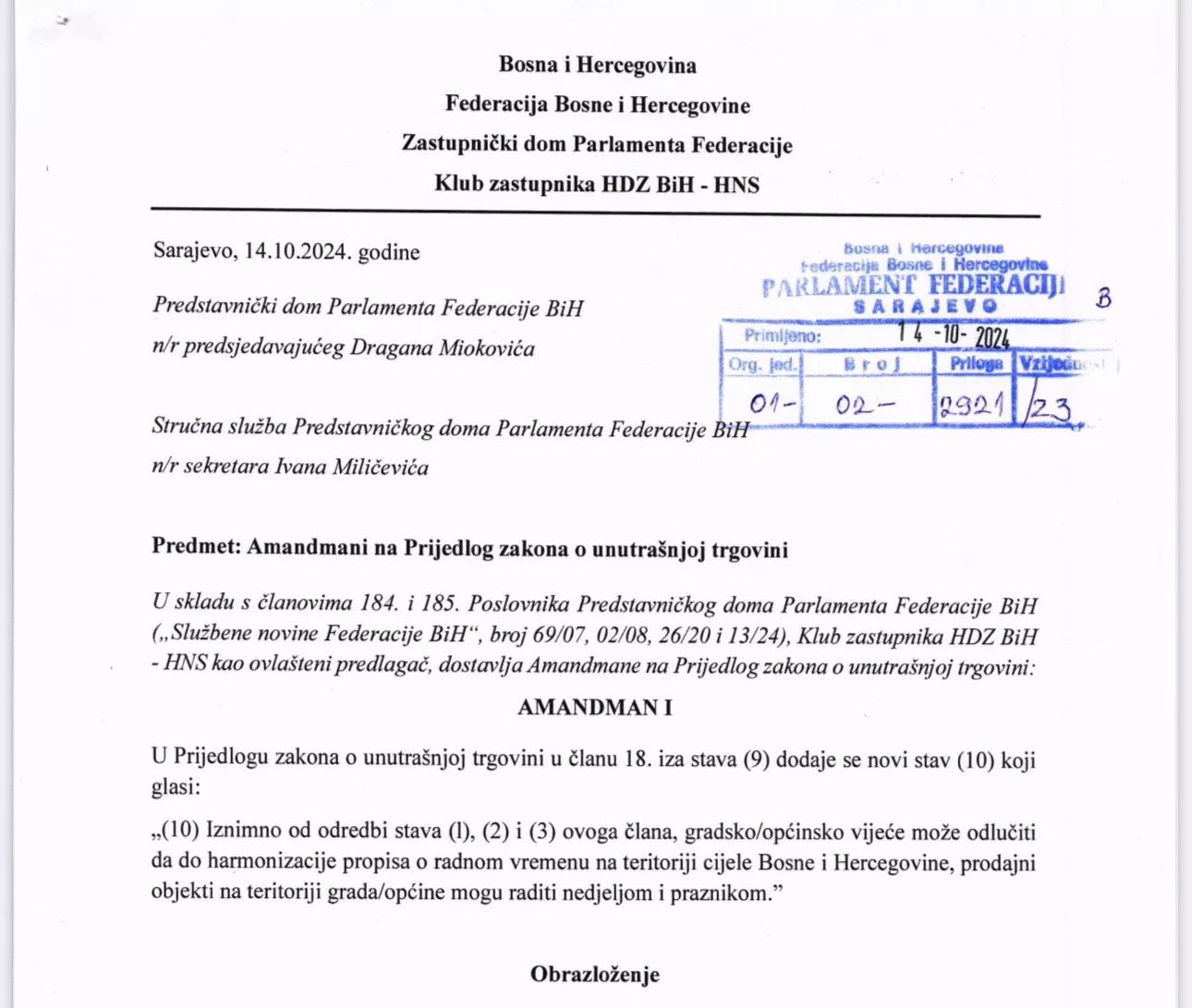
Nevertheless, yesterday the HDZ presented two amendments to its partners in a coercive manner and issued an ultimatum that they would vote against the law if these amendments were not accepted. The key is in the first amendment, which provides that cities and municipalities, regardless of the federal law, can themselves decide whether facilities in the territory of that city or municipality will work or not - on Sundays and holidays, until a law is passed at the state level.
This amendment is completely unacceptable to other interested parties, because it introduces additional chaos and anarchy into this area, and places municipalities and cities above the Federation of BiH. Namely, accepting this amendment would put market participants in an unequal position, and the HDZ is aware that harmonization at the state level will not happen anytime soon.
However, it seems that the retailers will ensure that the HDZ's move does not go unanswered. Namely, as we learn, after learning yesterday about the HDZ's intentions, retail chains are arranging a brutal response that would in practice mean canceling purchases of goods from wholesalers from Herzegovina until the HDZ's policy comes to its senses.
What the law provides
Let us recall, the Law stipulates that the working hours of retail stores are determined by the trader in the period from Monday to Saturday for a total of 90 hours per week, and that retail stores are closed on Sundays and holidays.
That female and male workers employed in the retail sector in the Federation of BiH want days off on Sundays and holidays was also shown by a survey on the attitudes of employees in the retail sector about working on Sundays and holidays, conducted by university professors on a sample of 1,442 people. Support for the Law on Internal Trade of the FBiH, whose adoption would make Sundays and holidays non-working days, was given by as many as 96 percent of workers, i.e., 97.5 percent of retailers, 96% of employees in service-trade activities, 98.5% in the service sector, and 91% of employees in office-counter jobs.
96.4% of workers believe that a free Sunday and holidays would positively affect their family life, and 95.2% believe that the ban would positively affect productivity during the work week.
As the main reasons for supporting the Draft Law on Internal Trade, 74.7% of retailers cite rest, while 59.5% believe that Sunday is the best day for rest and family. Also, every other worker (49.8%) from the retail sector says that their support for the Draft Law on Internal Trade will depend on who they will vote for in the elections.
Let us recall, in the Federation of BiH, the ban on Sunday trading is in effect in Tomislavgrad, Livno, Kiseljak, Čapljina, Goražde, Mostar and Novi Travnik, while such a decision for the entire West Herzegovina Canton has been in effect since mid-2020.
When it comes to countries in the region, the ban on Sunday work has been in effect in Croatia since July 1, 2023, while Montenegro made a decision back in March 2019 that stores would no longer work on Sundays and holidays.
Incidentally, the relevant Federal Ministry had already earlier requested from local communities where Sunday is a non-working day data on whether there had been a significant change in turnover. The answer was that only in the first month did turnover slightly decrease, by two percent, but that after a month, customers shifted their shopping habits to other days. That there were no disruptions is also evidenced by data from the FZZS, which show that last year total retail turnover in the FBiH increased.
Komentari (0)
Prijavite se za komentiranje
PrijavaJos nema komentara. Budite prvi!
Minuta
Sve →Iz drugih kategorija

High Representative Not Elected: Germans, French and British Sabotaged Americans, New Attempt at End of June

ČOVIĆ WITHOUT MERCY: How Those Who Brought Ademović to Office Created a Political Hell for Him



Sunny Saturday, quite warm



Tragedy in Albanian resort: Two minors drown












