
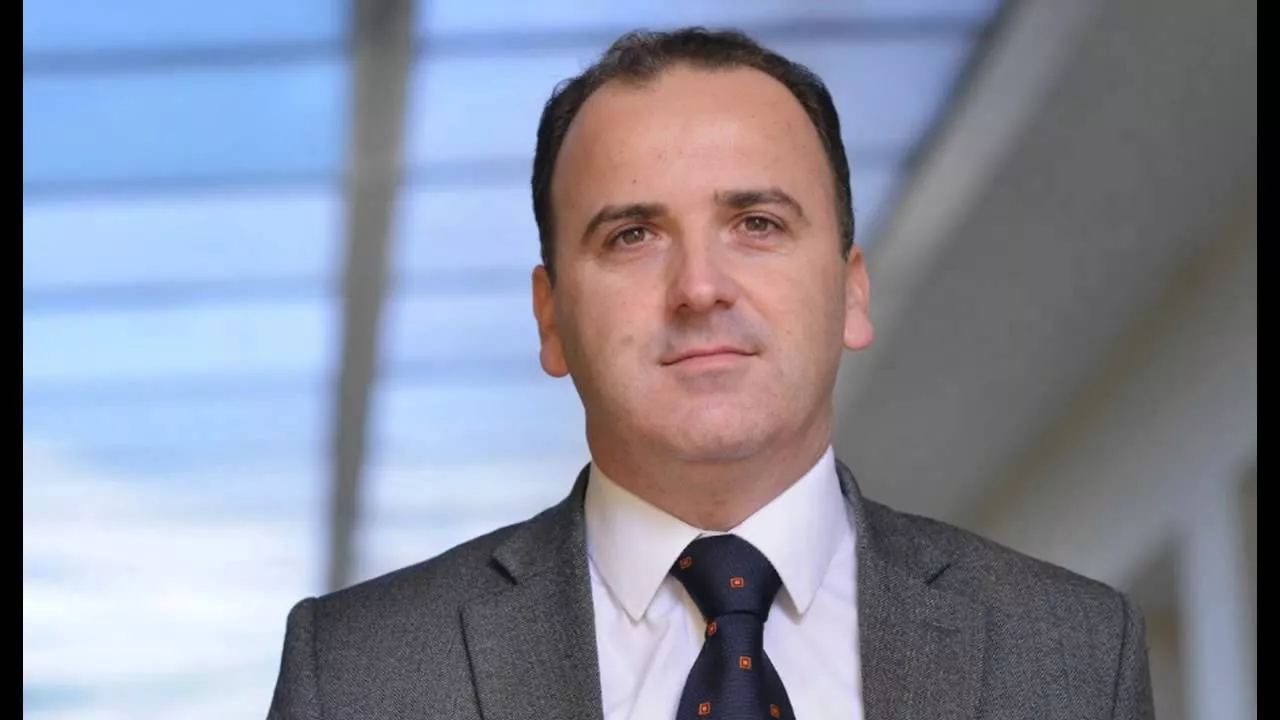
SARAJEVO, (Patria) - The role of international officials here, the visit of the US special envoy for electoral reform in BiH, Matthew Palmer, and Angelina Eichhorst, director at the European External Action Service, is in the context of making any progress so that they can tell their bosses that they have made certain progress in Bosnia and Herzegovina, said Dženan Đonlagić, a member of the Interdepartmental Working Group for amending electoral legislation and chair of the Democratic Front caucus in the House of Representatives of the Parliamentary Assembly of BiH.
The consequences of such moves will be borne by the citizens of BiH, Đonlagić claims, warning that BiH has an obligation to implement all five judgments of the European Court of Human Rights related to the mentioned issues.
- The solution must go in the direction of implementing all judgments, not as international officials emphasize, only the Sejdić-Finci judgment. At this moment, they have focused only on one judgment and are seeking a solution for Sejdić-Finci. For BiH to implement all judgments, it is not possible to go only with amendments to the BiH Election Law, but changes to the BiH Constitution are also needed, because the election of members of the BiH Presidency is a constitutional category. In this regard, what must be the goal of these amendments is to remove any form of discrimination based on ethnic principle and place of residence. Here, only that ethnic principle of discrimination is always emphasized to be eliminated.
However, we have citizens of BiH who are also discriminated against based on their place of stay, i.e., place of residence. So, constitutional changes that would go in the direction of implementing the judgments very clearly require from BiH a new concept of the country's organization, i.e., to move BiH out of the Dayton straitjacket, i.e., out of the Dayton shackles of exclusive rights of peoples, primarily those who declare themselves as Bosniaks, Serbs, and Croats, in the direction of retaining the rights for everyone to determine and declare themselves as they wish. However, in the new BiH Constitution - the judgments mandate us - that the focus should be on the human being, that the focus should actually be on the citizen who holds BiH citizenship. And then that citizen exercises their rights based on the BiH Constitution, which will guarantee their individual, fundamental human rights and freedoms - Đonlagić states.
Very often, he says, it is maliciously spun that placing the citizen in the new BiH Constitution is actually creating a unitary state, which is not true.
- Placing the citizen in the BiH Constitution actually means that a person can exercise their personal, individual, civic rights, which, among other things, include that this person has every right to declare themselves regarding ethnic affiliation, language, culture, and everything that a person feels belongs to them. Therefore, there is no dilemma about the implementation of the judgments of the European Court of Human Rights in Strasbourg; it requires from BiH a new model of organization, a new concept of the constitution, where we will move away from the principle of constituent peoples, i.e., from the principle of granting exclusive rights to those who primarily declare themselves ethnically as Bosniaks, Serbs, and Croats, but rather granting fundamental human rights to every citizen of BiH, regardless of where they live, where they stay, where their place of residence is, and regardless of how they declare themselves.
In BiH, we currently have a clash of these two concepts, these two models, of those political forces that at all costs want to cement the ethnic model and ethnic principle in the BiH Constitution and those political forces that want to introduce a new model, which is actually for a civic state of BiH. Whether this generation will succeed in this is another question, however, I believe that if an agreement is not reached for BiH to enter this new concept of civil society, a civic organization of the state, it is better to keep the existing system of the constitutional framework of the state and the BiH Election Law than to take a step that will mean a step backward in the exercise of the rights of BiH citizens, i.e., cementing the ethnic model and ethnic concept, because it is evident that such processes in BiH have been ongoing for a decade or more - Đonlagić emphasizes.
He also commented on the current talks among political representatives in BiH, which are being conducted under the auspices of American and European officials in the context of attempts to find a solution for amending the BiH Election Law.
- I believe that what we have had so far, these rounds of negotiations under the auspices of American and European officials, will not be possible to reach a solution in the time ahead of us. Because the Central Election Commission of BiH has a legal obligation to make a decision on calling elections in May next year. Therefore, the third, i.e., fourth month of next year would be the last chance to do that. Because, regardless of what agreement is reached, the final word will be had by the representatives and delegates in the Parliamentary Assembly of BiH. All of this must procedurally return to the institutions, primarily to both houses of the Parliamentary Assembly of BiH, and additionally, given that we would have to go into amendments to the BiH Constitution, for that type of change, a two-thirds majority support is needed in the Parliamentary Assembly of BiH, i.e., the support of a large number of parliamentary parties that have their representatives and delegates in the Parliamentary Assembly of BiH.
I believe that under no circumstances should any additional electoral units be created in BiH that would be based primarily on the ethnic principle. Therefore, further cementing of ethnic divisions in BiH is out of the question. No virtual, floating, temporary electoral units, or whatever terms are already in the public media space, that is out of the question. The Federation of BiH can be one electoral unit and, of course, the entity of RS as another when we talk about the election of members of the BiH Presidency - says Đonlagić.
He states that the role of the houses of peoples in the political system of BiH, as is their constitutional name, in this reform should be reduced to a taxatively listed, clearly defined jurisdiction of the house of peoples.
- In principle, so that the houses of peoples do not deal with every legal solution, because we have experience that these are precisely the critical points of blockage of the political system and functioning of institutions in BiH. Therefore, the future role of the house of peoples or houses of peoples should be to clearly define in the constitution the provisions of vital entity interest. In this case, the federal House of Peoples would deal with vital entity interest in the FBiH. To simplify, the role of the federal House of Peoples should be brought into symmetry with the role of the Council of Peoples in the RS. Then we would actually establish a functional political system in the Federation of BiH in the sense of ensuring the passage of legal solutions coming from the executive body, i.e., from the Government of FBiH to the Parliament of FBiH.
For illustration, from 2018 until now, there are more than 100 legal solutions that have been blocked in the federal House of Peoples. There is no dilemma. One political group, in this case the HDZ BiH, uses the federal House of Peoples as an institutional mechanism to block the functioning of the FBiH. Therefore, to implement all the judgments of the court in Strasbourg, it is fine to delete ethnic prefixes related to the election of members of the BiH Presidency and in that way actually enable every citizen of BiH to be able to run for the position of member of the BiH Presidency. And to organize the houses of peoples in such a way that they get a redefined role - Đonlagić emphasizes.
We are not talking, says Đonlagić, about abolishing the houses of peoples and reducing the political system of BiH to a unicameral system.
- There would still be a bicameral system in BiH, but we would have a redefined role of the house of peoples and reducing the role of the house of peoples to what it should actually be and serve its purpose of invoking vital interest on those issues that would be clearly prescribed and defined by the constitution, and which would concern truly vital interest of the peoples and others in the houses of peoples. This primarily refers to issues of language, culture, public information, representation in institutions... These would be issues that the houses of peoples would deal with, and in this way, we would enable the passage of other laws from all other areas that actually concern issues of citizens' lives from different sectors, i.e., issues of citizens' standards - Đonlagić assesses.
He supports the introduction of modern information technologies in the electoral process in BiH. It is necessary to decriminalize the electoral process in BiH, he explains.
- We all know, i.e., we witness electoral thefts in the electoral cycles we have had so far. Therefore, it would be very important to amend the BiH Election Law in those provisions that would enable, i.e., that would to the greatest possible extent prevent electoral fraud and electoral theft, and that the voter's vote would truly be credible, not the counter's, as a phrase we have in BiH. Namely, it is often said that elections are determined by counters, not voters. That is why I am for the introduction of modern information technologies in the electoral process. Here, I primarily mean electronic vote counting and video surveillance in polling boards. This type of improvement would be very necessary to decriminalize the electoral process to the greatest possible extent - Đonlagić emphasizes.
In his opinion, the civic model in BiH should not be abandoned, because it is completely uncertain when new amendments to the BiH Constitution could come again.
- And it is a question whether we would ever again have the opportunity to change the BiH Constitution in a way that ensures every person in this country their human rights. That is why it is important to constantly emphasize that this model of civic concept and civil society in BiH is not an illusion. Many say - well, it is impossible to implement now in these political circumstances. Maybe it is. But that does not mean giving up on this idea and this concept, because I am sure that, for example, if we asked all citizens in BiH on a referendum question organized throughout BiH, I am sure that an overwhelming majority of people in BiH would say that they want BiH organized according to the concept of civil society and respect for fundamental human rights.
In this regard, we will continue the political struggle through democratic means. If you asked me whether it is possible in these political circumstances to reach changes to the Constitution and the BiH Election Law, it seems to me, as things look now, that we will hold elections next year under the current BiH Election Law. Very often, the thesis is put forward that it is not possible to hold elections if we do not now make amendments to the BiH Constitution and the BiH Election Law. That, of course, is not true. BiH has the BiH Election Law in force, and if no changes occur, it means that we will hold the 2022 elections under the same electoral rules as we held the 2018 elections - Đonlagić emphasizes.
The introduction of virtual electoral units, in his view, would be a legalization of a third, i.e., a "Croat entity".
- DF will never raise its hand and we do not accept in any combination the introduction of any electoral units in the territory of the Federation of BiH, because that would evidently mean further ethnic division of BiH. That would lead to new discriminations and would lead to what is absolutely unacceptable to us, and that is unequal value of the vote. Essentially, what the Strasbourg judgments require from the state of BiH is the introduction of equal value of the vote for everyone. If we were to go into this story of floating, virtual electoral units, first, that would evidently lead to the introduction of a third entity in BiH, i.e., a predominantly Croat entity, which is absolutely unacceptable. And it would lead to unequal value of the vote where, conditionally speaking, some virtual electoral unit that would consist of 150 thousand votes would have a greater value of the vote than some other electoral unit with a million votes. That would lead to new problems in the functioning of BiH and to unequal value of the vote and evidently to new judgments. There is no dilemma - Đonlagić assesses.
The current political crisis, but also all those before it, was used by the HDZ BiH as pressure to negotiate solutions that suit them, Đonlagić believes.
- Everyone in BiH knows that the HDZ BiH, through blackmail and blockade, made the holding of the 2018 elections meaningless for the level of the FBiH Parliament from which the appointment of the FBiH Government arises. We know that the electoral process from 2018 was never brought to an end in terms of its implementation. FBiH did not implement the general elections of 2018 because we did not appoint new leadership in FBiH, the president and two vice-presidents, and a new FBiH Government. Actually, the illustration of what the HDZ BiH has done from 2018 onwards convinces us that changes to the Constitution and the BiH Election Law must not go towards further cementing the ethnic concept in BiH. Because, actually, it then puts you in a situation where one political party, one political organization can block the entire system of functioning of institutions in BiH, which is absolutely unacceptable - Đonlagić believes.
Komentari (0)
Prijavite se za komentiranje
PrijavaJos nema komentara. Budite prvi!
Minuta
Sve →Iz drugih kategorija

High Representative Not Elected: Germans, French and British Sabotaged Americans, New Attempt at End of June

ČOVIĆ WITHOUT MERCY: How Those Who Brought Ademović to Office Created a Political Hell for Him



Sunny Saturday, quite warm



Tragedy in Albanian resort: Two minors drown












