
By Amra Vrabac
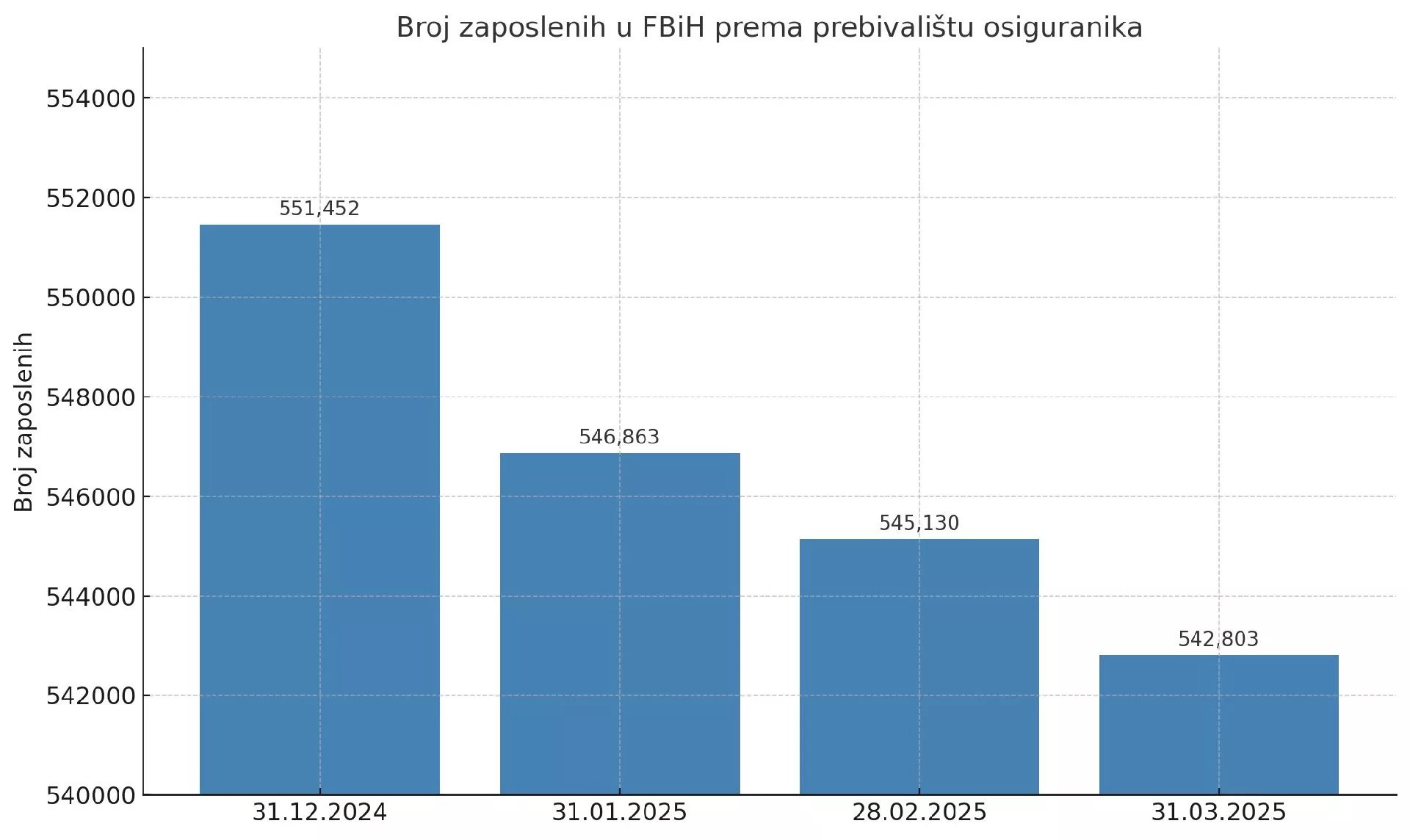
The difference in the number of employed persons in the Federation of Bosnia and Herzegovina from January 1, 2025, to March 31, 2025, is 8,649, indicating an increase in the number of people losing their jobs or terminating their employment for other reasons (death, retirement, emigration from BiH).
On the last day of 2024, according to the records of the Tax Administration of the Federation of BiH, there were 551,452 employed persons. On the last day of March, the number dropped to 542,803 employed. The largest decrease was recorded in three cantons – Sarajevo, Tuzla, and Zenica-Doboj.
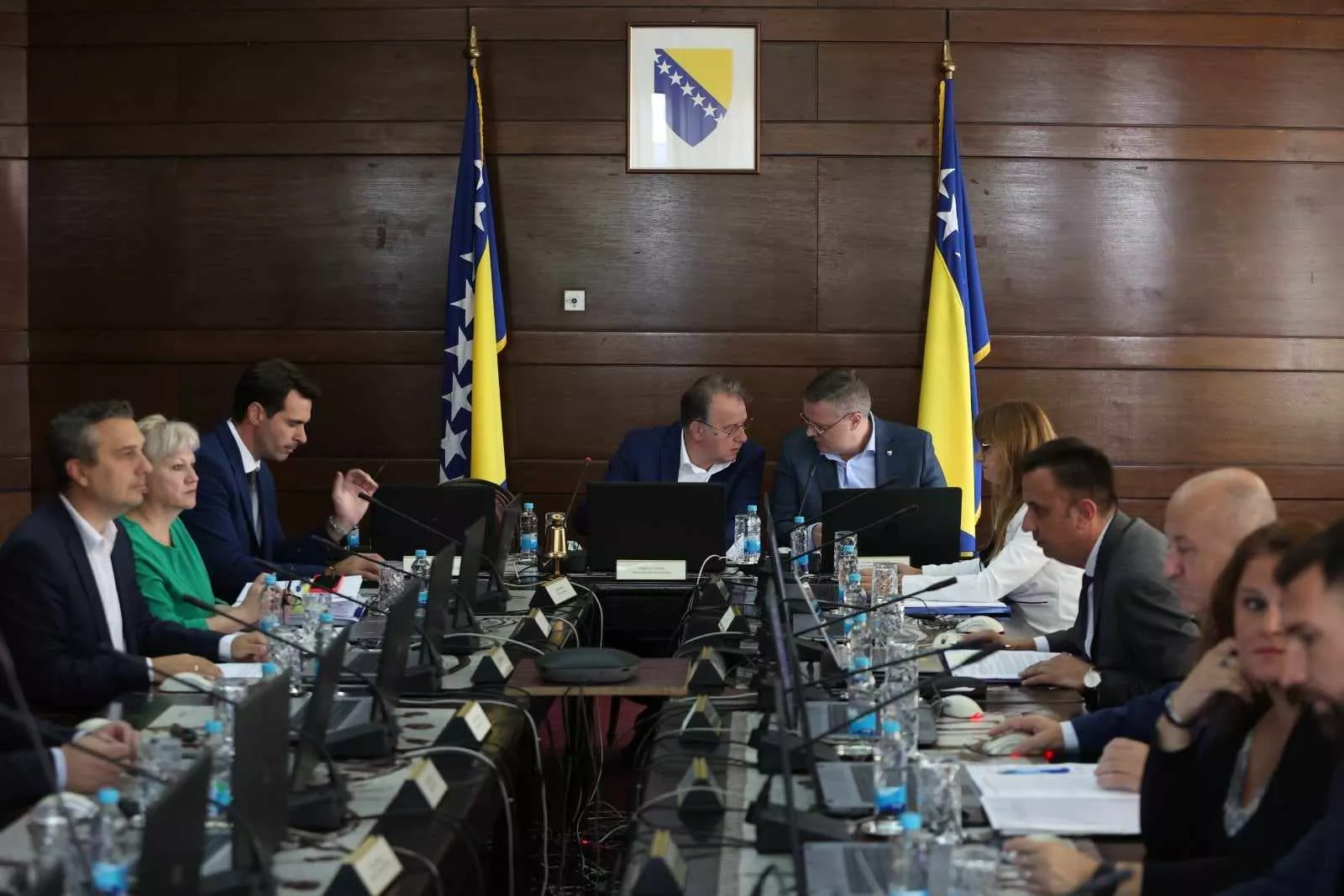
Yesterday, the Prime Minister of the Federation of BiH, Nermin Nikšić, stated that there were no mass layoffs after the Government of the Federation of BiH decided to increase the minimum wage from 620 to 1,000 KM at the beginning of the year. The same was claimed yesterday by Minister Vojin Mijatović, the "ideological creator" of the 1,000 KM minimum wage decision.
However, data from the Tax Administration shows that the number of employed persons has significantly decreased in the last three months.
The difference between the number of employed persons and the number of pensioners in the Federation of BiH is also decreasing, standing at 87,973 at the end of March, meaning only that many more people are employed.
During the period January-March 2025, contributions for pension and disability insurance, health insurance, and unemployment insurance were collected in the total amount of 1,502,398,335 KM.
The structure of contributions for the period January – March 2025 includes:
- contributions for pension and disability insurance (PIO/MIO) in the amount of 838,688,286 KM,
- contributions for health insurance in the amount of 594,381,004 KM,
- contributions for unemployment insurance in the amount of 69,329,044 KM.
Monthly breakdown is as follows: January 449,315,945 KM, then in February there was an increase to 521,038,401 KM, and in March, 532,043,989 KM was collected.
While the difference between January and February collections is over 70 million KM, in March, only 11,005,588 KM more was paid compared to the previous month.
Admir Čavalić, a Member of Parliament from the Party of Democratic Action and an economist, also analyzed the official data from the Tax Administration of the Federation of BiH.
“As expected, there is still no recovery in terms of employment, nor is one in sight. Unlike February, when we had a decrease in employment of 1,733 (in the last five years, there has always been an increase), March turned out even worse with a decrease of 2,327. March should also be a month of recovery. Some are still futilely comparing monthly data with the previous year – which makes sense for turnover, for example, but not for employment, which accumulates throughout the year.
Summa summarum, the economic policies of the Government of the Federation of BiH have caused a decrease in employment (Tax Administration of the Federation of BiH), inflation (Central Bank of BiH), a decline in industrial production (Federal Bureau of Statistics), and an increase in turnover in Orašje (Tax Administration of the Federation of BiH). Yes, I forgot – and an increase in public revenues (Tax Administration of the Federation of BiH), which was, after all, the only motive behind the Government of the Federation of BiH's Decision of December 30, without prior fiscal relief,” stated Čavalić.
From July 1, a slightly lower contribution rate should apply, but the law amendments have not yet passed the House of Peoples of the Parliament of the Federation of BiH, nor has a session been scheduled.
Although the Government of the Federation of BiH does not accept its responsibility, the data from the Tax Administration clearly shows a decrease in the number of employed persons. The decision on non-working Sundays, which has been in effect since November 17 last year, caused disruptions in the labor market in the retail sector, leading to layoffs. This was followed by the decision to increase the minimum wage without reducing contributions. While the Government claims that subsidies for part of the contributions eased the burden on employers, it should be noted that the first payment for January was in March, amounting to eight million KM, while employers paid 70 million KM. Subsequently, a certain number of appeals were accepted, and an additional 2.5 million KM for January subsidies will be paid with the April payment for February.
Komentari (0)
Prijavite se za komentiranje
PrijavaJos nema komentara. Budite prvi!
Minuta
Sve →Iz drugih kategorija

High Representative Not Elected: Germans, French and British Sabotaged Americans, New Attempt at End of June

ČOVIĆ WITHOUT MERCY: How Those Who Brought Ademović to Office Created a Political Hell for Him



Sunny Saturday, quite warm



Tragedy in Albanian resort: Two minors drown












