By: Rasim Belko @rasimbelko
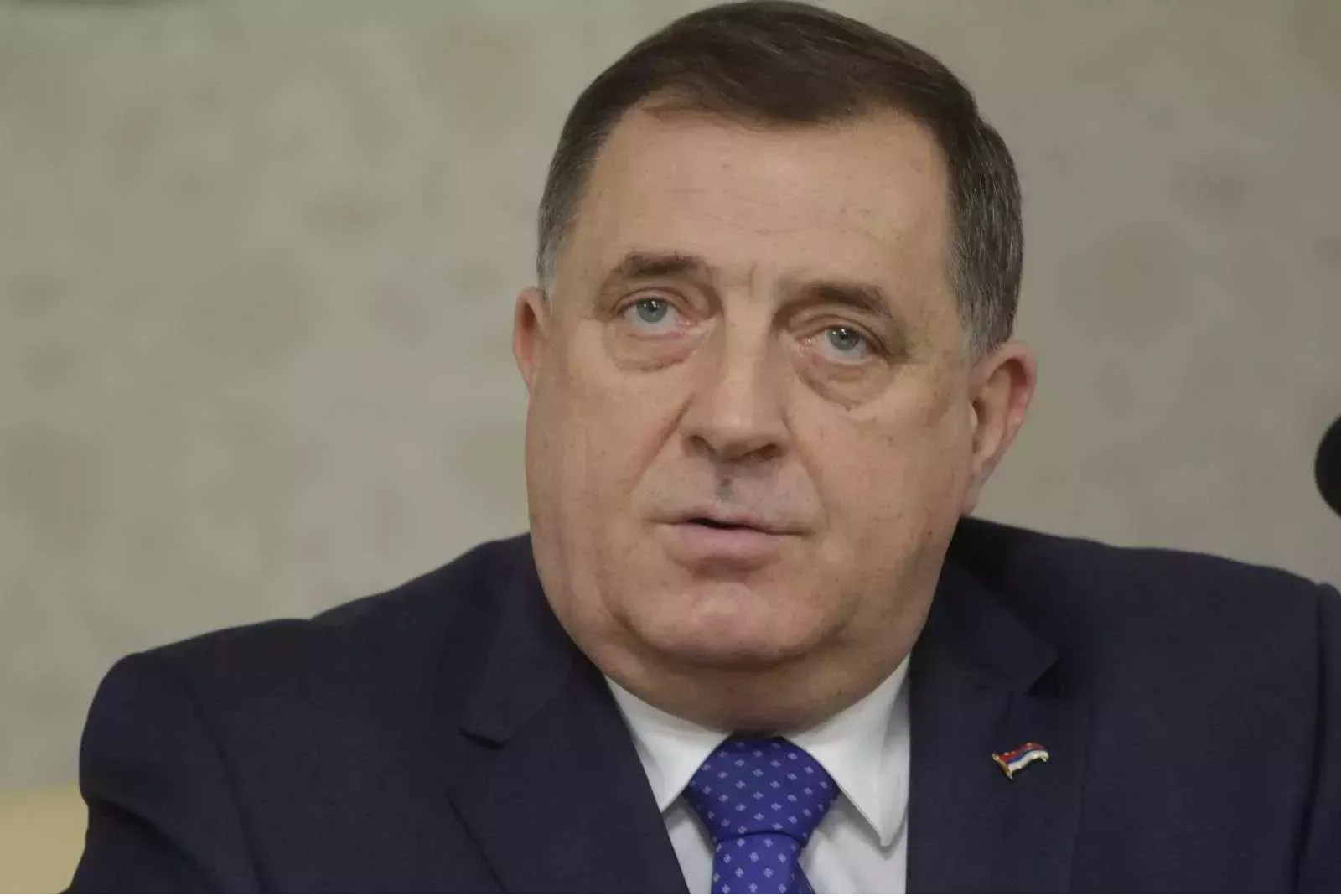
Regardless of when the trial of the president of the RS entity, Milorad Dodik, continues and concludes, and regardless of the content of that verdict, it is becoming increasingly clear and certain that Dodik has entered the twilight of his political career and that all that remains for him is to flail like a fish until the fisherman comes to pull in the net.
I do not wish to delve into his health condition – it would be inappropriate – nor will I interpret the double determination of his ability to follow the trial with different medical findings. That is least important for the outcome of the story itself, because the outcome can be seen almost with the naked eye.
The question is how much the outcome of the court process will be decisive for Dodik's political future and survival, because the fact that he completely isolated himself after what was presented to the public as a “routine operation” gives room for speculation that Dodik himself is creating an exit strategy.
In some circles, the possibility of a suspended sentence is mentioned, which would mean that Dodik will not go to prison, but that the Central Election Commission of BiH will have a legal basis to strip him of his mandate as president of the RS. This option may seem the most realistic in order to calm the public, and for Dodik to still be isolated and removed from the political life of Bosnia and Herzegovina. That is, there is a greater chance that this option will be more acceptable to the public of the RS than a prison sentence.
However, regardless of what the BiH Court decides at the end of the process, it is certain that by 2025, we could be freed from a long-term cause of many problems and destabilizations in Bosnia and Herzegovina. Because for almost two decades, Dodik has continuously fanned the flames under the Balkan powder keg, seriously endangering Western interests, insulting the US and its ambassadors, as well as other international officials, while simultaneously going for assignments to Putin.
The difficult political situation in Serbia, where Vučić's regime has to deal with itself, does not help Dodik either.
The ways and means by which Dodik will leave cannot yet be predicted with certainty, but what is quite certain is that the end is near. However, the question that must be asked, primarily within the pro-Bosnian political bloc, is: with whom among the representatives of the Serb people should we build a better political story after Dodik's fall?
That end could have been accelerated if the political project Trojka, including SDP as part of it, had voted statesmanlike, not treacherously, in the NSRS two years ago. Because then Dodik and his SNSD would not have had control over the Serb club in the House of Peoples of the BiH Parliament, and a parliamentary majority could have been built with Dodik's opposition.
Had such a scenario occurred, Dodik would not have had the leverage to control the legislative and executive power of the state, so his power would have been greatly weakened in the past two years. Trojka missed the opportunity to accelerate the departure of the biggest political scoundrel in Bosnia and Herzegovina, and even served us the story that Dodik had become a European politician – until it faced the true picture of its coalition partner.
The atmosphere and results of the 2022 elections were definitely an opportunity to try to make a serious breakthrough with the opposition from the RS. Unlike then, the atmosphere today is much worse, and the circumstances are more complex.
The circumstances were best illustrated by the speeches of the presidents of the parliamentary parties in the NSRS at the recently held special session. It was clear that night in December that the race for Dodik's successor at the head of Serb politics in Bosnia and Herzegovina had begun. And the speakers' vocabulary resembled Dodik's – except for Nebojša Vukanović.
The most frequently used word was “sabornost” (gathering/unity), which implies pan-Serb unity in the fight against the institutions of Bosnia and Herzegovina. This unity best demystified that in PDP under the leadership of Draško Stanivuković, SDS, and other smaller opposition and positional parties, there is no strength to move away from Dodik's policy. Therefore, the open question is: will we get Dodik after Dodik, or perhaps a worse Dodik?
There are many candidates, and the fight will be quite fierce. Dodik has ruled the RS entity with an authoritarian hand for two decades, and it is evident that many hungry political mouths aspire to succeed him. The pro-Bosnian political bloc must therefore be decisive, but wise in choosing partners, because that decision could be the tipping point – helping some and breaking the legs of others.
It is up to the true opponents of Dodik's policy in the RS and Bosnia and Herzegovina to show that they are truly in opposition to separatist and retrograde policies, and it is up to the international community to finally show whether it is for political projects that will move Bosnia and Herzegovina forward or will continue to experiment until new armed conflicts erupt.
There are many examples from the region, such as the fall of dictator Slobodan Milošević, which show that the post-dictatorial period is not at all simple. In a country like Bosnia and Herzegovina, the departure of a leader who has ruled for so long and so firmly can be a serious trigger for destabilization, which in the current geopolitical circumstances can cause far-reaching consequences beyond the borders of Bosnia and Herzegovina.
What ultimately remains an open question for both pro-Bosnian political forces and the international community is: how to cut off the flow of Russian and Greater Serbian influence on Bosnia and Herzegovina?
The answer to the question of who and how can ensure this will greatly facilitate the choice of the political successor of the outgoing Milorad Dodik. The same questions and answers should also concern the citizens of the RS, because two decades of secessionist policy pursued by the SNSD leader have brought them nothing but the lowest salaries and pensions, abandoned villages and towns, corruption, and crime.
Komentari (0)
Prijavite se za komentiranje
PrijavaJos nema komentara. Budite prvi!
Minuta
Sve →Iz drugih kategorija

High Representative Not Elected: Germans, French and British Sabotaged Americans, New Attempt at End of June

ČOVIĆ WITHOUT MERCY: How Those Who Brought Ademović to Office Created a Political Hell for Him



Sunny Saturday, quite warm



Tragedy in Albanian resort: Two minors drown












