
By Armin Aljović
Analysts assess that it is positive that the United States of America has re-engaged in the Western Balkans, primarily for security reasons in the countries of the region, which automatically generates a better economy as well as the advancement of democracy.
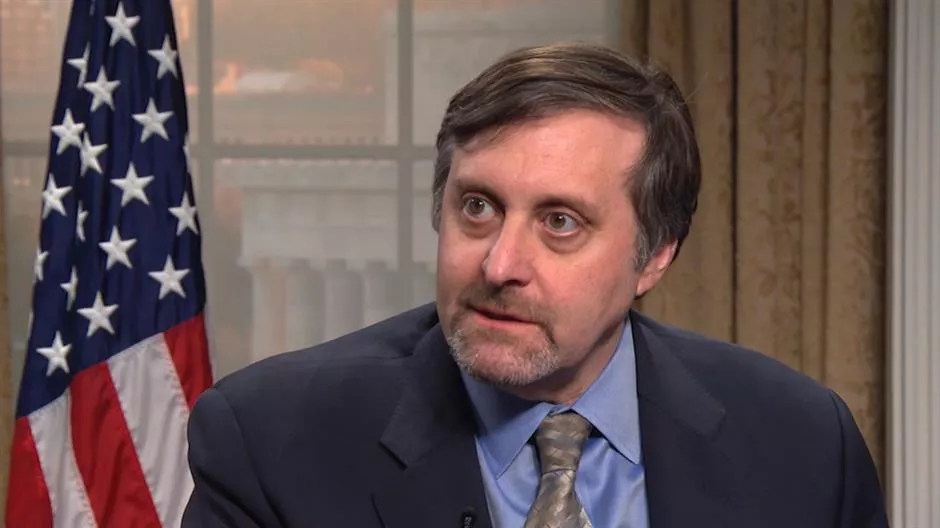
The Special Envoy of the State Department for the Western Balkans, Matthew A. Palmer, who was recently appointed to that position by US Secretary of State Mike Pompeo, said in an interview with the Slovenian Delo that he will work extensively with 'European partners and allies' to ensure 'a peaceful, prosperous, and stable region integrated into the European family of nations'.
The United States of America has found an open door in most countries of the region, most recently in Montenegro, Kosovo, and Macedonia, while Serbia and Bosnia and Herzegovina are still playing between the US and other world powers, primarily Russia – which, when it comes to Bosnia and Herzegovina, is most directly seen in the Bosnian entity of Republika Srpska.
Croatian journalist Vlado Vurušić, in his analysis 'Where Has Russian Power Disappeared in the Balkans?', published last year in Jutarnji list, believes that 'Putin has only two potential allies left' in the Western Balkans, recalling that 'Russian policy, whatever it may be – tsarist, Bolshevik, or democratic – has been trying to position itself in the Balkans for more than 200 years'.
'It has always sought to play on and exploit two 'politically emotional' strategic factors – Slavdom and Orthodoxy (during the USSR period, additionally the ideological component) and the protection of these peoples from the 'influence of the Vatican and Islam' and the 'imposition of undesirable pro-Western values'. Therefore, Russian analyst Konstantin Eggert notes that even today in Moscow, the Balkans are viewed as a territory where 'simple peasants live who pray to the Russian Tsar as a protector and guardian of faith from Catholic heretics from Vienna and cruel 'Mohammedans' from Sultanic Istanbul'.
Is it, therefore, realistic to expect that these two countries, after all, will turn their backs on Russia and seek allies in the prosperous West, where most of the population from Serbia and Bosnia and Herzegovina has emigrated in recent years?
Serbian President Aleksandar Vučić recently stated at the celebration of Russia Day in Serbia that 'every great day for Russia is an important and great day for Serbia too'. 'Long live Serbian-Russian friendship,' Vučić said at a reception hosted by the Russian Ambassador in Belgrade, Aleksandar Chepurin, while Putin decorated Vučić with the Order of Saint Alexander Nevsky during his visit to Belgrade in January.
As for Bosnia and Herzegovina, under pressure from American sanctions and isolation by most European Union countries, the leader of the Bosnian entity of Republika Srpska, Milorad Dodik, has openly sided with Russia, while directly accusing Western countries of interfering in BiH's internal affairs. It is difficult to expect Dodik to change his views in the near future, at least without a significant reason, such as a guarantee from Western countries that he will not be arrested for the crime and corruption he is accused of, or at the very least in exchange for being removed from the US blacklist.
Furthermore, although in the other part of Bosnia and Herzegovina – the Federation of BiH – the leading national parties: the Croatian Democratic Union (HDZ BiH) and the Party of Democratic Action (SDA), as the winning party among Bosniaks, declaratively advocate for strong cooperation with the US, primarily with NATO, some strategic state projects, such as telecommunications, energy, road infrastructure..., are being developed with partners found in Russia, and more recently, increasingly in China. For example, the Chinese company Huawei has installed equipment in the largest telecom operator in BiH – Sarajevo's 'BH Telecom'; the construction of Thermal Block 7 in Tuzla, worth over a billion KM, will be carried out by Chinese companies, financed by Chinese loans; the Belgrade-Sarajevo highway is to be built with Turkish loans, while the President of HDZ BiH, Dragan Čović, is negotiating with investors from Russia and China for the sale of the struggling aluminum processing company in Mostar, or 'Aluminij', which is the lifeline not only of the economy in Herzegovina but also affects the port of Ploče in Croatia.
It is still unclear whether BiH will take American gas from the terminal on the island of Krk in Croatia as an alternative to Russian gas.
Journalist Vurušić notes that with the change in the Macedonian paradigm and the definitive commitment to NATO membership, the position of Serbia and Bosnia and Herzegovina, or Republika Srpska within Bosnia and Herzegovina, is also changing. Serbia is currently the only one emphasizing that it 'will not join NATO' and declares itself a 'Russian ally'. 'However, Serbia could soon find itself surrounded by NATO countries, as with the entry of Macedonia, the Albanian element in NATO will be further strengthened – Albania, Macedonia, and Kosovo, which is not formally in NATO but is actually a 'large NATO base',' writes Vurušić.
Now the only question is what Russia's next steps will be: will it retreat before NATO, or will it become even more aggressive in Serbia and Bosnia and Herzegovina as a 'wounded beast'?
After playing a key role in the Western Balkans in the 1990s, such as stopping Milošević's rampage against neighboring countries, the United States of America withdrew from the region for a time, so some analysts consider their return to be late, at least when it comes to Serbia and Bosnia and Herzegovina, because other powers did not allow a vacuum to be created there. On the other hand, they agree that for now, the most important thing is that the US has the will to be dominant in the Western Balkans again, along with its Western partners, although the final outcome depends most on the domestic authorities. For now, the authorities in Serbia clearly stand on Russia's side, with Milorad Dodik and Republika Srpska under his leadership being even more direct in their pro-Russian stances, while the ruling SDA and HDZ in the Federation of BiH are gambling with American trust.
Komentari (0)
Prijavite se za komentiranje
PrijavaJos nema komentara. Budite prvi!
Minuta
Sve →Iz drugih kategorija

High Representative Not Elected: Germans, French and British Sabotaged Americans, New Attempt at End of June

ČOVIĆ WITHOUT MERCY: How Those Who Brought Ademović to Office Created a Political Hell for Him



Sunny Saturday, quite warm



Tragedy in Albanian resort: Two minors drown












