
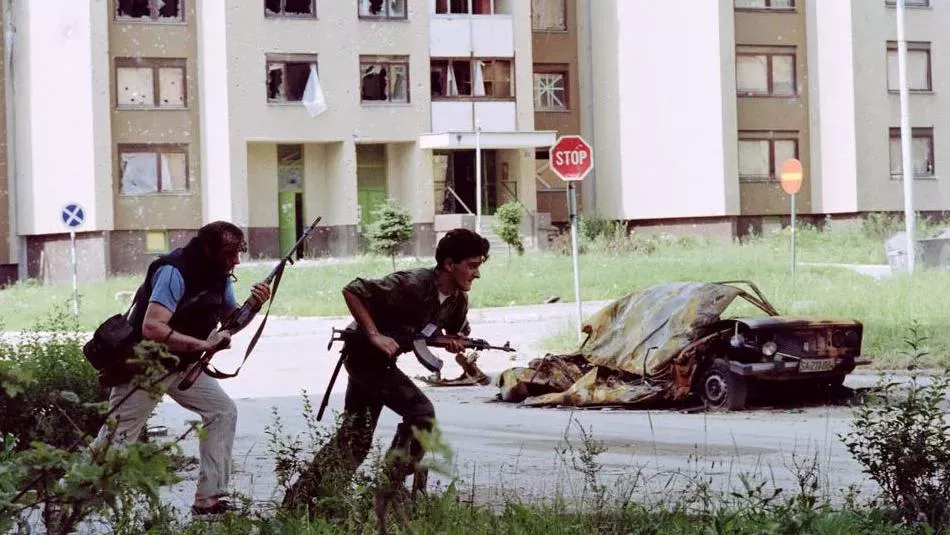
(Patria) - In the early morning of June 17, 1992, Serbian forces, under the directive of Ratko Mladić and reinforced by a unit of the Army of Yugoslavia, entered Aerodromsko Naselje with transporters and tanks. 40 civilians were killed who were found in a mass grave in Vlakovo.
The Niški Specijalci formation led civilians out of houses and apartments and shot or liquidated them in other ways. According to the testimony of surviving civilians, one-third of the killed were Croats and Serbs, whom the Serbian forces presented as victims of the Army of the Republic of Bosnia and Herzegovina.
Incursions were also carried out in Dobrinja 3, where men were taken to Kula prison, from where they were exchanged several days later during the night.
On June 17, detonations echoed every 30 seconds. The attacks lasted until late at night.
June 21, 1992, was fateful for Dobrinja. The defenders of Dobrinja, reinforced by special forces who, by order of President Alija Izetbegović after talks with the wartime commander of Dobrinja, Ismet Hadžić Mutevelija, arrived on the night of June 21-22, managed to break the Serbian occupation.
"Dobrinja did not give in; we responded to the first barricades with barricades; we did not allow them to close us in," recalled commander Ismet Hadžić Mutevelija.
The Dobrinja settlement was of not only operational and tactical but also strategic importance to the aggressor, and the aggressor had been intimidating the population even before the armed incursion into Dobrinja to discourage them from resisting.
Small groups organized themselves in parts of the settlement. Dobrinja was already under attack by Serbian forces on May 5, when they entered Dobrinja 1, 3, and 5, and Aerodromsko Naselje with transporters.
Chetniks entered overnight from Trapar, from the direction of Lukavica, where the first JNA transporter was destroyed by a hit from Zajko Vatrenjak.
Lukavička cesta was their main thoroughfare (today's Želimira Vidovića Kelija).
On one transporter, there was a flag that read "Arkan," giving the fighters an additional motive to destroy it.
Fikret Kereš Fića, one of the most important heroes of Dobrinja in Avdo Huseinović's film "Dobrinja - Siege within a Siege," states that they received a rocket launcher, and no one dared to shoot except Zajko Vatrenjak. Then Fića took over, and before being wounded, he managed to destroy 10 transporters and 4 tanks.
"Dobrinja was written off for the rest of Sarajevo and Bosnia and Herzegovina. However, thanks to the exceptional synergy and self-organization of ordinary citizens, civil defense, police, and the Army of the Republic of Bosnia and Herzegovina, we managed to defend ourselves and connect with the rest of the capital of Bosnia and Herzegovina. We managed to survive. Dobrinja is an untold story. No matter how much we talk about it, there will always be something that should have been said. How to survive without water, food, electricity. How to defend without weapons, treat without medicine, hold classes for children on the front line, religious and other rites of different confessions... these are stories that will never be fully told," said Hadžić in 2015.
Komentari (0)
Prijavite se za komentiranje
PrijavaJos nema komentara. Budite prvi!
Minuta
Sve →Iz drugih kategorija

High Representative Not Elected: Germans, French and British Sabotaged Americans, New Attempt at End of June

ČOVIĆ WITHOUT MERCY: How Those Who Brought Ademović to Office Created a Political Hell for Him



Sunny Saturday, quite warm



Tragedy in Albanian resort: Two minors drown












