
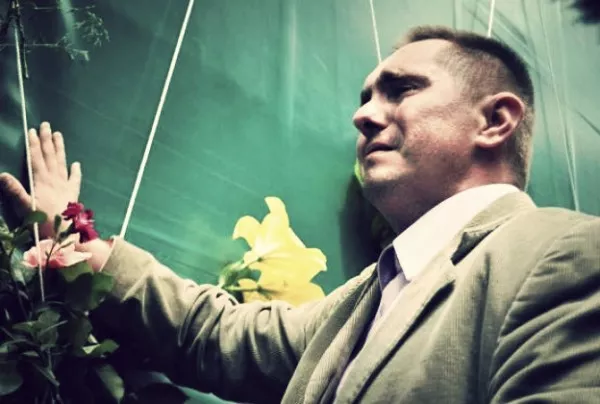
If it weren't for my neighbors and friends, whom I have all over Bosnia and Herzegovina, I would probably be hungry. But they really don't allow that. They help me. I am grateful to them for that – says Adel Šabanović, a 31-year-old young man who lives alone in Miševići near Hadžići, writes the Bosnian news agency Patria (NAP).
Šabanović is a civilian victim of war, with severe health consequences. He spent the last Serbian aggression against BiH, which lasted from '92 to '95, in the besieged Srebrenica, where he witnessed the murders and rapes of thousands of Bosniaks, including his father and grandfather.
When Šabanović, who was 11 years old at the time, reached free territory in the town of Kladanj, the first town after Srebrenica controlled by the Army of the Republic of BiH, his testimonies shocked the entire world.
During the genocide in Srebrenica, the Chetniks captured Šabanović's family, along with dozens of other Srebrenica residents, and took them to camps. As a minor boy, he was singled out and ordered to wash bloody knives after rampaging Serbian soldiers spent hours slaughtering Bosniaks.
From these crimes, Šabanović became seriously ill and is today unable to perform any work. He receives only 103 KM in aid from the local community, which he spends on utilities.
- I was eight years old when the aggression began and when we had to flee from the village of Zaklopače into the forest to save ourselves from the Chetniks – Šabanović recalled for Patria.
- A few months later, we fled to Srebrenica, like Bosniaks from other villages, because we thought the UN would protect us there. Unfortunately, the UN did not protect us. In July 1995, mass killings and rapes began. I watched as Chetniks raped women in one house and slaughtered men in another. They forced me to bring them water to wash their hands and knives after the slaughter. I cried, but they had no mercy. I was so scared that my body was stiff, and I don't know how I performed those tasks. I walked around and stumbled over dead people. When humanitarian convoys with survivors left Srebrenica for Kladanj, my grandmother managed to get me into one of those trucks; she found salvation in an old bus. My grandfather was not so lucky; they caught him and took him a little further away and killed him there, even though he was very old – says Šabanović.
The money Šabanović currently receives from local authorities is not enough for him, as he uses it to pay the utilities for the house he lives in, and due to his illness, there are very few jobs he can do to earn extra money for living.
- I am grateful to my friends who help me – says Šabanović.
- They buy me nice clothes and shoes, give me money for food. A few years ago, good people built me a small house. I also have a garden where I grow some vegetables.
Šabanović has difficulty staying in one place, and his gaze constantly wanders. He says he is most saddened by the attitude of local authorities towards him. He would like, as a civilian victim of war, to receive higher benefits from the state, so he wouldn't have to wait for help from friends. In BiH, he says, the situation is difficult for everyone, so he fears he is a burden to them, writes Patria.
Komentari (0)
Prijavite se za komentiranje
PrijavaJos nema komentara. Budite prvi!
Minuta
Sve →Iz drugih kategorija

High Representative Not Elected: Germans, French and British Sabotaged Americans, New Attempt at End of June

ČOVIĆ WITHOUT MERCY: How Those Who Brought Ademović to Office Created a Political Hell for Him



Sunny Saturday, quite warm



Tragedy in Albanian resort: Two minors drown












