
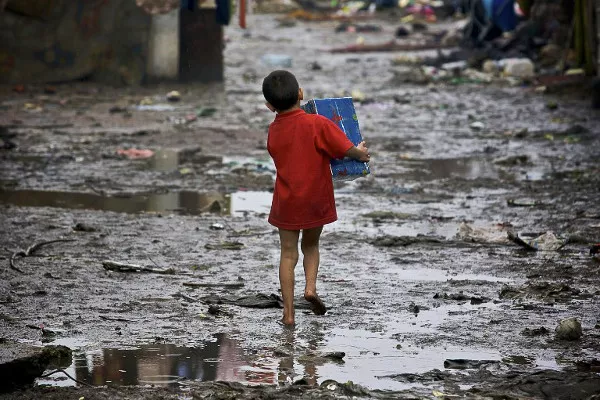
(Patria) - The economic downturn caused by the COVID-19 pandemic could push up to 86 million more children into poverty by the end of 2020, an increase of 15%, according to a new analysis published by the organization "Save The Children" and UNICEF. The analysis highlights that, without urgent measures to protect families from the financial hardships caused by the pandemic, the total number of children living below the national poverty line in low- and middle-income countries could reach 672 million by the end of the year.
Nearly two-thirds of these children live in sub-Saharan Africa and South Asia. Countries across Europe and Central Asia could experience the most significant increase, up to 44% across the region. Latin America and the Caribbean could see an increase of 22%.
"The coronavirus pandemic has triggered an unprecedented socio-economic crisis that is draining resources for families around the world," said Henrietta Fore, UNICEF Executive Director.
The organization "Save The Children" and UNICEF warn that the impact of the global economic crisis caused by the pandemic and related containment policies is twofold. The immediate loss of income means families are less able to afford basic necessities, including food and water, and are less likely to access healthcare or education, and are more exposed to the risk of child marriage, violence, exploitation and abuse. Also, when fiscal contraction occurs, the reach and quality of services on which families depend may be reduced.
For the poorest families, the lack of access to social protection services or compensatory measures further limits their ability to adhere to epidemic control and physical distancing measures, thereby further increasing their exposure to infection.
"The shocking impacts of the COVID-19 pandemic will hit children hard. Children are very vulnerable, even to short periods of hunger and malnutrition - potentially affecting them throughout their lives. If we act now and decisively, we can prevent and stop the pandemic threat facing the poorest countries and some of the most vulnerable children. This report should be a wake-up call for the whole world. Poverty is not inevitable for children," said Inger Ashing, CEO of "Save The Children".
Before the pandemic, two-thirds of children worldwide had no access to any form of social protection, meaning families would be unable to withstand financial shocks, perpetuating a vicious cycle of intergenerational poverty. Only 16% of children in Africa have social protection. Hundreds of millions of children remain multidimensionally poor - meaning they lack healthcare, education, proper nutrition or adequate housing - often reflecting inequitable government investments in social services. For children living in countries already affected by conflict and violence, the impact of this crisis will further increase the risk of instability and households falling into poverty. In the Middle East and North Africa region, which hosts the largest number of children in need due to conflict, the highest unemployment rate is among youth, while nearly half of the children in the region live in multidimensional poverty.
To address and mitigate the impact of the COVID-19 pandemic on children from poor households, "Save The Children" and UNICEF call for the rapid and large-scale expansion of social protection systems and programs, including cash assistance, school meals and child benefits - all key investments that address immediate financial needs, laying the groundwork for countries to prepare for future shocks.
Governments must also invest in other forms of social protection, fiscal policy, employment and labor market interventions to support families. This includes expanding universal access to quality healthcare and other services; and investing in family-friendly policies, such as paid leave and childcare.
Komentari (0)
Prijavite se za komentiranje
PrijavaJos nema komentara. Budite prvi!
Minuta
Sve →Iz drugih kategorija

High Representative Not Elected: Germans, French and British Sabotaged Americans, New Attempt at End of June

ČOVIĆ WITHOUT MERCY: How Those Who Brought Ademović to Office Created a Political Hell for Him



Sunny Saturday, quite warm



Tragedy in Albanian resort: Two minors drown












