
By Ernad Metaj
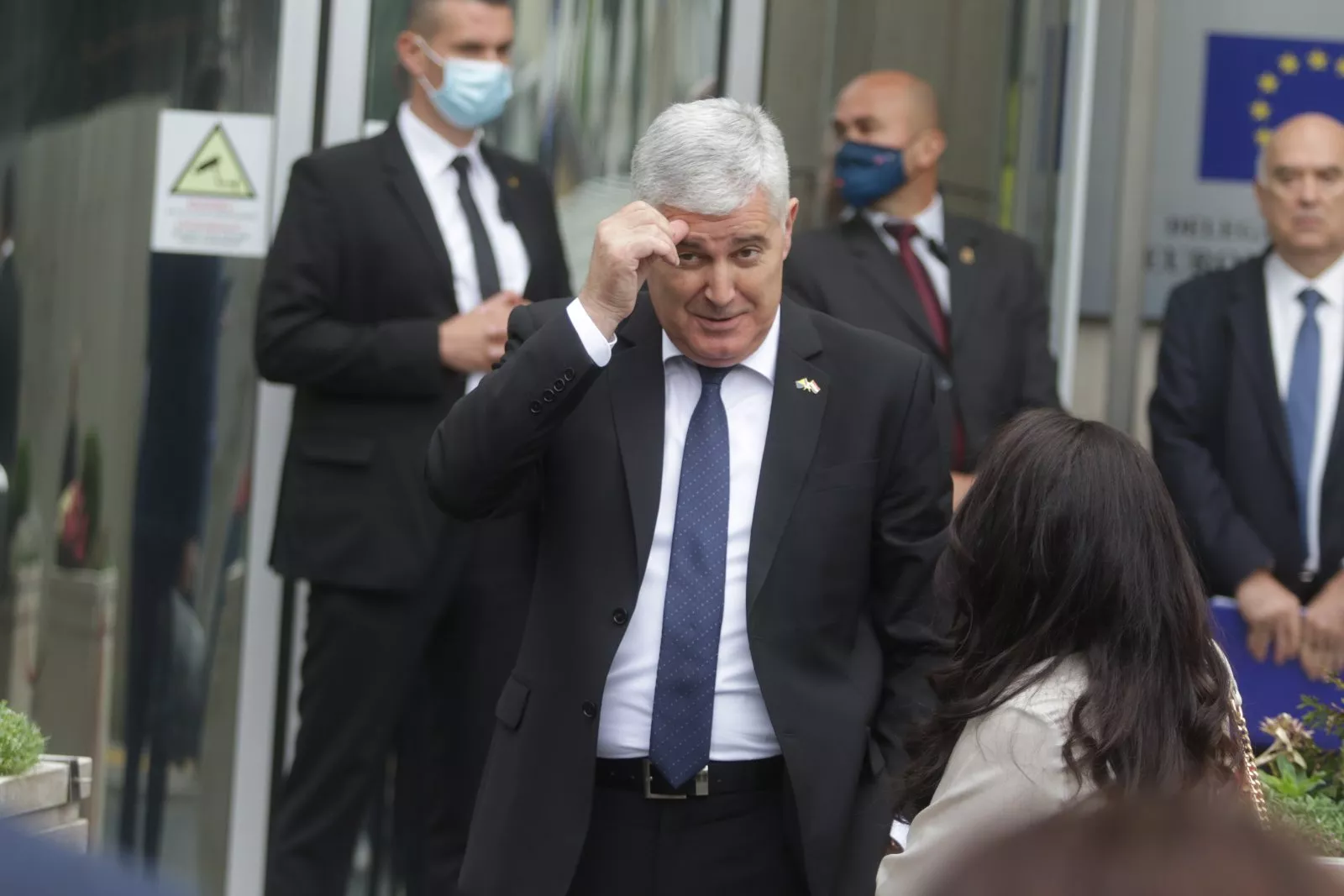
President of HDZ BiH Dragan Čović is aware that there is a negative perception of him in public, but he cannot and will not stop blaming only the policies from Sarajevo.
“Sometimes I am a fascist, sometimes a Ustaša, sometimes a Tuđmanist and a Šušak man, depending on how the Sarajevo bazaar needs it”, this is how Čović responded to a question from a Croatian journalist about his alleged connections with the Russians.
Not so long ago, Čović's connections with Russia were discussed outside of Sarajevo, outside of Bosnia and Herzegovina. The well-known magazine Foreign Policy wrote in the middle of the year about the significance of Russian presence in Bosnia and Herzegovina, i.e., about the damage their influence causes. Among other things, they stated that Russia is fueling ethnic divisions in BiH and that it is high time for the US to react, given that the 'complacent EU' has long been only watching the collapse.
- Serbs are not the only ones Russia is trying to influence. Russia has been actively supporting Croatian claims of discrimination and their demands for a third administrative entity for many years.
Dragan Čović, former member of the Presidency of BiH and current leader of the Croatian Democratic Union (HDZ), continues to court Russian officials who have long supported the creation of a third entity and oppose BiH's membership in NATO, it was written in the reputable magazine.
The reputable Croatian professor Dejan Jović, who publicly stated that the HDZ leader, along with SNSD president Milorad Dodik, is an ally of Russia in the Balkans, had no major doubts about Russian influence on Čović.
- Croatia is undoubtedly a Western country, and neither Russia nor China are counting on it. But its connection to the policies of Dodik and Čović in BiH turns it into a problem for America, and partly for Europe. No matter how much Prime Minister Plenković tries to fully integrate Croatia into European structures, he has a Minister of Foreign Affairs who directs Croatian foreign policy towards BiH according to the wishes of Mostar, as if Croatia were a contractor in the foreign affairs of HDZ BiH, Jović wrote not so long ago.
What Čović consciously omits is the fact that he has been critically discussed many times in the Croatian Parliament. Most often as one of the main culprits for the almost complete disappearance of Croats from RS, which is sovereignly ruled by his political ally Dodik. Thus, during one debate, independent MP Marko Vučetić confirmed that the Croatian people have problems in BiH, but stated that they have a problem primarily with legitimately elected representatives such as Dragan Čović.
- If he had directed his inventiveness towards enriching democracy instead of his own enrichment, then the Croatian people would be in a significantly better position, Vučetić said.
The mayor of Prozor - Rama municipality, Jozo Ivančević, who renewed his fourth term because both Croats and Bosniaks vote for him, agrees with the criticism from Croatia. He criticized the neighboring country's authorities' attitude towards BiH for the Croatian media after renewing his mandate, considering that they are pursuing the wrong policy.
- Absolutely wrong. Croatia, as an EU member, should recognize the bad things happening in BiH. If they want to help Croats in BiH and the whole of BiH, they should help economic projects that will bring people together and keep them. And they, unlike that, come to BiH, meet with Čović, spend two days, and people are still leaving. That is not good for Croats in BiH, said Ivančević.
On that occasion, he also explained why he did not want to be part of the Croatian National Assembly, through which HDZ has effectively managed to eliminate the opposition in areas where Croats live predominantly. They say in HNS: if you are not in HNS, you are neither Catholic nor Croat. And I answer that I am a greater Catholic and Croat than what Dragan Čović determines. That is really dirty propaganda, Ivančević said at the time.
The man whom his fellow citizens respect is in favor of changing the Election Law of BiH, but he does not reduce the battle for legitimacy solely to the relationship between Croats and Bosniaks. According to him, it is necessary to stop the practice of constant domination over Croats by a minority from Herzegovina. He defends this thesis by stating that before the war in the nineties, out of eight hundred thousand Croats in BiH, only 200,000 lived in Herzegovina.
- We should count according to those parameters, because people were driven out of their homes. In the area of Republika Srpska alone, there were two hundred thousand Croats. Now there are not even ten thousand, maybe five. Who is to blame for that? And at the same time, we see the pact between Dodik and Čović, said Ivančević.
It has long been clear to many that the alliance between Dodik and Čović is becoming increasingly dangerous for the integrity of BiH, but also increasingly uncomfortable for Croatia. Outrage over this alliance is not just a matter of the political opposition in Croatia, which speaks openly about it, but this stance is shared by all reasonable people within the administration. At one point, Čović managed to anger even the most hard-line Croatian nationalists because, by his presence at the marking of the unconstitutional Day of RS, he "graced" the commemoration of Slavko Lisica, convicted of war crimes in Croatia.
The patriotism of a man who signed in Cyrillic in the hated former Yugoslavia system was also criticized by generals who resent him for loving UDBA and KOS members more. Thus, inscriptions appeared calling Čović and his gang "Sokolovi" (Falcons), alluding to the fact that the former Mostar giant could not be managed by anyone except those close to the communist regime.
When it comes to criticism within the Croatian people, Čović is most often accused of being a criminal, and these days the European Parliament's Committee on Foreign Affairs (AFET) adopted the Report on the fight against organized crime in the Western Balkans. It states that the countries of the region should open the files of Yugoslav secret services as soon as possible in order to eradicate political and administrative ties with organized crime. The Committee notes in the Report that links between organized crime, politics, and business existed before the breakup of Yugoslavia and continued from the 1990s. From this, it could be inferred that Čović's persistent insistence on legitimacy has nothing to do with the interests of citizens, but with the desire to protect himself and the property he acquired while fighting for the rights of Croats.
Komentari (0)
Prijavite se za komentiranje
PrijavaJos nema komentara. Budite prvi!
Minuta
Sve →Iz drugih kategorija

High Representative Not Elected: Germans, French and British Sabotaged Americans, New Attempt at End of June

ČOVIĆ WITHOUT MERCY: How Those Who Brought Ademović to Office Created a Political Hell for Him



Sunny Saturday, quite warm



Tragedy in Albanian resort: Two minors drown












