
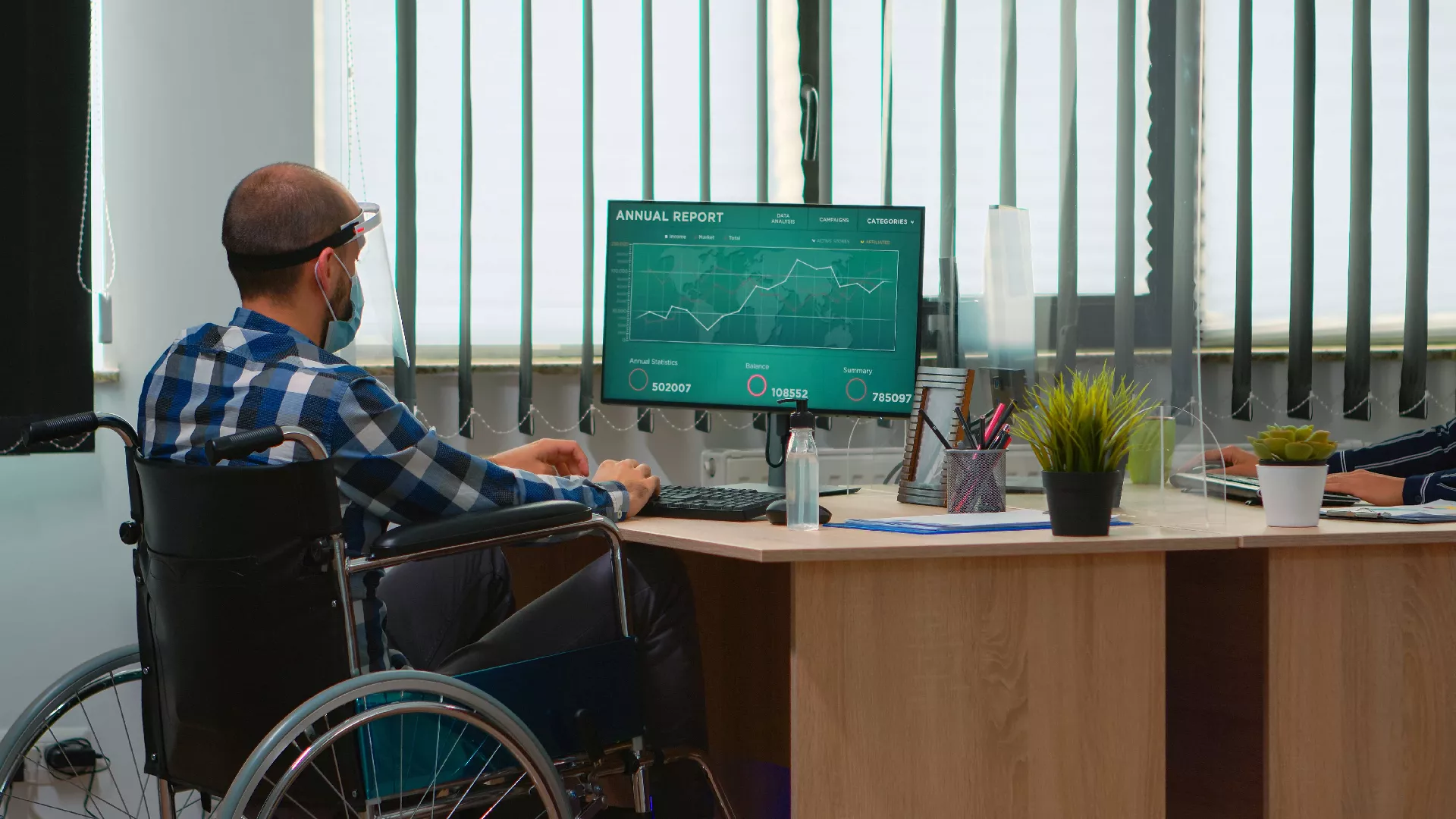
(Patria) - The integration of persons with disabilities into the labour market is one of the most neglected, yet most important social issues in Bosnia and Herzegovina. According to estimates by the Agency for Statistics of Bosnia and Herzegovina, as much as a quarter of the population lives with some form of disability, while their employment rate remains several times lower than the general rate, which is already among the lowest in Europe.
The result is tens of thousands of people who can and want to work, but remain outside the system, which is not only a social problem, but also a serious blow to the overall economic productivity of the country.
Precisely because of this, the issue of removing barriers and enabling professional rehabilitation must be strategic, not humanitarian. This is discussed in detail by Azur Kuduzović, an assistant at the Faculty of Educational Sciences of the University of Sarajevo, who has worked for years with blind and visually impaired persons on developing their independence and professional competencies. 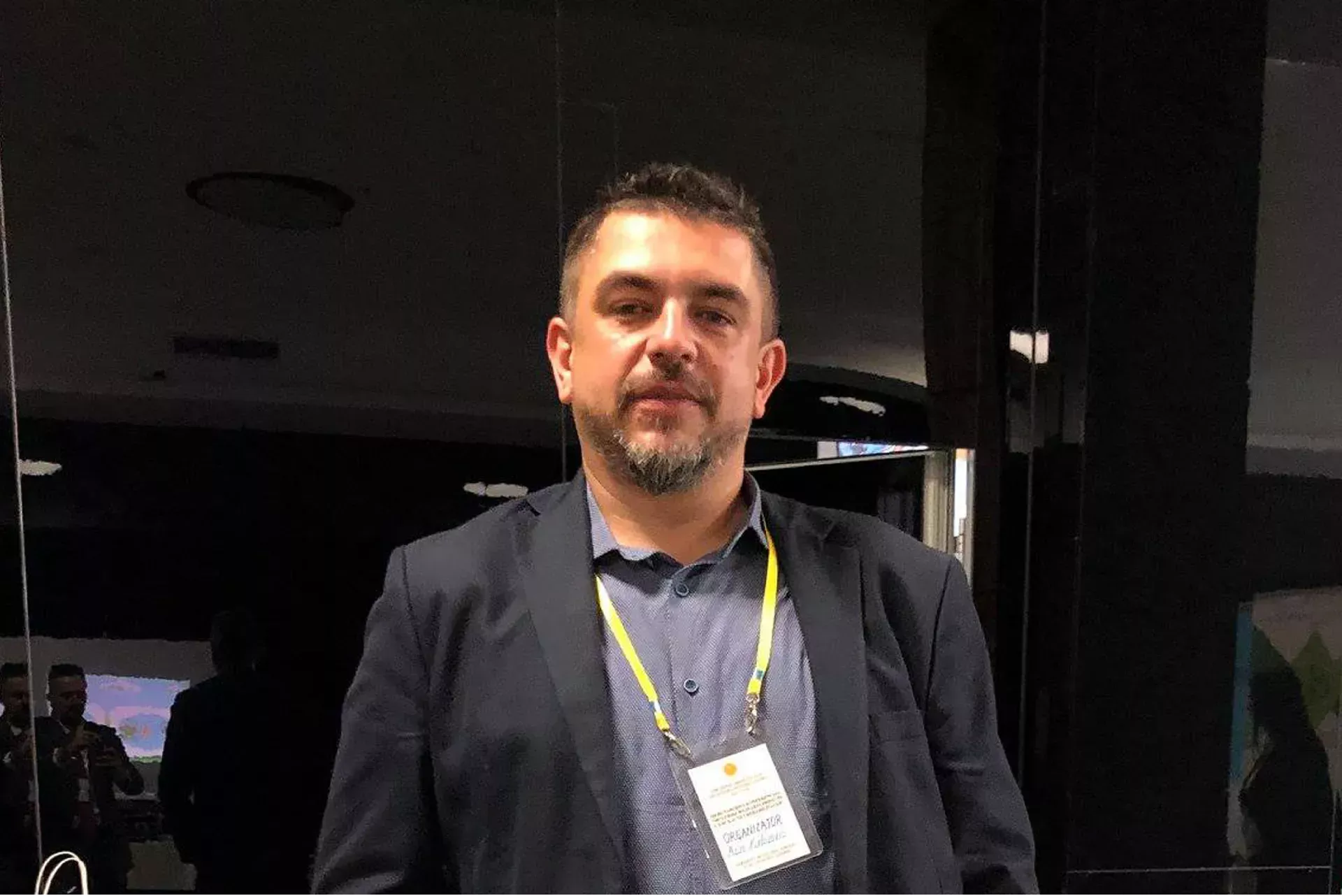 Azur Kuduzović
In the interview, he explains why inclusion is not charity, and how accessibility, from technology to architecture, directly determines who will get a chance to participate equally in the modern work environment, and who unfortunately will not.
Diversity and efficiency
Kuduzović initially emphasises that the integration of persons with disabilities into the work environment is much more than a moral act.
“The integration of persons with disabilities into the work environment should not primarily be viewed as a philanthropic or exclusively ethical category, but as an imperative of social, economic and organisational efficiency,” he said.
As he explains, diversity of abilities and approaches to work brings not only inclusion but also stability and innovation to organisations. “Through diversity of opportunities, increased resilience and innovativeness of the workforce is ensured,” he explained.
This means that society must not view persons with disabilities as a burden, but as a resource that needs to be given access to the labour market.
Support produces competence
Kuduzović points out that the potential of existing and future workers with disabilities will never be realised without comprehensive rehabilitation and without the removal of various forms of barriers.
“The potential contribution of persons with disabilities, including those with sensory impairments, requires adequate professional rehabilitation and the elimination of barriers in every sense of the word,” he emphasised.
This is particularly important for persons with visual impairments, where, he says, the possibility of employment directly depends on the level of support the system provides.
According to his words, with assistive technology, typhlotechnical aids, i.e., specialised devices and means intended for persons with visual impairments, an adapted workplace, but also accessible public space and public transport, functional visual limitations can be largely compensated for.
“All functional visual limitations can be successfully compensated for, enabling the competent performance of highly specialised tasks in the modern business environment,” he explained.
This, he adds, “drastically expands the range of occupations” that persons with visual impairments can perform.
Independent movement – a prerequisite for professional autonomy
For full inclusion in the work environment, the ability to independently get to work and move within the workspace is crucial. Kuduzović particularly highlights the rehabilitation segment related to orientation and mobility with a white cane.
“Of great importance for establishing full professional autonomy is the rehabilitation segment of orientation and mobility with a white cane,” he said.
These skills, he emphasises, affect not only functional independence, but also the breaking down of prejudices in society. Independent movement reduces stigma, increases productivity and confirms that investment in specialised rehabilitation is a long-term profitable investment in human capital.
“It proves that systematic investment in specialised rehabilitation for blind and visually impaired persons, but also other persons with disabilities, is a direct and profitable investment in human capital, and not just a cost of social responsibility,” he pointed out.
Systemic instead of project-based
Society, Kuduzović believes, still views issues of accessibility and inclusion as one-off projects or as an opportunity for promotional activities.
“It is necessary for the awareness of society and governing structures to move beyond addressing these issues through project activities,” he warned.
The environment must be continuously accessible, not just occasionally adapted. That is why he is particularly concerned when existing solutions are permanently removed, as, he notes, happened during the reconstruction of a part of the street in Skenderija, where tactile guidance strips were not reinstalled.
“How then can we expect full inclusion and professional rehabilitation of persons with disabilities when we permanently destroy their architectural support for autonomy and independence?!” he stated.
This example, Kuduzović points out, best shows how far-reaching the consequences of individual oversights can be.
In this context, it is important to mention the efforts of the Fund for Professional Rehabilitation and Employment of Persons with Disabilities of the Federation of Bosnia and Herzegovina, which in recent years has been trying to systematically strengthen employability through programmes of wage subsidies, workplace adaptations and support for employers.
Although these models show that institutional intervention can yield measurable results, experts warn that no fund, no matter how functional, can compensate for the lack of accessible infrastructure, accessible public space and lasting political responsibility. The fund can be a powerful lever for change, but only if it fits into a broader, consistent and long-term support system.
The words of Azur Kuduzović remind us that professional rehabilitation is the foundation of a modern, fair and productive society, and it begins only when we stop expecting people to be grateful for access that should belong to them by right, not by goodwill.
Komentari (0)
Prijavite se za komentiranje
PrijavaJos nema komentara. Budite prvi!
Minuta
Sve →Iz drugih kategorija

High Representative Not Elected: Germans, French and British Sabotaged Americans, New Attempt at End of June

ČOVIĆ WITHOUT MERCY: How Those Who Brought Ademović to Office Created a Political Hell for Him



Sunny Saturday, quite warm



Tragedy in Albanian resort: Two minors drown












