
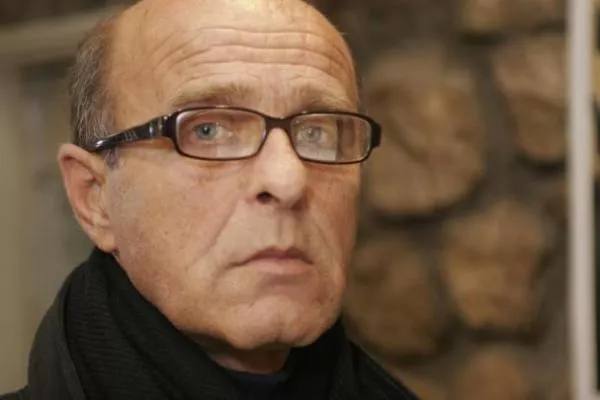
SARAJEVO, (Patria) - European and regional media today reported news published by EURAKTIV.com, stating that former High Representative in BiH Miroslav Lajčák will be the first Special Representative of the European Union for the Western Balkans.
In a statement to the Patria agency, political analyst Muharem Cero says he is not surprised by the announcement that Miroslav Lajčák could be the first EU Special Representative for the Western Balkans.
“It is no secret that this is just Lajčák's backup plan for arriving at a position in the European Commission. He was present in the story about the distribution of functions in the Commission and preferred the position of EU High Representative for Foreign Affairs and Security Policy Federica Mogherini,” Cero believes.
Cero adds that a much more interesting fact is that, for who knows how many times, a European counterpoint is being created in the Western Balkans to the United States, which appointed Matthew Palmer as Special Representative of Secretary of State Mike Pompeo for the Western Balkans, and US President Donald Trump appointed Richard Grenell as Special Representative for the Belgrade-Pristina dialogue.
“I cannot help but recall Lajčák's unfinished mandate as High Representative in BiH from the domain of my interest, which is that Lajčák undertook a robust initiative to resolve the infamous issue of state property. Three months before the Constitutional Court's ruling on the resolution of state property, which was supposed to preempt some solutions unfavorable to BiH, an action was launched that first resulted in the Prud, then the Banja Luka and Sarajevo agreements. Lajčák preferred the territorial model and created preconditions for an ethno-territorial constitutional arrangement of BiH, catering to the ethnic picture created by post-aggressor activities. Fortunately, the Constitutional Court's ruling thwarted that, and shortly after, Lajčák left the position of High Representative,” Cero points out.
With the same mandate, Cero states, Lajčák's successor Valentin Inzko arrived.
Cero notes that Lajčák's model for resolving state property was condemned by the Constitutional Court's ruling, and that Lajčák's then-mentors are still in European structures today.
“Also, I cannot forget the fact that Lajčák ended one model of a state union - Serbia and Montenegro - through a process of separation and creation of the independent state of Montenegro. Why do I mention this? Precisely because subsequent events, such as yesterday's marking of an unconstitutional holiday in the RS, bring back the model of a state union. These are no longer just verbal actions of the RS and Serbia but also practical actions. The falsification of the constitutional character of the Dayton Agreement and the acceptance of the infamous qualifications of ethnic representations in forming the Council of Ministers, reducing the Council of Ministers to a model of joint institutions, and a series of other constitutional falsifications, indicate that with Milorad Dodik and the arrival of Zoran Tegeltija, an attempt at the model of a BiH state union is returning,” this political analyst warns.
As he says, he greatly fears that in a constellation where Lajčák would be present in the “search for a solution” to the BiH crisis, he would be searching for a consociational, ethnic solution on ethno-confederal wings.
“And the fact that Lajčák announced his arrival to this position in Bucharest at a meeting with Dragan Čović and Dodik also worries me. The multiplication of international presence in the form of special representatives weakens the position of the OHR, the EU Delegation, and even the Peace Implementation Council. Bosnia and Herzegovina will thus become a testing ground for competition among three powerful structures - the American one through Palmer, the unknown new structure of the European Commission and Lajčák, and the long-invalidated power of the OHR and Valentin Inzko. In this visible or less visible geopolitical interest of Brussels - Washington - OHR, it may happen that BiH institutions are merely observers and implementers of the political will of the stronger in the international conflict,” Cero warns.
Cero concludes that “it is not yet known whether a whole structure of diplomats who, during his tenure as High Representative, heavily participated in taking positions according to the consociational model will come in a package with Lajčák. “For those who followed a bit more closely, I wonder if Hungarian diplomat József Pandur will come as well.”
Komentari (0)
Prijavite se za komentiranje
PrijavaJos nema komentara. Budite prvi!
Minuta
Sve →Iz drugih kategorija

High Representative Not Elected: Germans, French and British Sabotaged Americans, New Attempt at End of June

ČOVIĆ WITHOUT MERCY: How Those Who Brought Ademović to Office Created a Political Hell for Him



Sunny Saturday, quite warm



Tragedy in Albanian resort: Two minors drown












