
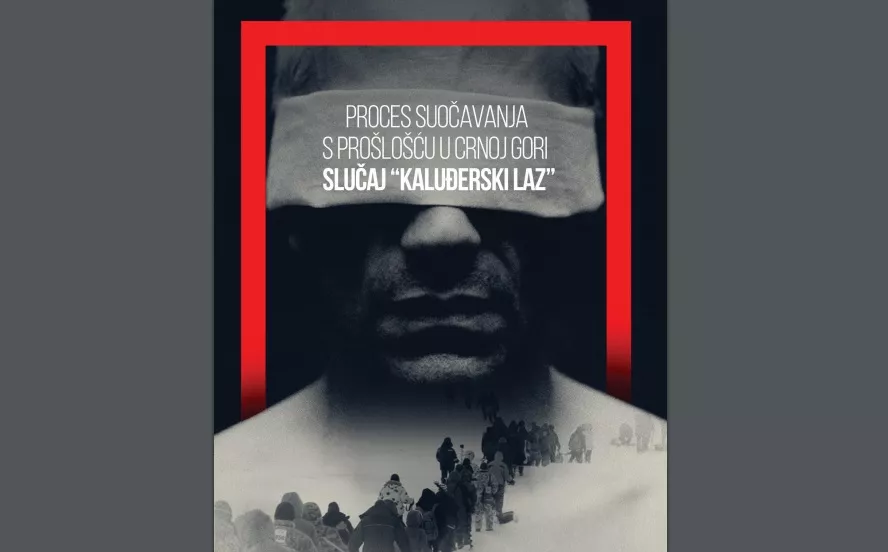
SARAJEVO, (Patria) - The Centre for Civic Education (CCE), as part of the edition "Process of Confronting the Past in Montenegro", and following the cases of "Morinj" and "Kaluđerski laz", has published two new publications that integrally present material from court proceedings in the cases of "Bukovica" and "Deportation".
"According to testimonies collected by human rights organizations, during the stay of a large number of reservists of the Yugoslav Army, the Montenegrin police, as well as members of paramilitary formations in the Bukovica area of Pljevlja, Bosniaks-Muslims were subjected to torture, searches, looting, harassment, and abuse. During these actions, from 1992 to 1995, according to data from expelled Bukovica residents, six people were killed, two committed suicide as a result of torture, 11 were abducted, and nearly 70 were subjected to physical torture, including extreme forms of humiliation and rape. At least eight houses were burned down, as well as the mosque in the village of Planjsko, while almost all households were looted," said Miloš Vukanović, program advisor, CdM reports.
This, he points out, resulted in the expulsion/flight of 90 families, with about 270 members.
"The 'Deportation' case refers to the illegal arrest on the territory of Montenegro, and then the handing over to the Bosnian Serb army in BiH of at least 66 refugees of Muslim faith from Bosnia and Herzegovina during May and June 1992. In addition to them, 33 refugees of Serb nationality were also arrested in the same operation. The deported refugees of Muslim faith were mostly liquidated, while only 12 of them managed to survive the handover. On the other hand, the deported refugees of Serb nationality were not treated as hostages, nor is it known that any of them died," said Vukanović.
He notes that the state of Montenegro, despite the inadequate prosecution of the masterminds and perpetrators of these two crimes, has acknowledged their commission by paying compensation to the victims and their families.
"It is difficult to sufficiently emphasize how essential the final prosecution of the 'Bukovica' and 'Deportation' cases is for the sustainable future of Montenegro. Their unresolved nature carries particular weight for Montenegrin society because it burdens the entire society with responsibility for war crimes," Vukanović emphasizes.
Furthermore, he stresses, it damages the international reputation of the anti-war society, but also undermines the fundamental civilizational values of our society, especially those related to the protection of citizens and refugees.
"Finally, it also prevents effective processes of transitional justice and confronting the past. Confronting the past is a vital need for Montenegrin society, not because of obligations undertaken through international documents and the process of accession to the European Union, but as a basis for firm and long-lasting interfaith and inter-ethnic reconciliation within the country. Until this happens, all rhetorically proclaimed civic and multi-ethnic essence of Montenegro remains threatened," said Vukanović.
By consolidating key and authentic documents from two more war crimes processes in Montenegro, the CCE aims to contribute to ending the negative practice of inadequate prosecution of war crimes, building the necessary institutional framework, and encouraging a constructive confrontation with the past.
These publications were published as part of the project "Confronting the Past for the Future" with the support of the Canadian Embassy in Montenegro.
Komentari (0)
Prijavite se za komentiranje
PrijavaJos nema komentara. Budite prvi!
Minuta
Sve →Iz drugih kategorija

High Representative Not Elected: Germans, French and British Sabotaged Americans, New Attempt at End of June

ČOVIĆ WITHOUT MERCY: How Those Who Brought Ademović to Office Created a Political Hell for Him



Sunny Saturday, quite warm



Tragedy in Albanian resort: Two minors drown












