
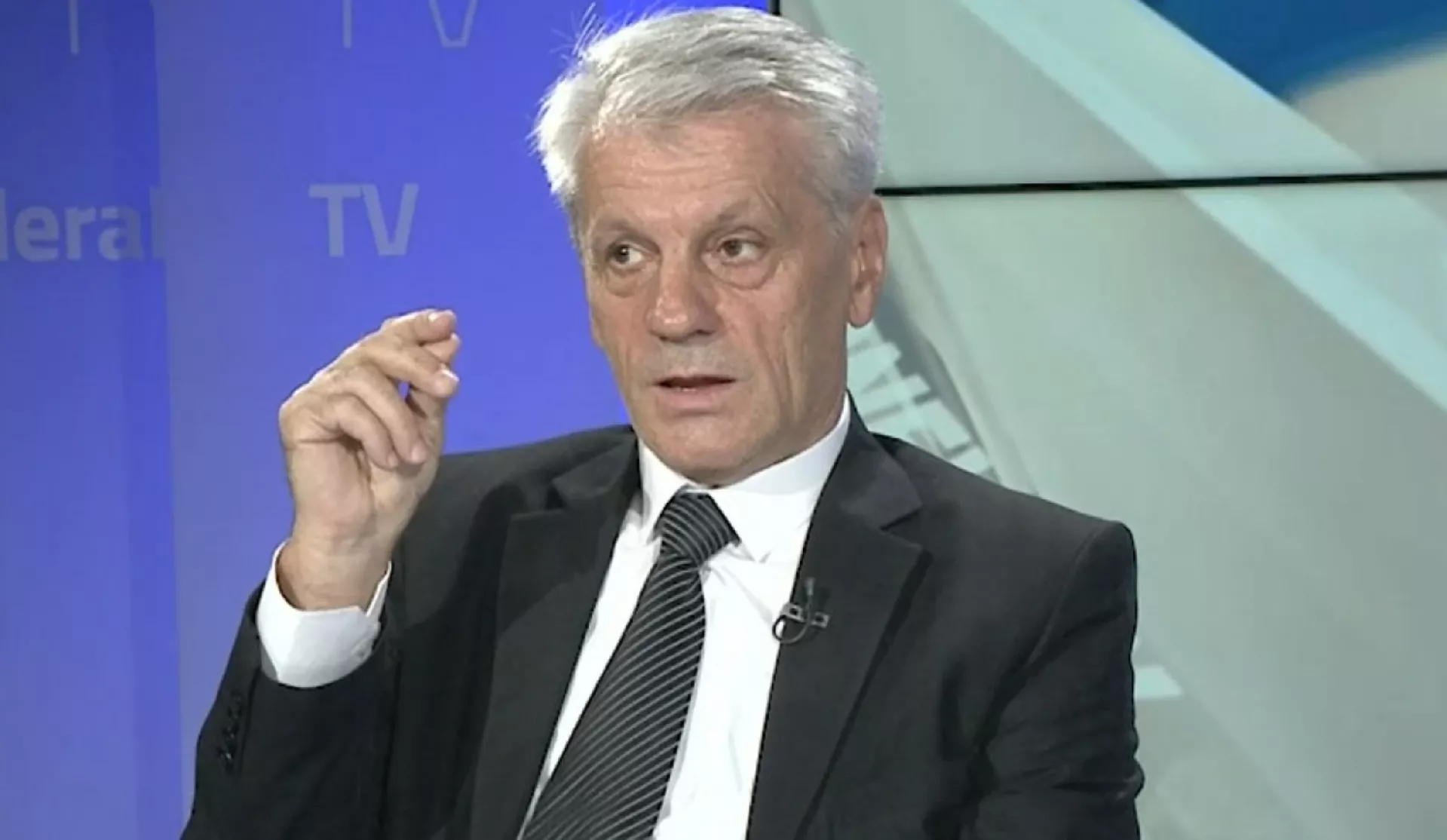
By: Enver Išerić, Doctor of Law and member of NES BiH
After recent information and published photos showing two students of Islamic faith praying in a primary school in Srebrenica, we witnessed numerous reactions from institutions and associations from the entity of RS. One of these associations characterized this event as a threat that "entire schools will be turned into mosques".
Bosnia and Herzegovina is a secular state. And there is nothing controversial about that. It cannot be otherwise. And here, one could say that Bosnia and Herzegovina is neither Islamic, nor Orthodox, nor Catholic. Just as it was stated, or written, at the First Session of the State Anti-Fascist Council of National Liberation of Bosnia and Herzegovina (ZAVNOBiH) on November 25, 1943, held in Mrkonjić Grad, in the Proclamation on a unified and indivisible state of Bosnia and Herzegovina, that Bosnia and Herzegovina is neither Serbian, nor Croatian, nor Muslim, but rather Serbian, and Croatian, and Muslim, or in other words - of all its citizens.
And a secular state is a concept that denotes a state in which the principle of separation of religion from the state is applied and according to which religion must not be part of state affairs, i.e., institutions, and religion and religious affiliations must not or should not influence political decision-making. This does not mean that the state does not have to respect and guarantee the absolute right of every individual to freedom of religion, as well as equal rights to all religions.
Is it like that in Bosnia? It is not. We can confidently claim that it is not. The facts that educational institutions/schools in the RS entity bear names of religious figures (Sveti Sava) and that schools have their patron saint celebrations which they celebrate and mark testify to this. Does the Ministry of Internal Affairs of Republika Srpska have its patron saint celebration? Is the patron saint celebration of the Ministry of Internal Affairs of RS the celebration of Saint Archangel Michael, which it marks and celebrates. Does this mean secularity and secularism.
Should Bosniaks and Croats in the institutions of the RS entity celebrate these holidays and be educated in schools with such names. Are you turning those institutions into churches in that way? Is keeping icons in some official premises of cantons and municipalities with a Croatian majority secularism?
That is not secularism. It is a direct interference of churches in state affairs, but at the same time, it is discrimination against citizens who are not Orthodox and Catholic. That should be prohibited and sanctioned. And no citizen of any faith (Orthodox, Catholic, or Islamic) should and must not be forbidden from performing their religious duties. I am not saying that it should be done in public institutions. But even if it were provided, it would not mean a violation of secular principles. Secular principles are violated by icons on the walls of institutions, names of institutions after saints, and patron saint celebrations of state bodies and institutions.
The state cannot be secular (separate) only from Islam. The state, if it wants to be secular, must be separated from all religions in the same way and to the same extent, or it will not be secular.
Komentari (0)
Prijavite se za komentiranje
PrijavaJos nema komentara. Budite prvi!
Minuta
Sve →Iz drugih kategorija

High Representative Not Elected: Germans, French and British Sabotaged Americans, New Attempt at End of June

ČOVIĆ WITHOUT MERCY: How Those Who Brought Ademović to Office Created a Political Hell for Him



Sunny Saturday, quite warm



Tragedy in Albanian resort: Two minors drown












