
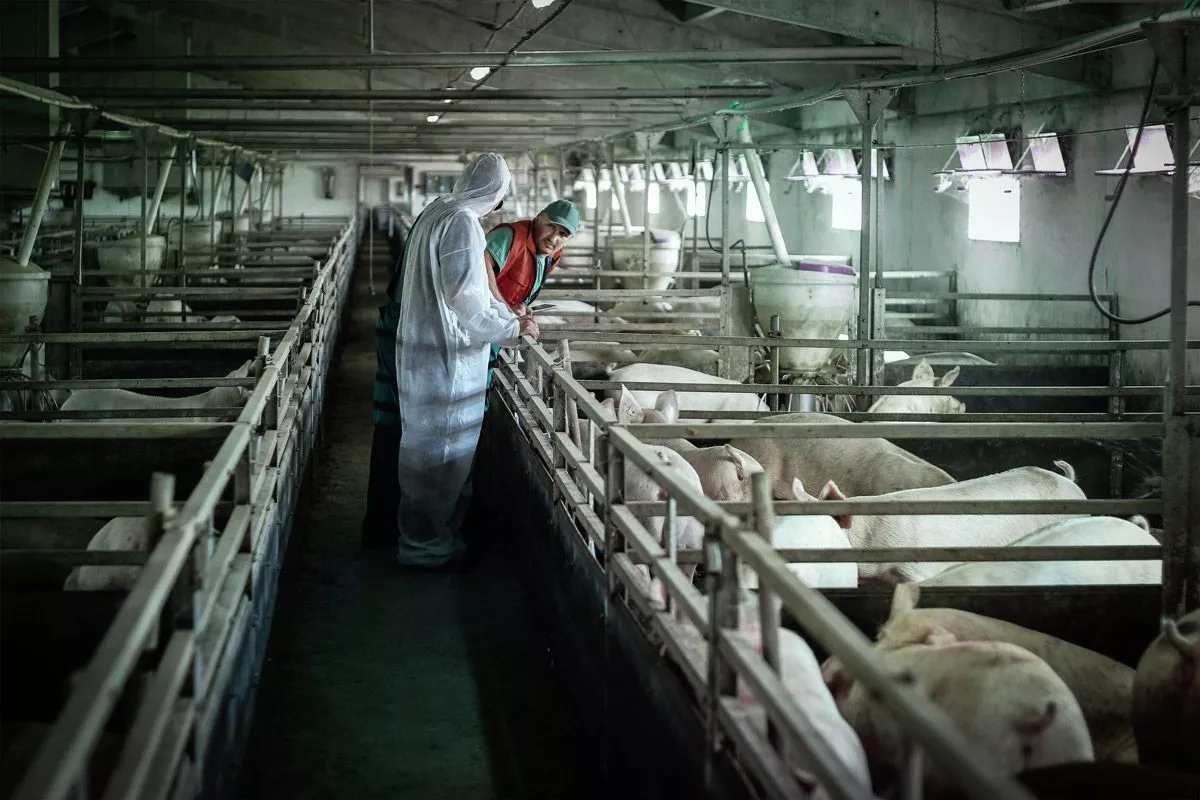
(Patria) - After the first case of African Swine Fever (ASF) was detected in the Zenica-Doboj Canton, specifically in the village of Goliješnica, Žepče municipality, through veterinary supervision and examinations, it is necessary to inform citizens and the public, especially breeders of this type of animal, about the most important details regarding the disease and its management.
Harmless to Humans, Devastating to Animals
African Swine Fever (ASF), also known as Montgomery's disease, is a viral infectious disease of pigs, including wild boars. Its symptoms and course are very similar to classical or European swine fever (CSF), but their causative agents are different and unrelated. ASF is not a zoonosis, according to the Institute for Health and Food Safety of Zenica.
The first case of African Swine Fever in Bosnia and Herzegovina was confirmed on a farm in the Bijeljina municipality on June 22 last year, marking the first time this disease was ever recorded in BiH. Following this, 40,000 pigs were euthanized in that area. There are no approved vaccines against ASF in Europe, nor in our country, so an epidemic can result in the culling of a large number of pigs kept on farms in the affected area.
It is important to emphasize - African Swine Fever is not dangerous to human health, but it leads to the almost certain death of every infected pig, domestic or wild, causing significant economic losses for breeders! The causative virus is excreted from an infected pig through saliva, tears, nasal discharge, urine, feces, and genital tract secretions. The disease is also transmitted indirectly through contaminated surfaces, equipment, and tools, as well as by the bite of infected ticks.
The signs of the disease depend on the virulence of the virus strain. The acute form of the disease can be easily mistaken for other infectious diseases, primarily classical swine fever, anthrax, and salmonellosis. Infected animals will develop some of the following clinical signs of the disease - Characteristic signs include hemorrhages on the skin and mucous membranes, purulent discharge around the conjunctiva, blue-purple areas and hemorrhages on the ears, abdomen, and hind legs, eye and nasal discharge, redness of the skin on the chest, abdomen, perineum, tail, and legs, constipation or diarrhea, vomiting, abortion in pregnant sows, bloody frothy discharge from the mouth and nose, uncoordinated movement occurring one to two days before death.
The human factor also plays a significant role in its spread, therefore all pig owners must strictly adhere to all prescribed measures and all measures determined by the Ministry of Agriculture and the veterinary inspection. All pig owners and hunters can contact the Ministry of Agriculture, the cantonal veterinary inspection, or their veterinarians for any questions, according to the IHFS.
Any death and appearance of disease symptoms must be reported to a veterinarian immediately and urgently. Burying dead pigs or removing carcasses without prior notification and veterinary examination is strictly prohibited. The BiH Veterinary Office has informed all neighboring countries, as well as the World Organisation for Animal Health (WOAH), about the occurrence of this disease.
Biosecurity Measures
Biosecurity measures are highlighted as measures for preventing the spread and control of various infectious and parasitic diseases, including ASF in pig farming. Biosecurity refers to various designed, planned preventive measures and procedures aimed at preventing the loss of biological integrity of animal and human health. Prophylactic measures are based on zoohygienic, zootechnical, and immunoprophylactic procedures, taking into account animal welfare and ecology, and must be documented.
Biosecurity involves assessing risks from possible sources of infection, their harmful effects, and designing measures to control disease agents. It is a specific set of implemented measures (in the form of written SOPs – Standard Operating Procedures) based on previously identified risks, which protect the farm from the introduction of external infections and from their spread between production groups/categories within the farm. Biosecurity comprises three components: isolation, movement control, and sanitation (cleaning and disinfection).
Biosecurity risks represent all events and occurrences that could hinder the success and profitability of production and lead to undesirable consequences for the health and production of the farm.
In order of importance, although the order can change depending on the circumstances, these include: other pigs, pig products (ham, salami, sausage, pizza), temporary storage or permanent disposal sites for dead pigs, transport systems, neighboring farms (pig production units), proximity and connection to local, regional, and main roads, purchase of used equipment or transfer of equipment from other farms or production units of the same farm, clothing from another production unit, birds, rodents, cats, dogs, insects (other animals), artificial insemination, embryo transfer (and similar procedures), feed and water, bedding material, manure, employees who own their own pigs or have contact with wild boars, employees who visit livestock markets, fairs, exhibitions, other pig production units, and slaughterhouses, visitors (e.g., for electrical or water system repairs, etc.), new equipment, devices, tools, and instruments, and finally - medicines - live vaccines.
Measures and Procedures on the Farm
When a farm has one or more pigs suspected of being infected with the African Swine Fever virus, the competent veterinary organization is obliged to notify the competent veterinary inspector and the competent cantonal authority as quickly as possible, and no later than 24 hours. They, in turn, inform the competent entity authority, which is obliged to inform the Veterinary Office. The competent VTO is obliged to implement all measures to prevent the spread of the disease until the arrival of the competent veterinary inspector and to implement the measures ordered by the veterinary inspection.
The IHFS emphasizes that, in addition to the range of already established and prescribed measures to be implemented by the competent authorities, it is important to note that if ASF is suspected on a farm, the exact number of all pigs, by category, on the farm must be determined, and a list of the number of pigs in each category that have already fallen ill, died, or are likely infected must be compiled.
This list must be updated to record pigs farrowed and died during the period of suspicion, and this data must be presented upon request and can be verified during any visit, to establish a stable quarantine by confining all pigs on the farm to their living quarters or another location where they can be isolated, so that no pig may enter or leave the farm / establish movement control.
If necessary, the competent veterinary inspector may extend the ban on leaving the farm to other animal species and require the implementation of appropriate measures for the eradication of rodents or insects.
It is also important that no pig carcass may be removed from the farm, nor may meat, products made from pigs, semen, eggs, or embryos of pigs, feed, tools, materials, or waste that could transmit African Swine Fever be removed from the farm; and that a ban on the movement of people and vehicles to and from the farm be imposed, unless authorized by a decision from the competent veterinary inspector.
Appropriate disinfectants should be used at the entrances and exits of buildings where pigs are housed, as well as at the entrances and exits of the farm itself; every person entering or leaving farms where pigs are kept must adhere to the appropriate hygiene measures necessary to reduce the risk of spreading the African Swine Fever virus. In addition, all means of transport must be carefully disinfected before leaving the farm.
As emphasized by the Institute, all competent authorities in Bosnia and Herzegovina responsible for veterinary matters are actively involved in implementing the prescribed control measures to combat, detect early, and prevent the spread of this disease. The BiH Veterinary Office has informed all neighboring countries, as well as the World Organisation for Animal Health (WOAH) and the European Commission, about the occurrence of this disease.
Komentari (0)
Prijavite se za komentiranje
PrijavaJos nema komentara. Budite prvi!
Minuta
Sve →Iz drugih kategorija

High Representative Not Elected: Germans, French and British Against Americans, New Attempt at End of June

ČOVIĆ WITHOUT MERCY: How Those Who Brought Ademović to Office Created a Political Hell for Him



Sunny Saturday, quite warm



Tragedy in Albanian resort: Two minors drown












