
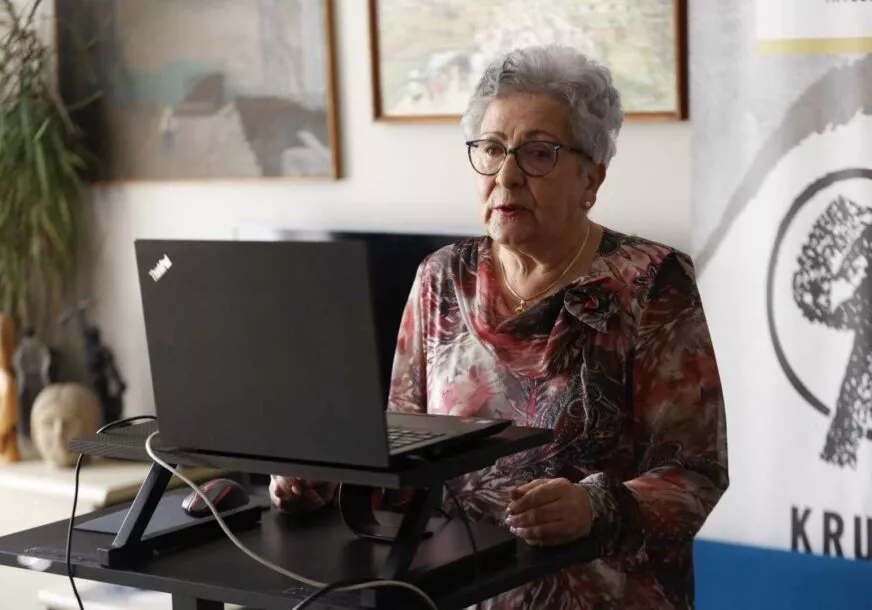
(Patria) - Azra Zornić, an applicant before the European Court of Human Rights, commented on the proceedings of the ECHR Grand Chamber in the case 'Slaven Kovačević v. Bosnia and Herzegovina'.
"As a member of the team involved in the public hearing before the Grand Chamber of the European Court of Human Rights in the case of Kovačević v. Bosnia and Herzegovina, I believe that the entire proceeding in this case is marked by serious procedural and institutional failures that undermine the integrity of the judicial process and open the door to justified doubts about the impartiality of the Court.
Illegal representation of BiH and interference of foreign actors
One of the key problems was the illegal representation of Bosnia and Herzegovina by agents who did not have valid authorization or consensus from the relevant authorities. This is contrary to Rule 35 of the Court's Rules and constitutes a serious procedural failure. Even more problematic is the involvement of the Office of the High Representative (OHR) in this case.
The OHR, which voluntarily joined as an interested party, has a direct interest in the outcome of the case because it has previously made decisions that are subject to legal challenges. Thus, the OHR acted as a political actor, not a neutral institution. The engagement of the law firm 'Blackstone Chambers', or rather their lawyer Timothy Otty, who represented the interests of the OHR in overturning the first-instance judgment in the Kovačević case, is particularly concerning. Timothy Otty not only represented interests that clearly favor the Republic of Croatia and HDZ BiH, but was also in a conflict of interest as a member of the Venice Commission. The Venice Commission has positions on the constitutional structure of Bosnia and Herzegovina that are completely contrary to those Otty advocated in this case. This further compromises the legitimacy of his engagement and raises questions about professional responsibility.
Unknown financing of the most expensive legal assistance
It has never been determined who financed the engagement of Blackstone Chambers, which further increases suspicion of political interference and manipulation of the proceedings. The engagement of one of the most expensive law firms in the world, without transparency about the source of funding, creates a feeling that the Court's proceedings are subject to the influence of powerful political and financial interests, thereby undermining confidence in the impartiality of the judicial process.
Influence of the Republic of Croatia and HDZ
The entire process is further compromised by the role of the Republic of Croatia and HDZ BiH. The OHR acted as an ally of HDZ BiH, advocating political positions that are in the direct interest of this party. The interference of the Republic of Croatia, which is not a party to the proceedings but has clearly influenced the course of the case through various connections and financial contributions, represents a serious precedent and jeopardizes the fundamental principle of impartiality. It is worth reminding that the Republic of Croatia donated 100,000 euros to the Court directly before the public hearing, which further strengthens the perception of political influence.
Composition of the BiH team
Bosnia and Herzegovina was represented in this case by a team composed almost exclusively of political representatives of HDZ BiH and one representative of SNSD, thereby completely excluding representatives of civic parties and those who would represent the interests of citizens outside the constituent peoples (the so-called 'Others'). This team composition did not represent the actual interests of the citizens of Bosnia and Herzegovina, but exclusively the political interests of certain ethnic and political groups. This further contributed to the illegitimacy of the proceedings.
Connection with the Zornić and Sejdić-Finci judgments
The Kovačević case has direct connections with the Grand Chamber judgments in the cases 'Zornić v. BiH' and 'Sejdić and Finci v. BiH', which established that the constitutional system of Bosnia and Herzegovina discriminates against citizens who do not belong to the constituent peoples. However, in this case, the Court departed from its own precedents, ignoring systemic discrimination and focusing on formalistic procedural aspects to avoid issuing a judgment that would have far-reaching political consequences.
Conclusion
The Grand Chamber's proceedings in the Kovačević v. BiH case are marked by the illegitimate representation of Bosnia and Herzegovina, unacceptable interference from foreign actors such as the Republic of Croatia and the OHR, and the engagement of lawyers in an obvious conflict of interest.
The Court has shown incredible inconsistency in relation to previous judgments and has ignored the systemic discrimination already established in the 'Zornić' and 'Sejdić-Finci' cases. Judge Faris Vehabović himself expressed disagreement with the Court's decision in the case concerning the electoral system of Bosnia and Herzegovina and constitutional limitations. His dissenting opinion points to numerous procedural and substantive shortcomings in the Grand Chamber's judgment of the European Court of Human Rights, particularly regarding the rights of the applicants and systemic discrimination in the country.
The question arises whether the Court consciously avoided confronting these issues to protect the political interests of certain actors. Transparency and impartiality of the judicial process are the foundation of trust in the European Court of Human Rights. Unfortunately, the way this case was conducted has left deep doubts about the integrity of the Court and its ability to deal with issues of systemic discrimination in Bosnia and Herzegovina. This is a serious blow to citizens' trust in the Court and its role in protecting human rights.
Komentari (0)
Prijavite se za komentiranje
PrijavaJos nema komentara. Budite prvi!
Minuta
Sve →Iz drugih kategorija

High Representative Not Elected: Germans, French and British Sabotaged Americans, New Attempt at End of June

ČOVIĆ WITHOUT MERCY: How Those Who Brought Ademović to Office Created a Political Hell for Him



Sunny Saturday, quite warm



Tragedy in Albanian resort: Two minors drown












