
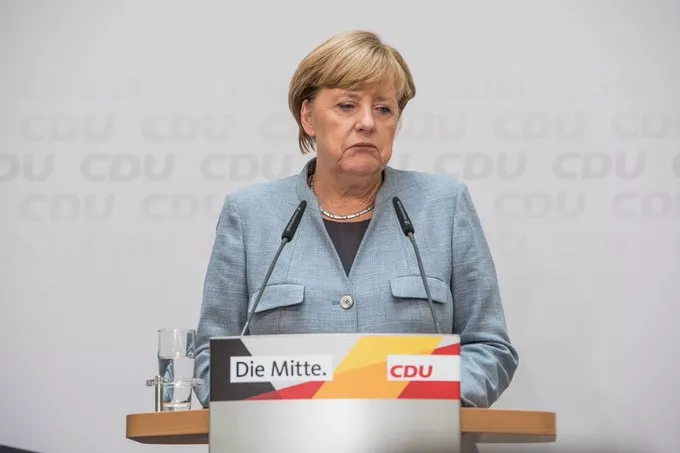
(Patria) - Dayton, which severely damaged the Bosnian soul and amputated the country, saved the state of Bosnia and Herzegovina, but turned it into a cripple. There are no solutions without those who made Daytonistan out of it, believes CDU politician Stefan Schwarz.
The war in Bosnia left a lasting impression on Angela Merkel, causing helplessness, disbelief, and anger in everyone. A few days ago, she called for "more empathy" for Bosnia and the Balkans. Last week, reflecting on the latest (refugee) crisis, she spoke of the "bad situation" in Bosnia, writes DW.
The Chancellor has repeatedly tried to cut the Gordian knots in the Balkans, but without success. Why has this not succeeded in Bosnia for more than 25 years? Who, or rather what, is blocking all progress? What drives people to resignation and to flee the country?
One reason is that Europe, and Germany in particular, are not confronting the causes of the current situation in Bosnia. There is no will to confront their own mistakes. The cause of the situation in Bosnia is not, as cynics claim, that the country is paralyzed by too much nationalism. That is propaganda.
The problem is international tolerance towards war criminals and criminals. And their life insurance, which is called the Dayton Peace Agreement.
Even during the 1992 referendum, when I was in Bosnia for the first time as an international observer, extremists were present. Extremists threatened Bosnian Serbs to prevent them from voting in the referendum. After 90 percent of the population voted for independence, things became even more radical. Karadžić's armed paramilitary forces held us hostage at the "Holiday Inn" hotel in Sarajevo.
Only after enormous pressure from the USA on Milošević was the evacuation of representatives of the international community carried out. Bosnians became victims of the worst war in Europe since World War II. Just as Karadžić had announced to the "internationals".
NATO saved Bosnia so that it would not be erased from the map. The aggression and genocide, not only in Srebrenica in 1995 but already in 1992 in Prijedor, and in Foča and many other cities and villages of Bosnia, were stopped late, for hundreds of thousands of people - too late.
In Dayton in 1995, the war was indeed ended, but with an unforgivable mistake - a part of the country was left to war criminals as spoils. Too much consideration for Milošević, already a war criminal and president of Serbia at the time, led to the most brutal agreement of the 20th century in Europe. Perpetrators of genocide and war criminals received almost half the country as a "reward". Never in the 20th century have genocide and destruction been more rewarded. Acceptance of aggression, and even genocide, was considered completely unthinkable after Hitler, for political and moral reasons. Until the Dayton Peace Agreement.
Precisely because not only many diplomats but also politicians looked at Bosnia without compassion and empathy - but rather with arrogance and ignorance - the country was divided, which is true cynicism. Even German diplomats like Ischinger and Steiner participated in the division of foreign countries for the first time since World War II.
Thus, war criminals not only gained international recognition but also control over half the country, and with the Dayton Peace Agreement, they were given a mechanism to block all of Bosnia. No country in the world has three presidents. In no European country can decisions be blocked like this. Richard Holbrooke, the son of a German Jew who fled from the Nazis, brokered an agreement that excluded Jews from the BiH Presidency. In 1992, a tolerant Bosnia intended to celebrate 500 years since the arrival of persecuted Jews in Sarajevo. In 1995, through the Dayton Peace Agreement, this idea was perverted. The Dayton Peace Agreement turned Bosnia, a beautiful country with compassionate people, into a hopeless country.
Republika Srpska is controlled by corrupt war criminals and their supporters. The Federation is led by a corrupt clique. In all parts of Bosnia, citizens suffer under these corrupt elites. The life insurance for criminals is the Dayton Peace Agreement. The High Representative, who was supposed to impose the rule of law and reforms with his Bonn powers, has been degraded to the level of a timid eunuch. Mr. Inzko proves his irrelevance daily. The population, due to the Dayton Peace Agreement, is unable to free itself from war criminals and corrupt elites on its own. Bosnia must first free itself from Dayton in order to free itself at all: It must once again become Bosnia and Herzegovina instead of Daytonistan.
And this will not be possible without those who made Daytonistan out of Bosnia. What characterizes (almost) all Bosnians, namely openness and empathy for others, is not understood by diplomats. That is why Dayton, which severely damaged the Bosnian soul and amputated the country, became possible in the first place. The operation called Dayton saved the state of Bosnia and Herzegovina, but it turned it into a cripple.
And this can change. Angela Merkel bears great responsibility. The German Chancellor is the most powerful woman in the world; many listen to what she has to say. This most powerful politician in Europe could significantly help to avert the danger of renewed war in this part of Europe. She should combine her empathy with her analytical thinking skills and will. Only then, as Chancellor, would she leave behind true peace.
Stefan Schwarz (CDU) is a former member of the German Bundestag and director of the European Institute for the Balkans. He is an honorary citizen of Sarajevo and Goražde. Since the 1990s, he has been involved in German and European policy in the Balkans.
Komentari (0)
Prijavite se za komentiranje
PrijavaJos nema komentara. Budite prvi!
Minuta
Sve →Iz drugih kategorija

High Representative Not Elected: Germans, French and British Sabotaged Americans, New Attempt at End of June

ČOVIĆ WITHOUT MERCY: How Those Who Brought Ademović to Office Created a Political Hell for Him



Sunny Saturday, quite warm



Tragedy in Albanian resort: Two minors drown












