
By Rasim Belko
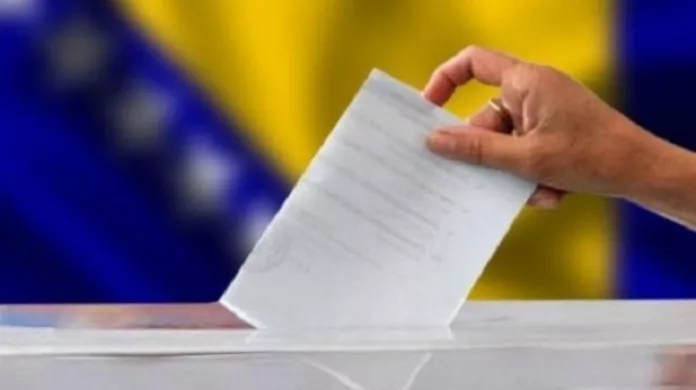
With another Local Elections approaching, in which we will elect representatives of our local communities, from councilors and mayors in municipalities to mayors and city councilors or assembly members.
The question is often asked what we have learned from previous local election cycles. How many times have we been deceived, and how many times have we deceived ourselves. The narrative of "I'm not voting," "I have no one to vote for," and "what will my vote change" has led us into various waves of problems in which we have been drowning for too long.
Through several articles starting today and in the period to come, we will analyze voter behavior and election trends, and point out how important it is for every citizen with the right to vote to respect that right, in order to enable themselves to realize other rights.
We will start with the Local Elections of 2008. Although these were not the first local elections in post-war BiH, this was an electoral process far less burdened by war and horrors. Not entirely unburdened, but a decade after the war, life was more normal.
Viewed from today's perspective, these were elections with a fairly good voter turnout.
Considering the continuity of low turnout that we have witnessed since, the Local Elections of 2008 can be characterized as successful in mobilizing the electorate.
Looking by entity, in the Federation of BiH, out of 1,833,639 eligible voters, 977,226 people voted. In percentages, this is 53.3 percent.
When it comes to the electorate of the smaller BiH entity, Republika Srpska, the turnout was even higher, amounting to 58.3 percent in percentages. In numbers, out of 1,110,280 eligible voters, 647,702 voters turned out.
Voters in Brčko District also did not lag behind their compatriots at that time. 58.7 percent voted, or 47,049 out of a total of 80,208 eligible voters.
In 2008, the turnout for the Local Elections in BiH was 55.3 percent. It was a time when the rays of democracy were increasingly warming the unstable political sky of BiH, but also a time when the first political parties outside of national enclaves began to emerge.
For example, in that year, a new option appeared on the political scene, Naša stranka, led by Oscar winner Danis Tanović.
A total of 414 political entities participated in the 2008 Local Elections (80 political parties, 273 independent candidates, 41 coalitions, and 20 lists of independent candidates).
For financing the pre-election campaign in accordance with Article 15.10 of the Election Law of BiH, political entities could spend 19,449,734.69 KM within the legally prescribed limit, of which political parties could spend 17,471,224.39 KM and independent candidates 1,978,510.30 KM.
Thus, parties and independent candidates spent 20 million KM in 2008. This is mostly our money, which they used to finance campaigns. Why then don't we turn out and elect someone who is financed by our taxes.
In terms of turnout, it was a successful year, but even that year, ethno-national parties dominated and won most municipalities and cities.
For example, in the campaign for those elections, SDA and Stranka za BiH spent a combined 1.7 million KM.
When it comes to larger cities, the results were: Bihać - (Hamdija Lipovača SDP), Banja Luka (Dragoljub Davidović SNSD), Zenica (Husejin Smajlović SDA), Doboj (Obren Petrović SDS), Tuzla (Jasmin Imamović SDP). SDA also won the elections for Mostar and Sarajevo that year, where the mayor is elected in the council.
But regardless of the results of ethno-national parties, the Local Elections of 2008 can serve as an example of what higher voter turnout means for Bosnia and Herzegovina and its citizens.
Because, while we complain that nothing is right, that life is hard, that we are persecuted and harassed, we let others choose and be elected, and to get jobs based on that. Given that there are fewer and fewer of us, it will be easier for the ethno-mafia elite to maintain political power.
A lesson we can certainly learn from the Local Elections is the example of Naša stranka, founded in Sarajevo, which won the mayoral position in distant Bosanski Petrovac and even 24 council seats.
It doesn't matter who is on the other side, what matters is how determined we are to defeat them and move forward.
In the coming days, through analyses of local elections after 2008, we will try to explain how Bosnians and Herzegovinians sank into electoral abstinence and gave additional strength to ethno-political mafias.
To be continued...
Komentari (0)
Prijavite se za komentiranje
PrijavaJos nema komentara. Budite prvi!
Minuta
Sve →Iz drugih kategorija

High Representative Not Elected: Germans, French and British Sabotaged Americans, New Attempt at End of June

ČOVIĆ WITHOUT MERCY: How Those Who Brought Ademović to Office Created a Political Hell for Him



Sunny Saturday, quite warm



Tragedy in Albanian resort: Two minors drown












