
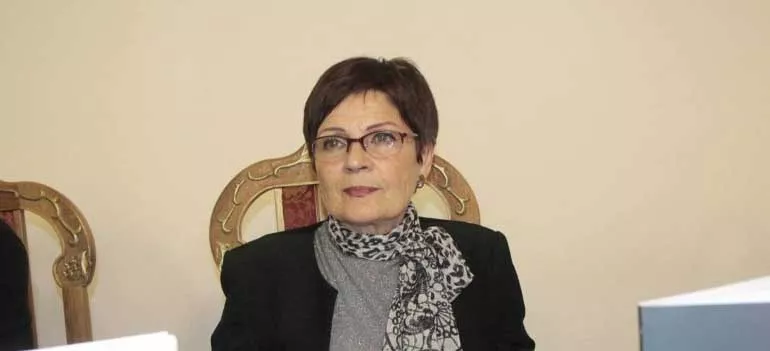
During the election campaign, which officially began on September 12, several events were used to raise national tensions, and the situation became further complicated when in RS the decision was made to change the name of the subject "Bosnian Language" to "Language of the Bosniak People". An analysis of these events for the BiH news agency Patria was prepared by Prof. Dr. Hanka Vajzović, a full professor at the Faculty of Political Sciences of the University of Sarajevo.
"In the heat of the election campaign, all sorts of things are done, all sorts of things are said, and all sorts of things are stated; many brazenly 'bend the truth' - either by omitting something or by boasting about things that the sincere would be ashamed of. All in all, parties are 'campaign-wise' occupied with themselves and their schemes on how to disqualify opposing camps in order to preserve power for another term. And that's fine, a campaign usually means a 'fight', albeit in a competition of who is better (in our case: who will make the opponent worse without the rules of the game or completely defeat them with 'low blows'), so it is usual and (if the end justifies the means) probably legitimate to praise oneself and criticize others. It is allowed, although not always nice, honest, or even wise if one goes too far in the fervor of incitement or pathos. A campaign practically always has four main directions of action: say, take a picture, do, promote - announce and publish! So, these days we are witnessing boasting, promises, slandering others, and shouting already worn-out, so often repeated slogans from improvised podiums in villages, towns, or 'packed' local community halls across the country. For a change, some (richer in ideas) are photographed cleaning the area by the roadside, visiting the disabled, hugging people, loudly applauding (convenient for YouTube) those repeated slogans of their leaders or prominent candidates, hastily building and cutting ribbons, claiming credit for adopted laws, quickly erecting crosses, announcing that they will do many more things in the remaining 15 days (and the sky will supposedly finally return to us) - and many other things that they 'didn't get around to' in four years or significantly more years. Such is the campaign - it has everything and everything somehow became normal for us.
Even for a campaign, it's too much
Nevertheless, even a campaign does not always mean the usual, seemingly socially and politically 'harmless' rhetoric in which more attention is paid to *who* says something than *what* is said, or when we don't like it, we equate it with 'barking that the wind carries' and 'caravans that pass by'. What has been happening in the field of education in RS in recent days (which has really intensified during the election period) seems to be 'a little' too much and 'a little' too dangerous, especially since it is ongoing and not just rhetorically ugly, and it's not just some political party doing this this time, even though it's suspected that it's not excluded. On the contrary, we are talking about unconstitutional and discriminatory institutional action (Ministry of Education and Culture of RS) which is socially and politically even more dangerous if it is nationally motivated. Because nationalism in our country (although, compared to previous years, it seems to be in significant decline) is still, unfortunately, a significant political and promotional tool for many, a 'Hepokockica' when it's needed for quick and effective incitement of broad masses, especially during election times. The problem, of course, is the fact that nationalism by no means means harmless devotion to one's nation, but necessarily implies loyalty *measured exclusively by the degree of shown hatred and intolerance towards others*. For these reasons, discriminating against 'the others' becomes an invaluable proof of love for one's own and a very effective means of achieving political goals.
"Sincere" Nationalism or Political Provocations?
So, I am not claiming that the attitude of the authorities in RS towards the non-Serb population is always, exclusively, primarily, and sincerely nationally motivated, but it is always useful to maintain continuity and give 'one's own' a good impression of tireless care for their own nation. Therefore, it could be said that some of the previous moves (there will certainly be more) are politically or pre-election tactically pre-designed concepts of the ruling elite in RS, especially since we know that the struggle for power has largely shifted from inter-ethnic to intra-ethnic inter-party conflicts, so it is not superfluous to stir up nationalism if one wants to present oneself as the protector of the nation. However, the fact that there was much, much more nationalist activity in the past should by no means include the traditional 'foolish logic' of our common people: *it's good, things could be worse, as long as there's no shooting!*
When it comes to nationalist pre-election activities, I am not referring this time to provocations like installing some 'cross-wise' placed concrete beams on Zlatište above Sarajevo. No, because compared to what I am talking about, that might not even be worth reacting to, since someone (not state institutions), clearly with the aim of inter-ethnic or inter-religious incitement for political or pre-election purposes, actually first mocked themselves and their own attitude towards Orthodoxy, which they supposedly defend with that improvised cross. No, here I am referring to the behavior and actions of state (entity) institutions (Government of RS). This is a state problem, a violation of constitutional provisions and international norms in the field of human rights, because the campaign will come and go, but such consequences could remain. Of course, the motives here, as in the case of the Trebević so-called cross, were probably the same or very similar: *provoke to awaken nationalism, and then show yourself as loyal to the nation!* Or: *divide and conquer!*
What are the troubles of Bosniak students in RS?
It all started at the beginning of the last school year (2013/14) with problems faced by parents and their children from Konjević-Polje and some other Podrinje villages. They objected that in RS, where they live as returnees, they were denied the right to the so-called national group of subjects, i.e., the right to attend classes in their mother tongue, Bosnian, and even (as parents stated at the time) not even in the local - Bosnian-Serbian, but in some places even in 'imported' ekavian (teaching staff from Serbia) which additionally caused them problems in understanding the content. When they failed to exercise their rights to their mother tongue (rights that are strived for by national minorities in the civilized world, let alone the so-called constituent peoples) through regular channels (in RS or in the local community), the parents, with their disenfranchised children, decided to seek justice in Sarajevo. They waited for three months, living in very difficult winter conditions under somehow 'cobbled together' tents set up across from the OHR. The outcome of their demands was, we remember - they suffered in vain! The children lost the school year, and nothing was resolved. In the meantime, the parents did not give up - they tried to somehow improvise education for the children and continued to patiently and persistently seek their rights. Despite everything, the response of the entity authorities to the Bosniaks' demands was relentless, and it could be roughly summarized as follows: NO, you do not have the right to ask for that, we will not comply, it is not in accordance with our (entity) constitutional provisions and laws, and if you continue to insist, you will see who is in charge. We will find adequate legal grounds if necessary (as we did with the Law on Residence!), because you are on our (entity) territory (that 49% of the country) and you will behave as we dictate, and if you don't like it, there's the Federation.
National group of subjects - what for and how for whom?
Now, it's another matter or (sub)question who, when, and why introduced that so-called national group of subjects? However, if this is our reality for now (what is - is), then at least the equality of rights of all three constituent peoples should be respected, not to mention the absence of any rights for the non-constituent, in various ways disenfranchised 'Others' citizens, because we would come to a new (sub)question related to constitutionality and again the same thing: why, what for, for whom, and how? It is clearly not advisable to talk about the latter in our country, but we could agree on some aspects regarding the national group of subjects.
So, if there were luck and a normal country, would geography need to be interpreted ethnically separately (both within and outside the borders of our country) or reduced to the question: Is Sarajevo where it used to be? Shouldn't (h)istory seek facts, rather than interpret the past with one's own truths and ethno-political interests? Isn't it more important for everyone to read everything (domestic and foreign) and offer schoolchildren age-appropriate program content, rather than insisting on claiming writers and ethnically interpreting 'what the writer meant to say'? Doesn't Bosnia and Herzegovina constitute a linguistic community, a communication space regardless of the three names of languages and three accompanying linguistic norms, if we know that the differences (such a small percentage of differential features) are expressed in the traditional richness of synonymy and do we need to translate for anyone here? Of course, if there were a (normal) country like this one isn't, and if we looked at language like all normal peoples, primarily as a 'basic means of communication among people', there would be linguistic tolerance: we would all know everything and no one's freedom of individual choice would bother anyone. Then there would be no such difficult topics and questions, but, by God (and that's the key to the problem): nor would there be room for scoring nationalism for political and pre-election purposes. Admittedly, problems in education are not, to be honest, necessarily present and current only in RS, although they are clearly more drastically expressed there. Because, when it comes to education, the story of 'two schools under one roof' is not far from this story, but what has happened in the Republika Srpska regarding the issue of language before the start of this school year (exactly a full calendar year since the beginning of the troubles of RS Bosniaks and their three-month protests in front of the OHR) - truly seems like unprecedented nationalistically tendentious discrimination.
In the continuation of the analysis, which the BiH news agency Patria will publish on Monday, Prof. Dr. Hanka Vajzović recalls the discussions about language and debates on official languages in RS...
Komentari (0)
Prijavite se za komentiranje
PrijavaJos nema komentara. Budite prvi!
Minuta
Sve →Iz drugih kategorija

High Representative Not Elected: Germans, French and British Sabotaged Americans, New Attempt at End of June

ČOVIĆ WITHOUT MERCY: How Those Who Brought Ademović to Office Created a Political Hell for Him



Sunny Saturday, quite warm



Tragedy in Albanian resort: Two minors drown












