
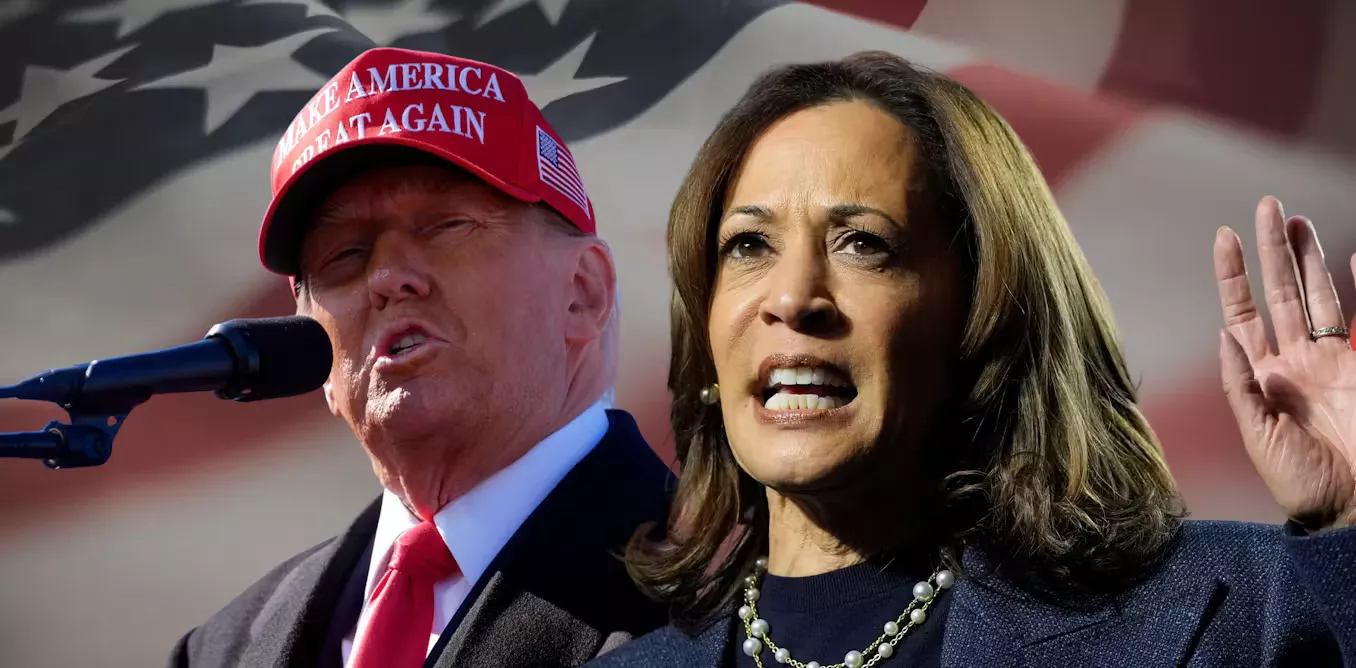
(Patria) - The US presidential election is heading towards its finale on November 5th, with millions across the US having already cast their votes. This marks the end of one of the most uncertain election campaigns in the history of this country. Polls indicate that every vote could be crucial in the race between Democratic candidate Kamala Harris and Republican candidate Donald Trump.
As election day approached, messages from both campaign headquarters suggested that these might be the last elections if the opposing side wins, which surely served as an alarm for many Americans.
Those who support Kamala Harris and US President Joseph Biden have argued that Trump would destroy American democracy and permanently change the country, seeking to rule without limits. Trump and his supporters claim that a victory for Kamala Harris and the "radical left," as they call her platform, would mean the end of fair elections, the introduction of censorship on all social media, and the opening of borders to millions of illegal immigrants.
However, even such strong rhetoric may not be decisive. The events of this election campaign, which began much earlier than is typical for American politics, unfolded at such a rapid pace that it is now difficult to recall them, let alone chronologically track them.
Patria News Agency began following the campaign in August of last year through analyses, and before and after that, in hundreds of news reports and dispatches. You can review these analyses by clicking on the links below.
We started with the Republican primaries and the state of the American right, and continued with the intention of some states to remove Trump from the ballots, the attempt by a part of the Republican establishment to have Nikki Haley defeat Trump, the differences in Biden's and Trump's policies, Trump's victories in court and in the Republican primaries in March, Biden's State of the Union address, which prepared the ground for a showdown with Trump, Biden's political defeats on the domestic and foreign policy fronts, Trump's and Biden's debate, which took the current president out of the race for the White House, Robert F. Kennedy Jr.'s campaign as an independent candidate, the first assassination attempt on Trump in the town of Butler, J.D. Vance's entry into the race as the Republican vice-presidential candidate, Kamala Harris's entry into the race instead of Biden, Tim Walz's entry into the race as the Democratic vice-presidential candidate, Trump's attempt to influence young voters and in areas where he hasn't sought them before, the debate between Trump and Harris, and concluded with a report on the second assassination attempt on Trump in Florida.
Seven States Will Decide the Winner
With so many events in one campaign, it is clear that there are numerous indicators influencing the election outcome, and Americans face several days of uncertainty. Many believe that the election results might take longer than usual to be announced, as Harris and Trump are in a dead heat. Other candidates are not being seriously considered, as they have no chance, except theoretically, of winning the election.
Some polls give Harris an advantage, while others favor Trump. The most relevant polls suggest that Kamala Harris will receive more votes nationally, but this does not guarantee a final victory.
The winner of the election will be decided by the states of Arizona, Georgia, Michigan, Nevada, North Carolina, Pennsylvania, and Wisconsin, which have 11, 16, 15, 6, 16, 19, and 10 electoral votes, respectively. The goal is to win 270 electoral votes. Harris effectively has 225, and Trump has 219 before the election even began, from so-called "blue" and "red" states. There are exceptions, as Maine and Nebraska divide their four and five electoral votes between candidates, meaning the winner does not take all electoral votes. It is predicted that neither candidate will win all electoral votes in this election. Harris needs 45 electoral votes in the swing states for a final electoral victory, and Trump needs 51. The total number of electoral votes at stake is 538.
In this election, these are the so-called swing states or "undecided states," which vote differently from one election to the next. Even in these states, polls show the difference between the two candidates is almost within the margin of statistical error, with different winners predicted.
The importance of these elections for Americans and the political and business elite is highlighted by the fact that Kamala Harris has raised over a billion dollars for her campaign since July, while Trump has seen record inflows of small donations after being convicted in one of the cases against him.
In the shadow of the presidential election, elections for legislative bodies have been overshadowed. On November 5th, Americans will elect all members of the House of Representatives (the lower house, often called Congress) for a two-year term, and one-third of the members of the Senate (the upper house) for a six-year term.
These elections can be as important as the presidential election, as they can significantly tie the hands of the occupant of the White House. Recall Trump's problems with congressmen and senators during his term in the White House. Unlike the polls for the presidential election, the polls for the legislative bodies are much clearer. The Senate is currently controlled by Democrats, and the House of Representatives by Republicans. After these elections, it is expected that these roles will be reversed.
Finally, let's revisit the polls and predictions about who might be the next president of the United States. Due to the results of surveys on the popularity of both candidates, many are hesitant to predict the final winner. Except for one man, who has developed his own tool for predicting the outcome of US elections.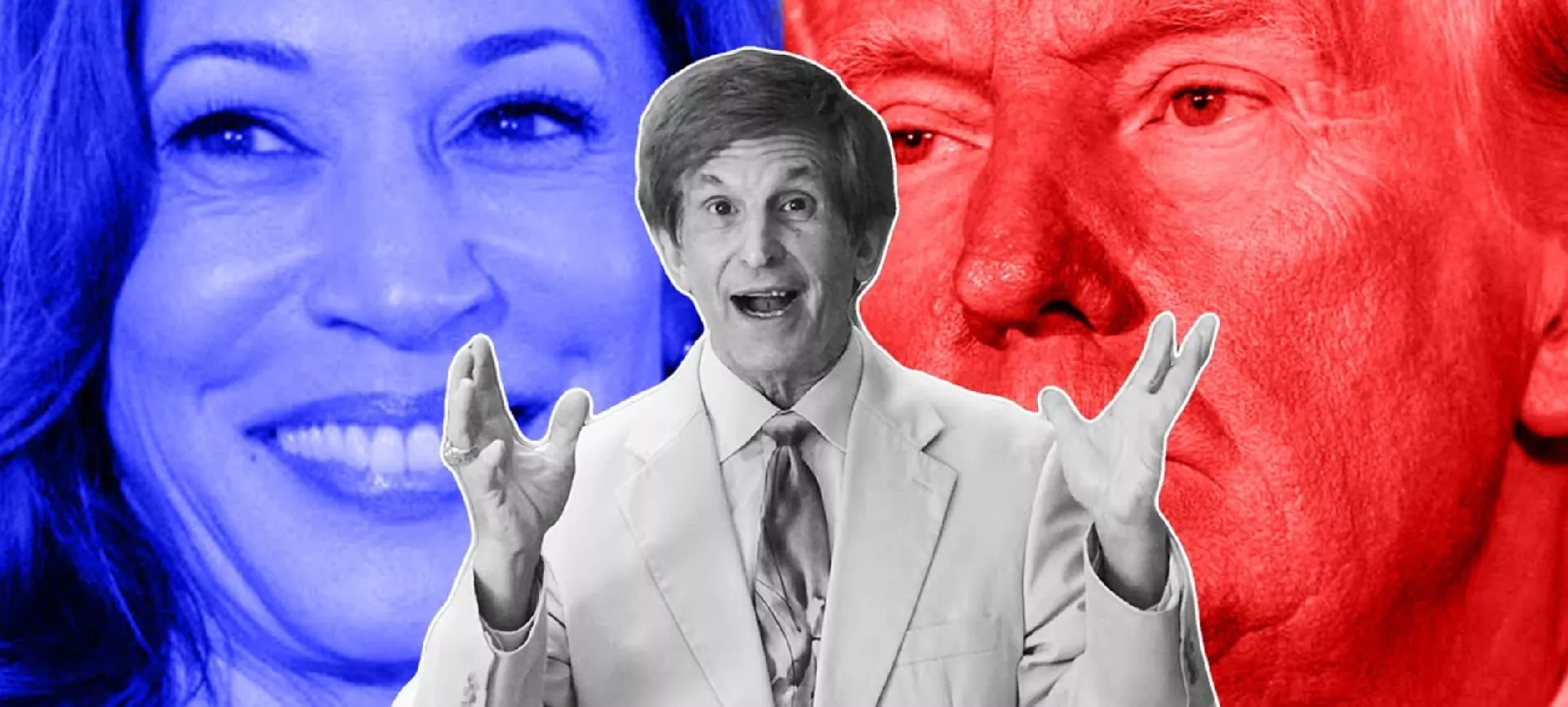
Lichtman: Has predicted the outcome of all US presidential elections since 1980
Since 1980, Professor Allan Lichtman has predicted the outcome of all US presidential elections. Vladimir Isaacovich Keilis-Borok, a renowned seismologist, also worked on developing this tool. They developed "thirteen keys" to the White House, or statements that are answered affirmatively or negatively, and based on them, the election winner is determined. Professor Lichtman has also made his assessment this year and stated that Kamala Harris will be the winner of the election. Trump and his supporters surely disagree with this and believe that Professor Lichtman will be wrong this time.
Komentari (0)
Prijavite se za komentiranje
PrijavaJos nema komentara. Budite prvi!
Minuta
Sve →Iz drugih kategorija

High Representative Not Elected: Germans, French and British Against Americans, New Attempt at End of June

ČOVIĆ WITHOUT MERCY: How Those Who Brought Ademović to Office Created a Political Hell for Him



Sunny Saturday, quite warm



Tragedy in Albanian resort: Two minors drown












