
(Patria) - The United States (US) has 398 active sanctions against individuals, companies, and organizations from the Western Balkans, as of January 31, 2025, according to research by Voice of America.
By far the largest number of sanctions apply to Bosnia and Herzegovina - 177, followed by Serbia (80), Kosovo (60), North Macedonia (46), Albania (23), and Montenegro (11). One punitive measure applies to a person from Croatia.
VOA has created the first searchable database that includes all sanctions imposed by the Office of Foreign Assets Control of the US Department of the Treasury (OFAC) and sanctions imposed by the State Department between 2017 and 2024.
- Sanctions are one of the most important tools of US foreign policy. They give us the ability to deal with hostile actors and to put pressure on those we want to make a specific political decision - says Richard Nephew, a sanctions expert who was recently the State Department's coordinator for global anti-corruption efforts.
John Smith, former director of OFAC, says that the primary goal of US sanctions is "to prevent and stop certain concerning activities and to make individuals change their behavior." He adds that most US sanctions, including those for the Western Balkans, are not directed at entire countries, but at individuals and organizations.
The US has primarily imposed sanctions on the Western Balkans in two periods. Between 2001 and 2004, they were imposed due to war crimes, destabilization of countries, and threats to peace after the breakup of Yugoslavia.
After a longer period with only a few sanctions per year, these foreign policy measures became relevant again from 2021, and mainly relate to corruption, threats to peace and stability, and Russia's invasion of Ukraine.
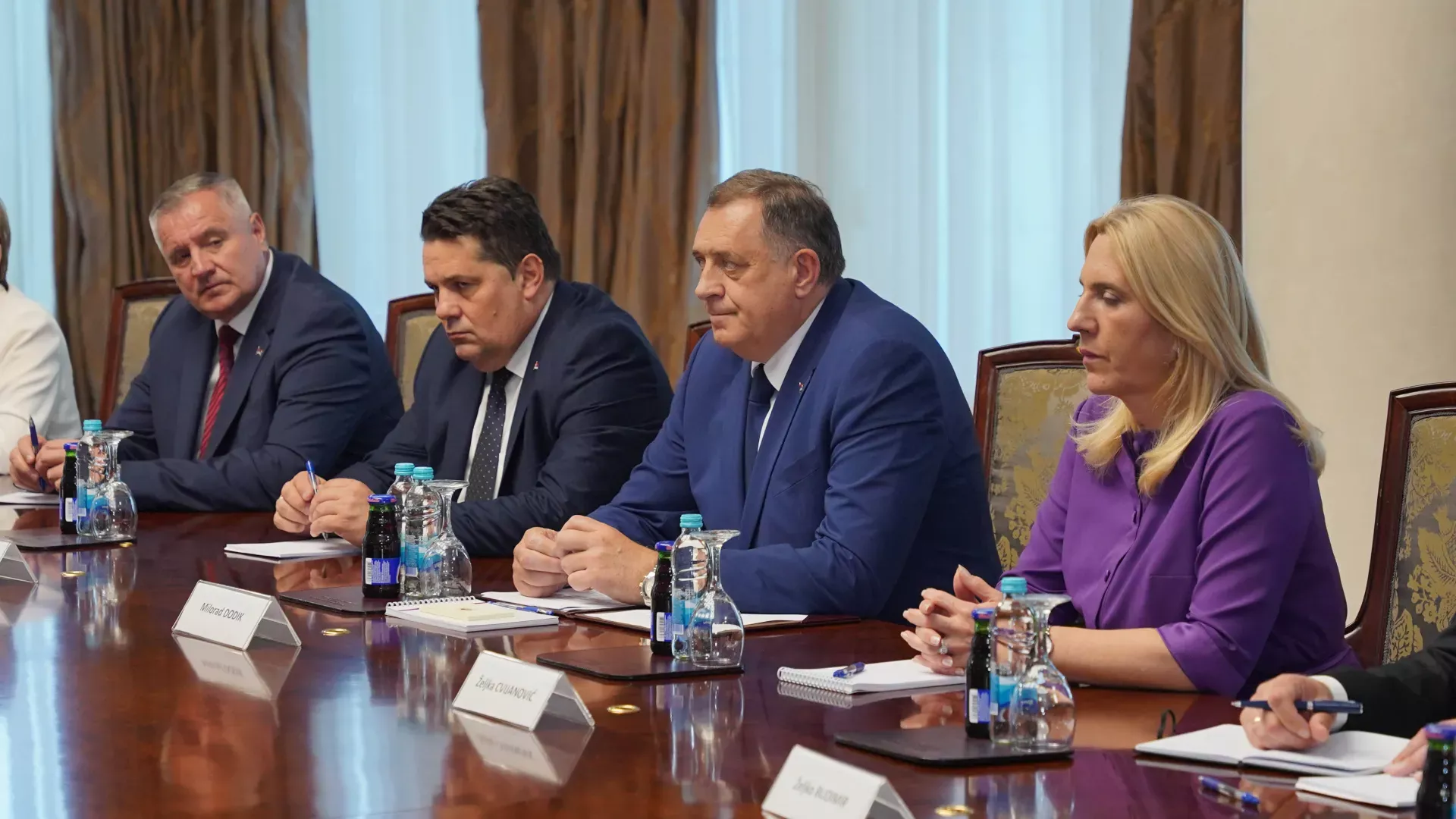
Among others, numerous high-ranking officials have been sanctioned in the past four years, such as the President of Republika Srpska Milorad Dodik, ministers in the Serbian government Aleksandar Vulin and Nenad Popović, former Prime Minister of North Macedonia Nikola Gruevski, former President of Serbia and Montenegro Svetozar Marović, and former Prime Minister of the Federation of BiH Fadil Novalić.
- In the past few years, we have seen many different actors in the Western Balkans who threaten the stability of the countries in the region. They can do this in various ways, by undermining democratic processes, threatening human rights, or being involved in corruption that drains these countries - says Nephew, who is now a senior researcher at Columbia University.
VOA has determined that the remaining sanctions for the Western Balkans are most often imposed due to terrorism, organized crime, and drug trafficking.
Dodik and Associates
Ever since the wars in the former Yugoslavia, US presidents renew the state of emergency for the Western Balkans region every year, which facilitates the maintenance of old and the introduction of new sanctions. Sanctions are also imposed for reasons that threaten US national security, based on legal acts or presidential decrees.
The majority of sanctions in the VOA database were imposed by OFAC - 341 - and they are classified into different lists. The largest is the "Balkans" list with 152 individuals and 16 companies and organizations.
Among others, it includes war criminals Radovan Karadžić, Veselin Šljivančanin, Milan Martić, and Ratko Mladić, members of Slobodan Milošević's family, as well as organizations such as the Chetnik Ravna Gora Movement and the Kosovo Liberation Army.
All sanctions on the "Balkans" list - except for Milorad Dodik - were imposed between 2001 and 2004.
Dodik was first sanctioned in January 2017 for obstructing the Dayton Peace Agreement, and he was the first official from BiH to be sanctioned based on Executive Order EO 14033 in January 2022. The reasons cited at the time were undermining BiH institutions, working to create parallel institutions in RS, corrupt activities, and ethno-nationalist rhetoric.
Including Dodik, OFAC's EO 14033 list includes a total of 76 individuals and legal entities, mostly from BiH - and mostly Dodik's associates and family members. Among them are BiH Presidency member Željka Cvijanović, Dodik's children Igor and Gorica, as well as a number of individuals and companies with whom they are associated.
Sanctions on that list were imposed based on the executive order of the same name, by which then-US President Joe Biden expanded sanctions authority in the Western Balkans in June 2021. In addition to threatening stability and peace agreements, "widespread corruption" was mentioned for the first time as a potential reason for US punitive measures.
At a press conference on January 23, 2025, Dodik stated that US sanctions have proven to be unsuccessful and meaningless. However, events over the past 12 months do not entirely support this claim.
Since US authorities warned banks in BiH in March 2024 that they should not do business with sanctioned individuals and companies, banks have begun closing their accounts. One of the consequences is that officials, including Dodik, can no longer receive salaries.
- Part of our goal is to warn banks that there are bad actors and that they must be concerned about it and risk being exposed themselves (to sanctions). Many of these banks may not have an opinion about a particular individual, but they have an opinion about their ability to access the US financial system. That is a power we can use - explains Nephew.
Smith, now a partner at the law firm Morisson Forester, responsible for national security, says this is common practice: "Even during my time at OFAC, we would travel around the world and advise banks and other reputable companies not to do business with those who are sanctioned".
In an attempt to circumvent punitive measures, new companies were opened in RS with different names and similar or identical ownership structures to those under sanctions. However, US authorities have actively uncovered such attempts and imposed new sanctions.
On January 18, 2025, Gorica Dodik announced on X that she was closing the restaurant "Agape" because its accounts were closed, making it impossible to pay employees. The company "Agape" was sanctioned in October 2023, and in December 2024, OFAC also added the company "Best Service" to the list, stating that it was "registered at the same address as 'Agape', and like 'Agape', it operates in the restaurant and food service sector in RS".
- There are multiple consequences. We have a large number of companies where people have lost their jobs, which have ceased operations precisely because their accounts were closed.
What I would say as a positive effect that we can expect only in the long term is that it will become increasingly difficult for the corrupt regime to ensure the obedience of its party colleagues, who will likely have to think more carefully when entering into certain "deals" or making certain decisions, that they truly cannot be protected in that regard from facing sanctions and suffering consequences such as the inability to have a bank account and the inability to conduct financial business - says Ivana Korajlić, Executive Director of Transparency International BiH.
How Often Does OFAC Update Data
OFAC data is not always complete and accurate, so some names are misspelled, and for many older sanctions, the country is not listed or, for example, it says "Serbia and Montenegro." In such cases, VOA added data to its database based on the place of birth or the country where the individual or company conducted the activities for which they were sanctioned.
OFAC occasionally - but not regularly - updates the data on its lists, for example, when a person on the list dies or when other reasons for lifting sanctions arise.
Slobodan Stanković, once one of the most powerful businessmen in BiH, was sanctioned in October 2022 for supporting Milorad Dodik and "connections to corruption." He died in February of the following year, after which OFAC removed him from the list.
A reason for removal from the sanctions list can also be a court decision. Aleksandar Karadžić, son of Radovan Karadžić, was removed from the "Balkans" list after suing OFAC.
State Department Sanctions and US Entry Ban
In addition to the "Balkans" and EO-14033 lists, the largest number of individuals from the Western Balkans sanctioned by OFAC are on the "GLOMAG" (52) and "Russia-EO 14024" (18) lists.
GLOMAG sanctions are imposed for human rights abuses, corruption, and crime, based on the Magnitsky Act, named after lawyer Sergei Magnitsky, who died in a Russian prison after investigating potential tax fraud. This list includes companies and individuals from Serbia and Kosovo.
For example, in December 2021, Zvonko Veselinović was sanctioned, whom the Treasury Department identified as the leader of an organized crime group and "one of the most notorious corrupt figures in Kosovo".
Milan Radoičić, former vice-president of the Srpska Lista party, against whom Kosovo authorities filed charges for terrorism and undermining the constitutional order of Kosovo in 2024 due to the attack on the police in Banjska, was also included on the same list at the time.
Smith points out that corruption as a reason for sanctions began to be cited precisely during the adoption of the Magnitsky Act in 2012, "when the government realized that if you have corruption, it often leads to many other related concerns, often where officials or those connected to officials steal resources from the state or unfairly exploit their positions".
According to him, another reason why corruption is increasingly used as a reason for sanctions is that it is easier to prove because it is regulated by law: "Most countries do not allow you to steal public funds or abuse your positions, so it is easier for people to understand what kind of sanctions these are".
Sanctions from the "Russia-EO 14024" list were imposed due to Russia's invasion of Ukraine and support for Russia's harmful activities against the US and its partners, including assistance to the Russian military industry and violations of international law.
The most prominent name on that list is Naftna industrija Srbije (NIS), included on January 10, 2025, as a subsidiary of Russian Gazpromneft. NIS requested a 90-day deferral of sanctions from OFAC in early February.
Sometimes OFAC and the State Department impose sanctions concurrently, for example, in the cases of former director of the Intelligence and Security Agency (OSA) of BiH Osman Mehmedagić or former director of the secret service of North Macedonia Saša Mijalkov.
Unlike OFAC measures, which primarily relate to the prohibition of economic and financial activities and asset freezes, the State Department bans sanctioned officials and their family members from entering the US, based on Section 7031(c) of the State Department Appropriations Act.
The VOA database includes 57 such State Department measures.
Nephew explains that both US institutions imposing sanctions on the Western Balkans follow a similar process. This includes gathering information, proving the case, determining that sanctions can be imposed in accordance with US regulations, consulting with other segments of the government, and considering the type of sanctions, and finally, making a decision.
According to him, the process can sometimes be quick - as in the case of imposing sanctions on the Gaddafi family in Libya, which took about 12 hours - and sometimes it can take a very long time "because it is harder to find evidence, there is disagreement on the legal basis" or for other reasons.
- I don't know if there is a perfect average, but I think you can always assume it will take at least a few months, three or four months or something like that - says Nephew.
How Effective Are Sanctions?
When imposing sanctions, the stated consequences most often include a ban on entering the US, freezing of assets and businesses in the US, as well as a ban on doing business with US companies and citizens.
Given that sanctioned individuals from the Western Balkans often do not have assets or financial interests in the US, and that in many cases they continue to participate in public life, run for and win thousands of votes in elections, and hold important positions, the effectiveness of sanctions is often questioned in public.
Ruggero Scaturro, a senior analyst at the Global Initiative Against Transnational Organized Crime, is one of the authors of a report on the effectiveness of sanctions in the Western Balkans, published in December 2024. He tells VOA that the impact of sanctions is not the same in all countries.
For example, Scaturro says, in Albania and North Macedonia, there have been situations where ruling politicians and parties have distanced themselves from sanctioned individuals to protect their own reputation.
- Conversely, in countries like BiH and Serbia, we have definitely identified completely different scenarios, where individuals have advanced to high ministerial positions and more important roles than they had when they were sanctioned - adds Scaturro, noting that this contributes to the perception that US sanctions have limited effectiveness.
Aleksandar Vulin was added to OFAC's EO 14033 list in July 2023, when he was head of the Security Information Agency of Serbia (BIA), for "involvement in transnational organized crime, illegal drug operations, and abuse of public office".
In November, he resigned, stating it was a concession to avoid Serbia being blackmailed by the US and the European Union. However, in April 2024, he became Deputy Prime Minister of Serbia.
Scaturro says his analysis has shown that many sanctioned individuals abuse this and "portray themselves as victims of political discrimination by the US or the UK," while in countries like BiH, public support for sanctioned individuals sometimes even grows, "especially when sanctions are viewed as politically motivated or unfair".
Korajlić states that in BiH, the justification for sanctions for corruption is generally not questioned, "except in the part where there is a clear perception that not everyone who should be covered by these sanctions is covered," but sanctions for destabilization and non-compliance with the Dayton Peace Agreement are manipulated, and officials present them "as an attack on the entire nation".
According to her, before banks started closing accounts, sanctions were considered a kind of public warning: "Only then was it taken seriously in a way, and only then did it have effects, if nothing else, at least a warning for future decisions that any public official might make".
Sanctions have not significantly changed the behavior of Dodik and his supporters. For example, RS officials have continued to celebrate Republic Day on January 9, even though the Constitutional Court of BiH has ruled it unconstitutional twice, which is why some sanctions were imposed.
- The simplest way to put it is that we use sanctions to change behavior. If you impose sanctions on a person involved in terrorism, you want them to stop being a terrorist and engaging in terrorism. Most likely, they will not do that. So, there is another goal, which is to make it harder to engage in terrorism - says Nephew.
Voice of America's interlocutors state that one of the consequences of US sanctions should be the reaction of local institutions, which would potentially conduct investigations into the allegations in the sanctions' justifications. In practice, this rarely happens.
In September 2024, Transparency International BiH filed a lawsuit against the BiH Prosecutor's Office for withholding information on whether the prosecutor's office had investigated OFAC's allegations of officials' involvement in corruption.
- Ultimately, individuals can often act without concern for legal or even reputational consequences. Sanctions can bring about some form of behavioral change, but their success is truly limited by local political dynamics - says Scaturro.
Nephew says it is sometimes simply important to label "some of these individuals as corrupt actors." He adds that in Albania there have been cases where authorities have investigated sanctioned individuals, and this shows that a US punitive measure "may not have significant financial consequences for a bad actor, but it can have a much broader impact on a particular country and judicial system".
Voice of America's interlocutors agree that US sanctions would be more effective if the European Union also imposed them, as officials and companies have assets and financial interests there, and also travel to European countries much more frequently.
However, EU member states have not yet agreed on sanctions for the Western Balkans. For example, Hungary and its Prime Minister Viktor Orbán oppose sanctions against Dodik, even though the European Parliament has proposed them.
Komentari (0)
Prijavite se za komentiranje
PrijavaJos nema komentara. Budite prvi!
Minuta
Sve →Iz drugih kategorija

High Representative Not Elected: Germans, French and British Sabotaged Americans, New Attempt at End of June

ČOVIĆ WITHOUT MERCY: How Those Who Brought Ademović to Office Created a Political Hell for Him



Sunny Saturday, quite warm



Tragedy in Albanian resort: Two minors drown












