
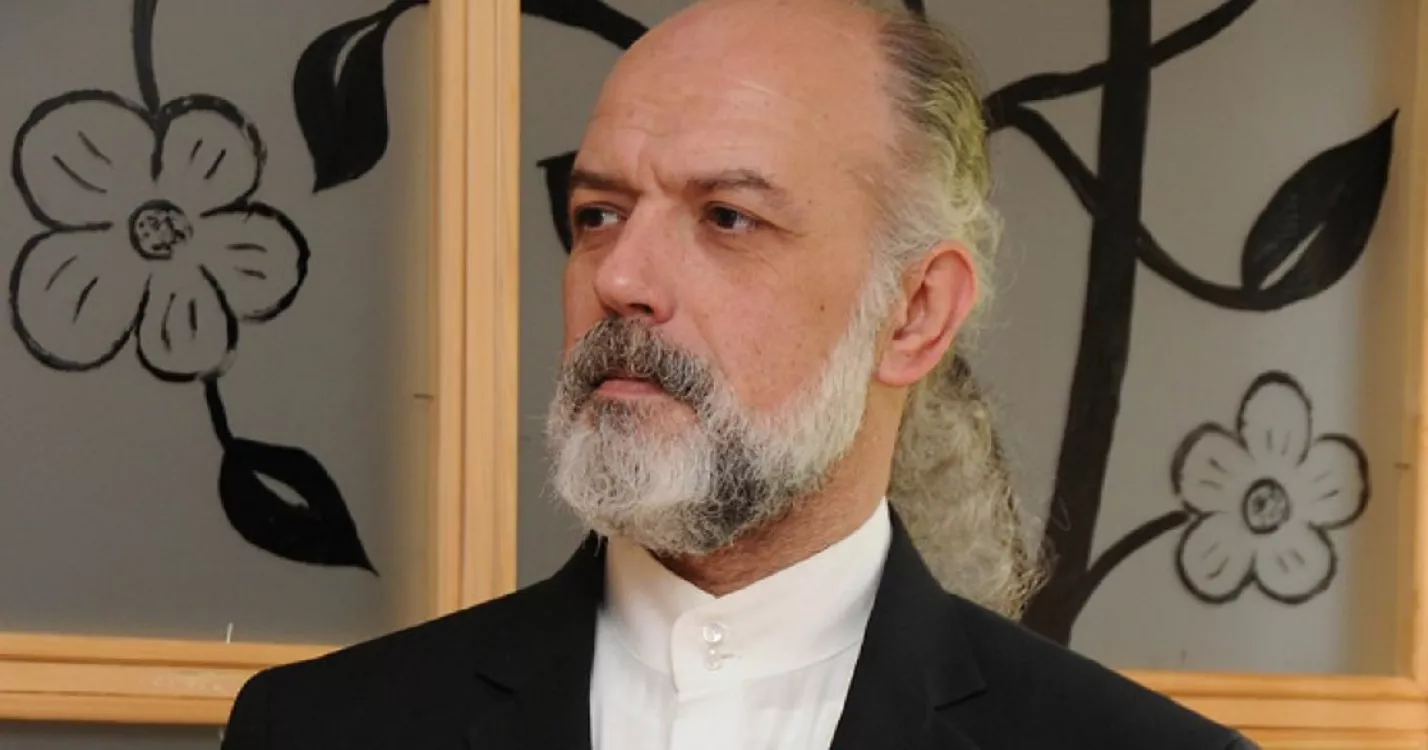
Written by Edin Urjan Kukavica
I must admit that the regular, traditional, annual gathering of Chetniks in Višegrad was full of surprises this year... First, the number, intensity, and content of reactions and condemnations, and calls for action from domestic freeloaders and the shock and unrest of international hypocrites surprised me... I was also surprised that so many people are surprised that Chetniks are Chetniks! And I am surprised by the surprise of BiH officials that there are Chetniks in BiH... and autochthonous, legitimate, legal, and registered ones...
Firstly, Chetniks have been gathering for decades at the same time and place, and for the same reason... and they would line up, although this year they are a bit more uniform than in previous years, lay a wreath under some "monument", visit the place where the greatest (Chetnik) was captured thanks to the betrayal of the second greatest (Chetnik)... the current (Chetniks) would remember the glorious past of the then (also Chetniks)... then they would salt their rakija with tears, toast the dead and the living, compete in adding the adjective "Serbian" to everything possible (water, air, sky...), in the meantime they would get drunk and often argue with their fists about who was the greater (Chetnik) and who betrayed whom, and whether (Chetniks) were fascists or anti-fascists, and in the dead of night – as befits (Chetniks) – they would disperse and drive off until next year. All in all... typically (Chetnik), brave when in a crowd and when there is no one armed except them, when they can kill, burn, rape peacefully, and no one shoots at them, and so on... all autochthonous, legitimate, and legal.
And all of this would somehow always go "under the radar"... True, there would be some media and diplomatic reactions, condemnations, and outrage, but never this much and never this "fierce", and that – with accumulated experience regarding making a fuss about anything – gives me reason to be skeptical.
Secondly, the legal basis for registering "associations of citizens" that will gather, organize, and assist bearers of all sorts of idiocies is embedded in the very foundations and roof of this, let's say, state... in its Constitution, just as the possibility of relativizing and rehabilitating anyone's crime is embedded in the same Constitution, and reactions like those we have been hearing for two days – in a slightly freer interpretation – can be considered a form of anti-constitutional action... Does anyone really need to be reminded that in Bosnia and Herzegovina, according to the Constitution, almost exclusively Bosniaks, Serbs, and Croats live, to whom everything is permitted?
Political castes in BiH – especially those who do not doubt that the Dayton Peace Agreement is an ineffective democratic model for the country, but extremely useful for their survival – have tried and, to a large extent, succeeded in appropriating everything that could be appropriated, so it often seems that the ethno-political order has not only stolen democracy from the citizens of this country but has also criminalized everything that opposes their narrative, calling those who agree or remain silent patriots, nationally correct, peace-loving, and state-building citizens, while all others are lazy, thieves, hooligans, and scoundrels. And they did not stop there... Believing in their own God-given right, they have even taken away people's right to think, to believe according to their own choice, and especially to say what they do not want to hear.
Hence, perhaps, the pattern according to which only the crimes of others are real crimes – the rest are perhaps good deeds – as part of the ethno-nationalist ideological matrix: constant reminders of the war – the last one or the previous one – and committed crimes, announcing the certain possibility of a new one. This keeps both the confused and the uninterested in a balance of fear, apathy, and melancholy on which election victories and power are based, behind which lie conceivably equally great crimes committed against their respective peoples in the post-war period.
On the other hand, if it is not clear to even the most junior legal layman in this country that the entire system – from the Constitution to the administrative organization of the country – must be reset and started from scratch, it should be clear at least now.
However, what is truly devastating in all of this, and at the same time serves as further argument for the need to reset the system, is one of the reactions of one of the Bosnian-Herzegovinian leaders, the Chairman of the Council of Ministers, who requested or called – I am not sure – for state institutions to react. I don't know what is more tragic in this single sentence I have singled out: that the Chairman of the Council of Ministers is not an institution or is not competent, or that he is but does not know that he is an institution and is competent... And a Bosniak.
Where is this Bosniak policy going and where is it leading? Is there a hierarchy of goals, a clear direction and strategy of action, a sequence of activities, a schedule of moves... anything that could lead anyone to think: Aha... well... this is "our" goal and this is "our" path? "We want a unified Bosnia" is not a policy, let alone a plan or strategy. It is a wish or a whole list of wishes. Admittedly, some say that Bosniak politics has been reduced to treating childhood and youth complexes, to fulfilling eighth-of-March or Bayram wishes for wives and birthday partners, coalition partners... Others, however, are of the opinion that more attention is paid to more serious tenders in Bosniak politics than to dialogue with Brussels or, God forbid, London, Paris, or Washington. We can get to Zagreb via the Sava River and then the highway (it's a bit problematic via Bihać now, and it will be worse), and everything is fine with Belgrade, the Turks will build us a fast road.
On the other hand, there is Croatian and Serbian ethno-nationalism with, respectively, Ustasha and Chetnik undertones, firmly standing on and behind their centuries-old traditions and pretensions, and there is indeed little to say about that.
In the extremely fierce competition of insolence, brazenness, and ruthlessness that we call national policy, HDZ has nevertheless won the undisputed first place, first by legitimizing the most ordinary association of citizens (HNS) as the sole representative of the Croatian national will, and then by elevating the "problem" of the election of the HNS to the level of an international problem by delegating the electoral defeat of a local politician through political sponsors from Croatia, to the level of EU institutions. Namely, spoiled by countless unnecessary, undeserved concessions from natural ethno-national allies in the FBiH (SDA), the HNS and HDZ are used to winning based on the votes of Herzegovinian Croats, regardless of the wishes and votes of other Croats in BiH, and they expected this in 2018.
In any case, making catastrophic mistakes, ranging from which, as it turns out, brutal and ruthless robbery, referred to as privatization, is the least (for the biggest, believe me, you don't even want to know), and for which others were regularly blamed... will come due sooner or later. If it hasn't already. For now, we are left to guess what else – besides the obvious – we have lost so that the wisest among Bosniaks remain in and in power. The weakness, hoarseness, and concern of the position of the strongest Bosniak party, not only in post-election government formation but also in its overall political positioning in BiH, indicate two irrefutable facts: 1. the name and surname of the culprit for the catastrophically impotent position of Bosniak politics and 2. that nationalism is indeed foreign and unnatural to Bosniaks, and that with all its virtues and flaws, they are not coping at all in that field and environment. The intellectual elites around BiH have no idea what a state is, they have shown this in countless examples, so how will they know how "something" is made and what it entails. Besides, they do not show much desire to learn... it is enough for them that their people are in strategic positions and that there is no rocking the boat because rocking is not good for tenders. Perhaps, just for reminder, it is necessary to mention that not rocking the boat is maintained by dangerous rocking, by establishing and maintaining an abnormal state of constant tension, no longer inter-ethnic but interpersonal tensions.
Therefore, all of them need a crisis – even if it is a (post)Chetnik one – at least in the form of maintaining something that could be called a power vacuum (occupying positions, retaining positions of power but institutions not functioning) because they emerged from crisis and only function in that atmosphere, showing and proving themselves as the only ones capable of calming and controlling the crisis, and more importantly, only in a crisis, mutual conditioning, and constant threat of conflict is it not seen that in reality, they don't know what to do.
Komentari (0)
Prijavite se za komentiranje
PrijavaJos nema komentara. Budite prvi!
Minuta
Sve →Iz drugih kategorija

High Representative Not Elected: Germans, French and British Sabotaged Americans, New Attempt at End of June

ČOVIĆ WITHOUT MERCY: How Those Who Brought Ademović to Office Created a Political Hell for Him



Sunny Saturday, quite warm



Tragedy in Albanian resort: Two minors drown












