
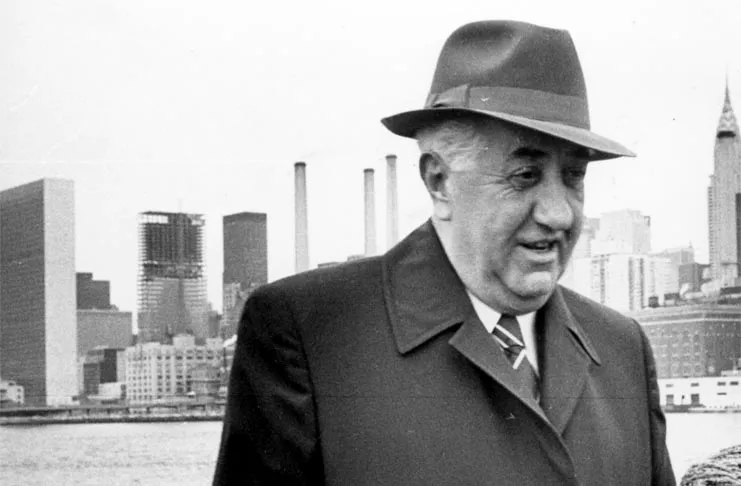
(Patria) - On this day, January 18, 1977, one of the greatest politicians and statesmen of Bosnia and Herzegovina, Džemal Bijedić, died in a plane crash near Kreševo.
Džemal's wife, Razija, also died with Džemal in the crash, leaving behind three children. For years after his death, various conspiracy theories circulated about an alleged assassination, but they were never factually substantiated.
Džemal Bijedić was born on April 12, 1917, in Mostar, where he grew up as a descendant of a respected merchant family. As a high school student, he sympathized with the communist movement, which he joined during his studies in Belgrade.
He became a member of SKOJ in October 1939, and two months later, a member of the Mostar organization of the KPJ. He was imprisoned four times in his hometown for his communist views. He spent World War II as an active member of the NOB, and after the war, he became the assistant minister of internal affairs in the republican government of BiH.
During his political career, he held a large number of positions, and he died as the president of the Federal Executive Council.
He played a key role in the economic and educational development of BiH in socialist Yugoslavia. He was the organizer of the Bosnian economic reform and infrastructure, and the cultural project "1000 Schools" was partially realized in the eighties.
His greatest life achievement can be considered the economic development of his native Herzegovina, where numerous economic giants were launched, such as the Aluminum Combine, as well as the modernization of the Sarajevo-Ploče railway line. With his authority, Bijedić partially succeeded in removing the label of Ustaše affiliation from the residents of West Herzegovina.
In addition, Bijedić succeeded in affirming Muslims as an equal nation with others, and Bosnia and Herzegovina as an equal republic with others in Yugoslavia at the time.
He was considered a successor to Josip Broz Tito at the head of Yugoslavia, in which many conspiracy theorists saw the reasons for his death. It was claimed that political centers in Belgrade, and even in Zagreb, could not accept him as Tito's successor.
Despite today's attempts to revise history and tarnish everything and everyone associated with the former socialist system, the name of Džemal Bijedić remains one of those that marked the political life of BiH and Yugoslavia in golden letters.
There is increasingly talk about how only someone like Džemal Bijedić could move today's BiH forward, but unfortunately, there are no such people today.
Komentari (0)
Prijavite se za komentiranje
PrijavaJos nema komentara. Budite prvi!
Minuta
Sve →Iz drugih kategorija

High Representative Not Elected: Germans, French and British Sabotaged Americans, New Attempt at End of June

ČOVIĆ WITHOUT MERCY: How Those Who Brought Ademović to Office Created a Political Hell for Him



Sunny Saturday, quite warm



Tragedy in Albanian resort: Two minors drown












