
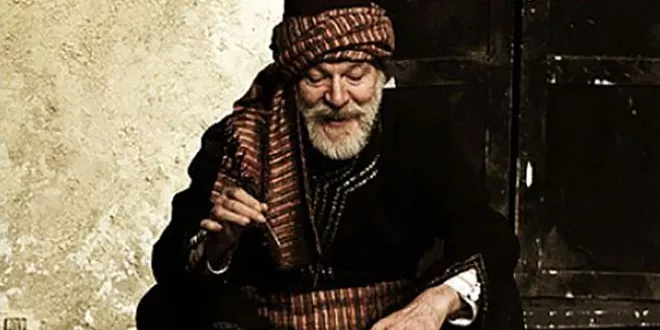
Mula Mustafa Bašeskija (Ševki), a Bosnian chronicler, was born in Sarajevo in 1731 or 1732 in the Mimar Sinan neighborhood.
We know about Bašeskija only what he recorded about himself in his “Chronicle,” which is therefore the only source for learning about his life and work.
His full name is Mula Mustafa Bašeskija, with the poetic pseudonym Ševki. He is the son of Ahmed and the grandson of Kadri-hodža. He received his initial education in a mekteb under hodža Sulejman-efendija Arnaut. That Mustafa stood out among his peers in the mekteb is evident from the fact that he became a kalfa.
Bašeskija also learned the craft of a kazaz from master Šahinbašić, a kazaz and imam of a Sarajevo mosque.
In his “Chronicle,” he left us some information about his family. His father Ahmed likely died while Mustafa was still a child, and his mother Fatima, daughter of Mehmed-hodža, remarried a certain mutapčija and died of a stroke in 1772.
Mula Mustafa married very young to Safija, the daughter of Mustafa-aga Čartozan. Bašeskija's most famous work is the “Chronicle of Sarajevo,” in which Bašeskija discusses events in Sarajevo from 1746 to 1804.
His saying is also well-known: “Only what is written remains; everything else is forgotten.” This sentence was Bašeskija's main motivation for writing the “Chronicle.”
It is assumed that Bašeskija died on August 18, 1809, in Sarajevo.
Komentari (0)
Prijavite se za komentiranje
PrijavaJos nema komentara. Budite prvi!
Minuta
Sve →Iz drugih kategorija

High Representative Not Elected: Germans, French and British Sabotaged Americans, New Attempt at End of June

ČOVIĆ WITHOUT MERCY: How Those Who Brought Ademović to Office Created a Political Hell for Him



Sunny Saturday, quite warm



Tragedy in Albanian resort: Two minors drown












