
By: Rasim Belko
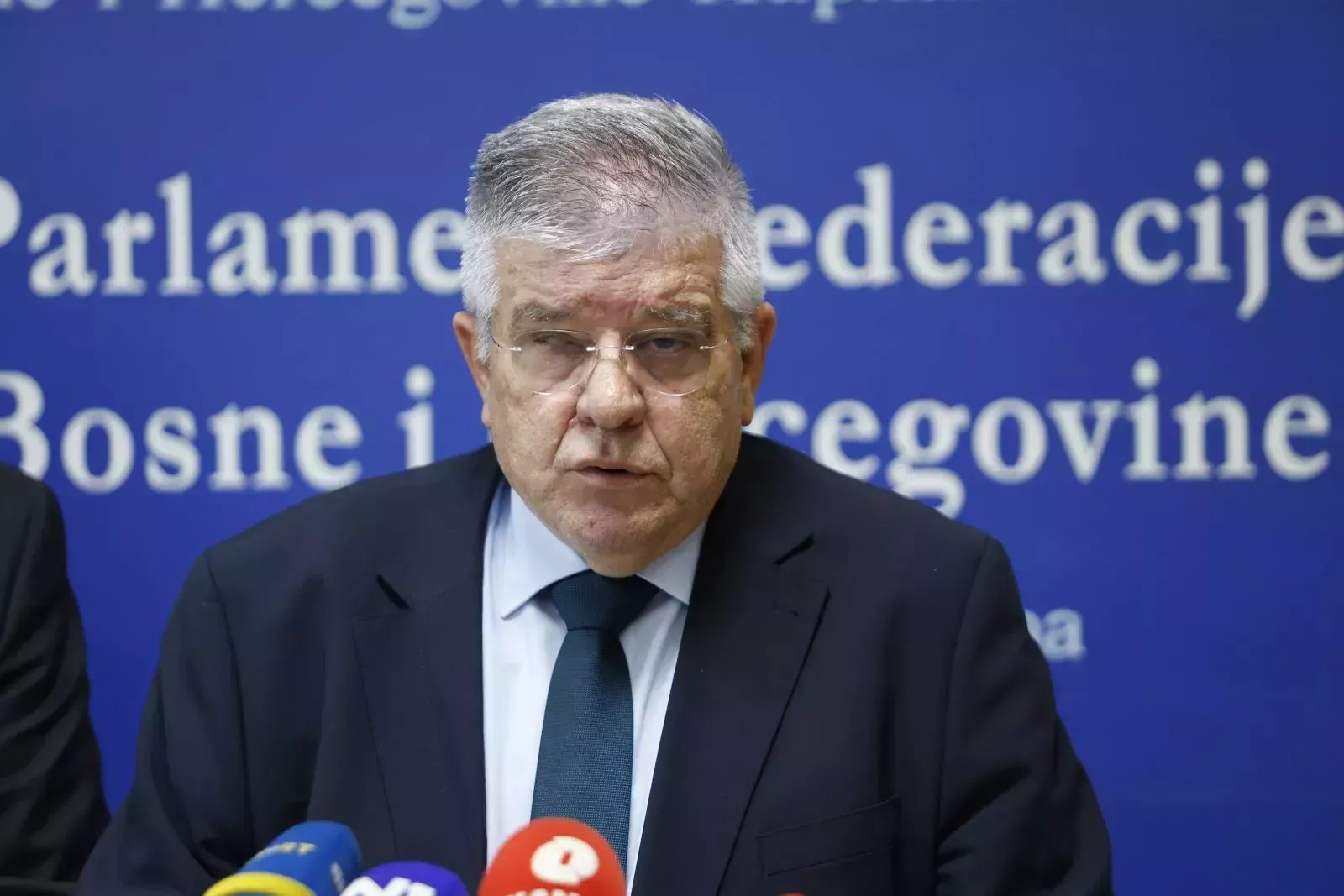
Retired police officer and occasional interpreter of the constitutional order, Dragan Mioković, is aghast these days. The man is horrified by the idea of Bosnia and Herzegovina being unitary. Because, according to his deep political feeling, unitary states are probably something to be feared. Why would we need success, stability, and functionality when we can have “consociations”, “balances”, “compromises”, and other acrobatics?
To the statement by IUS professor, Jahja Muhasilović: “Of course, we are for a unitary BiH”, Mioković immediately counters from the platform X: “Are there any surprises”. No, there aren't, nothing resembling a vision of a functional state is expected from Mioković anymore. It was never expected.
Almost in parallel, Nedžad Latić seriously states on Face TV: “I am not for a unitary BiH”. Thus, a group that strives to leave the state in a half-ruined, half-deaf, half-signed state, is quite harmoniously disharmonious.
Meanwhile, in the Bosniak media space, media and narratives against unitarism are emerging – some want their own little pashaluks, others dare not admit that they are actually following the policy of Dragan Čović, and through him, the old dreams of Franjo Tuđman.
And Our Party (Naša stranka) has become accustomed to highlighting itself with the story of consociationalism. Because they speak loudly against European principles of organization, against functionality, against the models that all successful countries in our region have, and of course, against a unitary BiH.
Sabina Ćudić, the new president of Our Party, last year at the “Quo vadis, Balkan” forum, decided to be a theorist and talk about “rigid” and “liberal” consociationalism, as if they were types of detergent. The problem is that these categories do not exist, only consociationalism exists, but well, they had to somehow obscure the essence: “I am not for democracy based on the majority”.
This is what liberal Ćudić said: “Regarding consociationalism, I will say that we have roughly divided types – corporate and liberal. We live a very rigid consociationalism where the literally defined rights of all ethnic groups are guaranteed. My question as a politician and political scientist is whether we can move from rigid to liberal consociationalism within the existing Constitution. I think it is wrong to advocate for democracy in the way of majority rule. I would like us to move towards liberal democracy and distance ourselves from our divisions, and to feel a sense of belonging to a system that guarantees rights for everyone”.
It is difficult to count the inconsistencies she has crammed into one statement. It is even harder not to notice that behind the “concern for minorities” lies a very clear political message: “I am not for a democratic order in which citizens decide.”
Not to mention the heroic democratic process of her election as party president, as the sole candidate, everyone in agreement, nothing bothersome. An example of autocratic simplicity.
Putting aside their internal affairs, the problem is that this policy spills over to the state. And that is why the story about Our Party must be untangled in public, because these self-proclaimed liberals too often play in tandem with the HDZ. And occasionally with the SNSD, let's remember when Ćudić coolly stated that Bosnia and Herzegovina is a “state community”. Fantastic. A constitutional-legal salto mortale.
That is why Mioković reacts so vehemently to Muhasilović's advocacy for unitarism, because the political circle to which he belongs lives on maintaining this complicated, dysfunctional system. A functional state would be their biggest nightmare.
Six years of ruling in Sarajevo Canton is enough for one to understand that Our Party is not a project for the advancement of the state, but something else entirely. The number of bans, restrictions, and rigid measures they have imposed shows that, paradoxically, they are often less liberal than even the SNSD, which at least sometimes yields to public pressure.
And that is why I will repeat what I have been saying for years, in every text about NS – the 2026 elections are an opportunity for this political mess, which formally operates from Sarajevo, but politically acts on the instructions of Zagreb, to finally be placed where it belongs, on the margins.
And Mioković, a high school student who happened to be at the head of a parliamentary body, like a student who mistakenly entered the wrong classroom, is just a reflection of Our Party's policy!
Komentari (0)
Prijavite se za komentiranje
PrijavaJos nema komentara. Budite prvi!
Minuta
Sve →Iz drugih kategorija

High Representative Not Elected: Germans, French and British Against Americans, New Attempt at End of June

ČOVIĆ WITHOUT MERCY: How Those Who Brought Ademović to Office Created a Political Hell for Him



Sunny Saturday, quite warm



Tragedy in Albanian resort: Two minors drown












