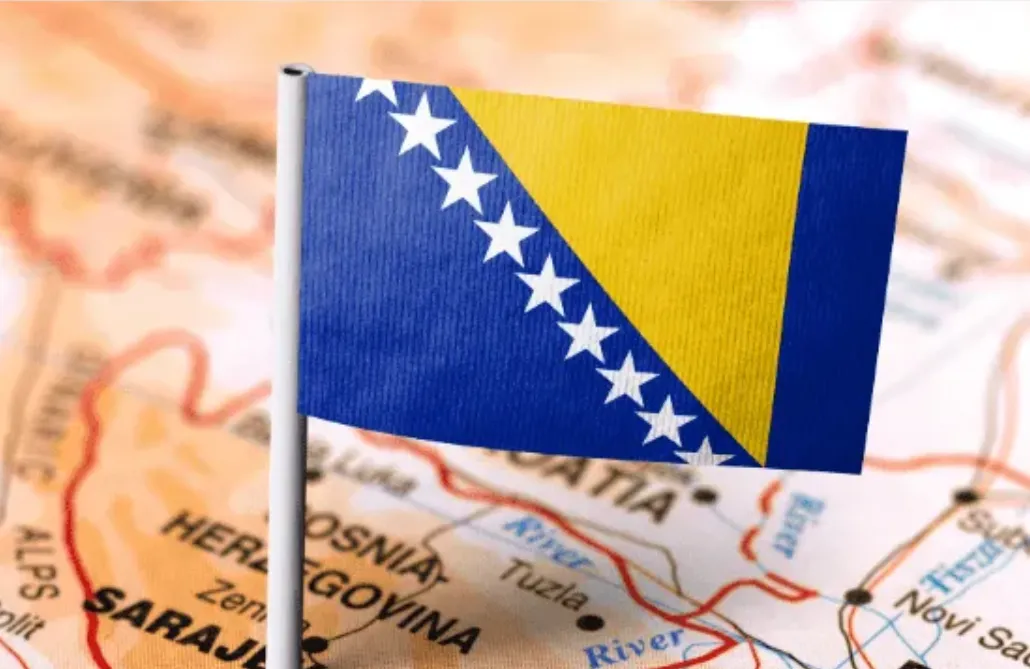

(Patria) - In Bosnia and Herzegovina, at the political and intellectual level, and through the cooperation of HDZ and SNSD, a completely new Croat-Serb agenda has been built, which is directed against the state of Bosnia and Herzegovina and its majority Bosniak people.
Although a Croat-Serb alliance on the issue of Bosnia and Herzegovina has existed since the Cvetković-Maček agreement, and although it was realized during the aggression against Bosnia and Herzegovina through plans to partition Bosnia and Herzegovina, the reality of post-Dayton Bosnia and Herzegovina has given rise to a new kind of Croat-Serb historical agreement.
This agreement is not only of a general nature aimed at the destruction of the state of Bosnia and Herzegovina; it manifests itself in daily political reality and dynamics on almost all issues where HDZ and SNSD have almost identical positions and decisions. The cooperation is not only party and institutional but also broader societal. Although the intellectual Croat-Serb milieu in Bosnia and Herzegovina is quite modest, relying mostly on Zagreb and Belgrade, the public, socio-political workers of HDZ and SNSD have a clear agenda regarding the relations between these two nationalisms, both in the past and in the future.
Therefore, there is a fairly established agreement between Croat and Serb nationalism in Bosnia and Herzegovina on the key point of Croat-Serb dispute, namely the crimes of the Independent State of Croatia and the responsibility for them. According to this historical agreement of Serb and Croat political and other public figures, Bosniaks as a people are primarily responsible for the crimes of that quisling entity, while the significance, ideological, and national background of the NDH's criminal apparatus, and overall Croat nationalism and its associated Nazism, are pushed into the background.
According to this agreed-upon Croat-Serb agenda, the people who, at the outbreak of World War II, had neither their own state, nor army, nor police, i.e., the Bosniak people, are capable, as Milorad Dodik presents the name of the aforementioned agenda, of forming camps, while at the same time, as Dedijer wrote, genocide is being committed against them.
Although at first glance all this seems insane and contradictory, the seriousness and persistence with which the Croat-Serb alliance promotes this agenda are astonishingly calculated and extremely rational. Because this agenda does not intend to provide any new insight into past relations. It is an introduction to explaining how, why, and on what supposed grounds to lure Zionist drones into the Bosniak territory. Intoxicated by the establishment of new relations with Israel, the aforementioned live in the belief that they can unleash them like enraged animals on Bosniaks to finish the job that the Croat-Serb alliance in BiH, on BiH, and around BiH, started long ago.
With this text, we are not trying to project how possible such an outcome is, because, after all, wishes are one thing, and reality is another, and it is not easy to put the latter into the service of one's own wishes. It is more likely that the Croat-Serb alliance will have to bloody its hands again in dealing with Bosniaks than for someone else to do it on their behalf, yet it is worth noting that they, in their hopes, are working to create that context.
The aforementioned agenda, which has been on the scene not from yesterday but from the moment Bosniaks, in 1971, after a hundred years, became the majority people in Bosnia and Herzegovina, and not only the majority but also a political people, figures in this context.
At that moment, Bosniaks became a legitimate military target, and attributing the crimes of the Independent State of Croatia to Bosniaks became a desirable trend in intellectual circles. Derviš Sušić perhaps could not have even guessed that some of his overly sharp insights into the role of the Muslim elite in World War II, described in Parergon, would find their ultimate outcome in the madness of Vojislav Maksimović and similar individuals, who, on the eve of the aggression and genocide against Bosniaks, tirelessly sang about the Muslim character of the NDH. Milorad Dodik also sings about this today.
As part of the Joint Criminal Enterprise project, the HDZ government compiled a list for the deportation of Serbs in Mostar in 1993. The same lists that the Independent State of Croatia made, the criminal para-entity of so-called Herceg Bosna also made. This is evidenced by documents from the Office for the Exchange of Captured and Other Persons of the Croatian Republic of Herceg Bosna, dated October 16, 1993.
The list of persons voluntarily going to the Serb Republic bore the number of 333 names of persons of Serb nationality who “voluntarily” left the territory under the political control of the HDZ authorities, renouncing their property in favor of the HVO.
However, reminding Milorad Dodik of such treatment of Serbs by the criminal para-entity of so-called Herceg Bosna would be naive from our perspective, even a little ridiculous. That fact is just a minor inconvenience for Dodik that is not worth mentioning, just as, from his perspective, the Independent State of Croatia is not worth mentioning, so as not to shake relations with strategic partners in BiH. Anything that stands in the way of joint efforts to act unitedly with Croatian nationalists, including Ustaše, is worth putting aside because Bosniaks are both a political and biological enemy of the Croat-Serb alliance in BiH.
Not even the fact that the most loyal representative of popular Croatian culture, Marko Perković Thompson, is unwelcome in Bosniak communities and the capital of Bosnia and Herzegovina, as the ultimate expression of what most supporters of Dodik's allies from HDZ think about the NDH, Ustašism, and camps, will certainly deter Dodik from attributing the Independent State of Croatia to Bosniaks, because it is not just a matter for Milorad Dodik, but a broader political, social, and intellectual consensus among Croat and Serb elites in Bosnia and Herzegovina, and beyond.
Komentari (0)
Prijavite se za komentiranje
PrijavaJos nema komentara. Budite prvi!
Minuta
Sve →Iz drugih kategorija
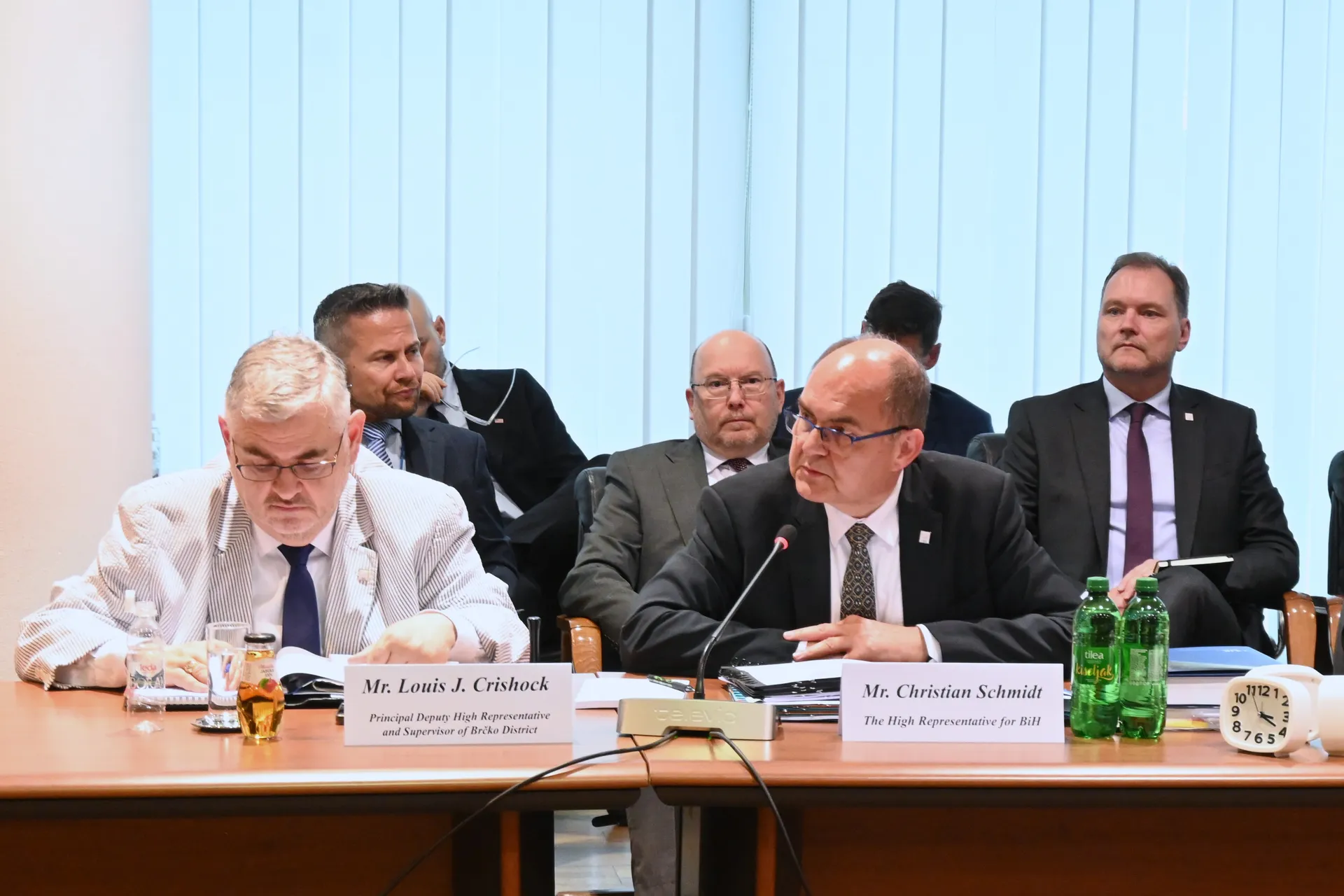
High Representative Not Elected: Germans, French and British Sabotaged Americans, New Attempt at End of June

ČOVIĆ WITHOUT MERCY: How Those Who Brought Ademović to Office Created a Political Hell for Him


Sunny Saturday, quite warm

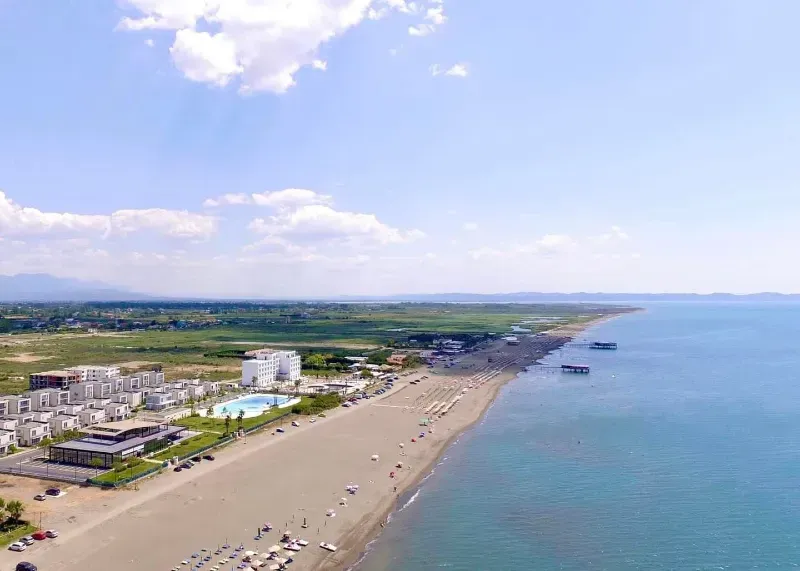
Tragedy in Albanian resort: Two minors drown