
By Armin Sijamić
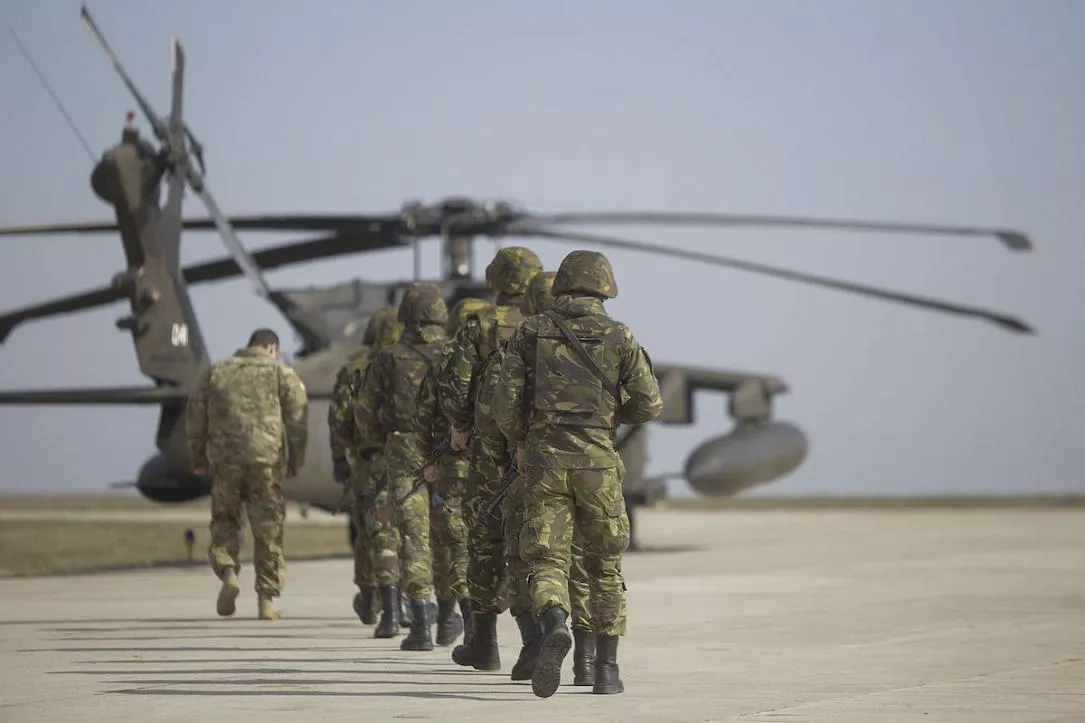
In late November, Romanians went to the presidential elections, and then the elections were annulled after the victory of a candidate who does not support Bucharest's current political course. Why is Romania so important to the West and NATO, and what does Russia want from this country?
In recent weeks, the main news from Romania has been the annulment of its presidential elections. Independent candidate Calin Georgescu unexpectedly won in the first round against social democrat and current Prime Minister Marcel Ciolacu, as well as Elena Lasconi, a pro-European politician. The current Romanian President Klaus Iohannis could not be a candidate, as he is serving his second five-year term. Ciolacu thus unexpectedly missed out on the second round of elections.
The Supreme Court annulled the elections with the explanation that Georgescu had illegally used the Chinese social network TikTok and that Russia had assisted him, which was interpreted as a hybrid war against Romanians.
Romania's Position
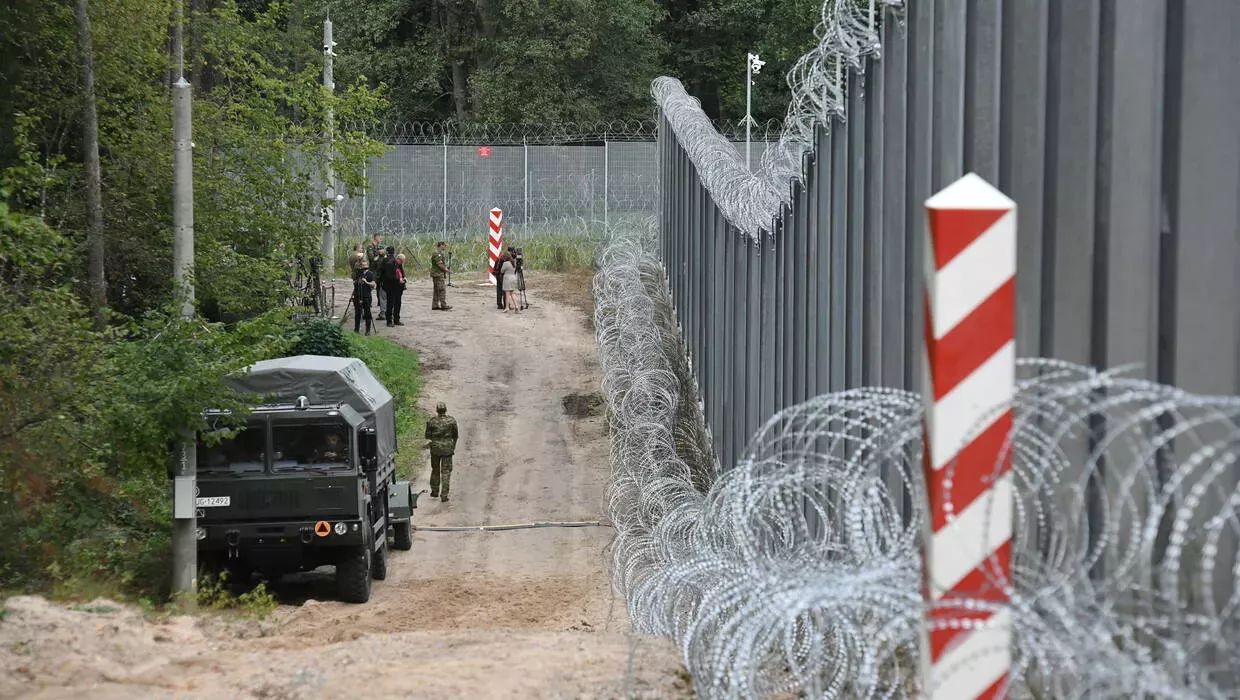
The reason the court annulled the elections, or rather ordered a repeat, is a story that cannot be fully understood without knowing what was at stake. The President of Romania does not just lead one of Eastern Europe's poorer countries; they become part of the geopolitical game between the United States and Russia.
It is not uncommon to hear that a country's position is difficult and that it is surrounded by enemies. If we put ourselves in the shoes of a Romanian, what can we see? In their perception, Romania is surrounded by threats, and to prove it, they would point to a geographical map.
Romania borders Ukraine – a victim of Russian aggression; then Moldova, with its breakaway territory and Russian troops; Bulgaria and Serbia, where Russia has a traditional presence, and in Belgrade's case, there is also the Russian "humanitarian center" in Niš. Then there is Hungary, which has close ties with the Kremlin, and the status of Hungarians in Romania burdens relations between Budapest and Bucharest. Finally, Romania's Black Sea coast is close to Crimea and the Russian Black Sea Fleet.
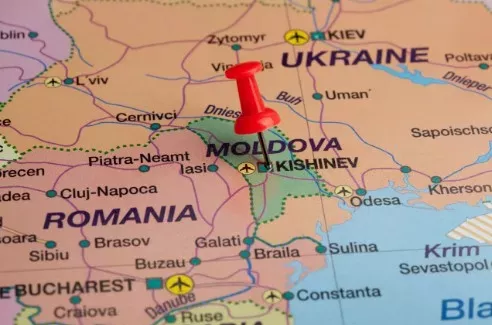
Therefore, Romania is surrounded by Russian and pro-Russian forces, and it is not impossible for it to become a victim of hybrid operations. Hence, the annulment of the elections under the given explanation is not surprising. Whether Romanians were manipulated will be shown by the new elections. It will be clear whether Georgescu's plan to weaken the influence of NATO and the European Union is the will of the Romanians and whether they also agree that the stance towards Russia and Ukraine, economic policy, and whether the country should be turned into a military power should be revised.
The Struggle for Romania
The West recognized Romania's importance for the outcome of the confrontation with Russia long ago. Even today, many claim that Romania and Bulgaria were admitted to NATO and the European Union solely to prevent Russia from establishing a foothold there, and that these two countries did not meet the criteria for membership candidates. Romania and Bulgaria would have been gateways for Russian penetration into the Balkans and Central Europe. The Russian fleet would have dominated the Black Sea, as under current rules, third countries are not allowed to send a large number of warships there.
But in the coming years, Romania's importance to the West has only grown. First, they decided to station missile interceptors there, allegedly due to the threat from Iran. As no one has ever provided convincing proof of whom Iran would target and with what over Romanian territory, it became quite clear that this was a competition with Russia, i.e., intercepting missiles fired from areas around Russia's southern borders and Crimea.
Nor was that the end for Romania in geopolitical calculations with Moscow. The deterioration of relations between Turkey and the United States, when the world's largest power began to transfer some forces from the Incirlik base, also resulted in an increased US presence in Romania. Then Russia attacked Ukraine, and Romania, along with Poland, became the most important country for assisting Ukrainian troops. In parallel, American strategists worked on strengthening Poland and Romania with the aim of creating a so-called "new Europe," which would separate Moscow from the old European powers, primarily Germany.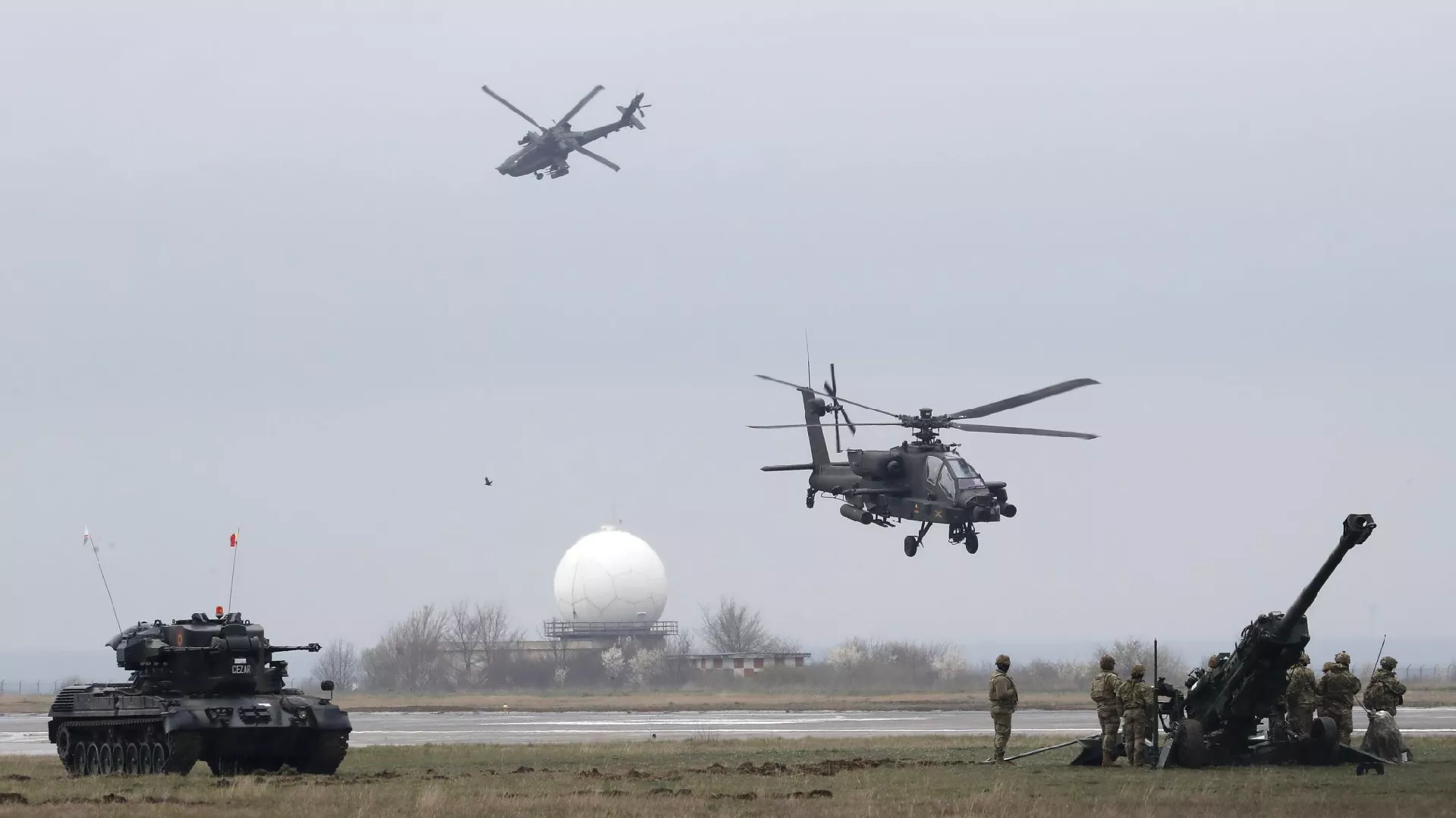
A Strong Romania is an American Interest
Until the recent annulled elections incident, the most important news from Romania was related to the strengthening of its army. Here are just a few examples. Romania is buying anti-tank missiles from Israel for 70 million euros and from the United States for 80 million dollars. Armored vehicles from Turkey, 1,059 units, for 856 million euros; howitzers from South Korea; F16 aircraft from Norway; American MQ-9 Reaper drones and Turkish Bayraktars; American radars; 32 F-35 aircraft for 6.5 billion euros; Abrams tanks, helicopters, submarines, frigates, cruisers, HIMARS missile systems, Patriot air defense systems; defense industry factories are being built...
This is possible with this year's investment in the military amounting to 21 billion dollars. Such funds are needed if one wants to respond to what Iohannis called in his article for Politico in March this year "the most significant and direct threat to the Alliance in the foreseeable future," which is Russia.
That this was being done because of Russia was clear back in 2016 when American missile interceptors were stationed at the Deveselu base, integrated into the missile defense shield stretching from the Mediterranean to Northern Europe. Redzikowo in Poland and Deveselu are the backbone of the American military presence in Eastern Europe.
The strengthening of Poland and Romania is not accidental. The United States wants to turn these two countries into major powers in Eastern Europe, creating what some call "new Europe," a group of countries that joined the European Union and NATO later. In American plans, these countries are a wall against Russia, but also a way to strengthen NATO's eastern flank.
This also requires a strong economy, which is increasingly felt in the case of Poland and Romania. Romania's GDP rose to 72 percent of the European Union average in 2020, compared to 44 percent in 2007. Economic growth until the beginning of the COVID-19 pandemic was shown in figures above the European Union average. However, this year, the issue of the state budget deficit has emerged.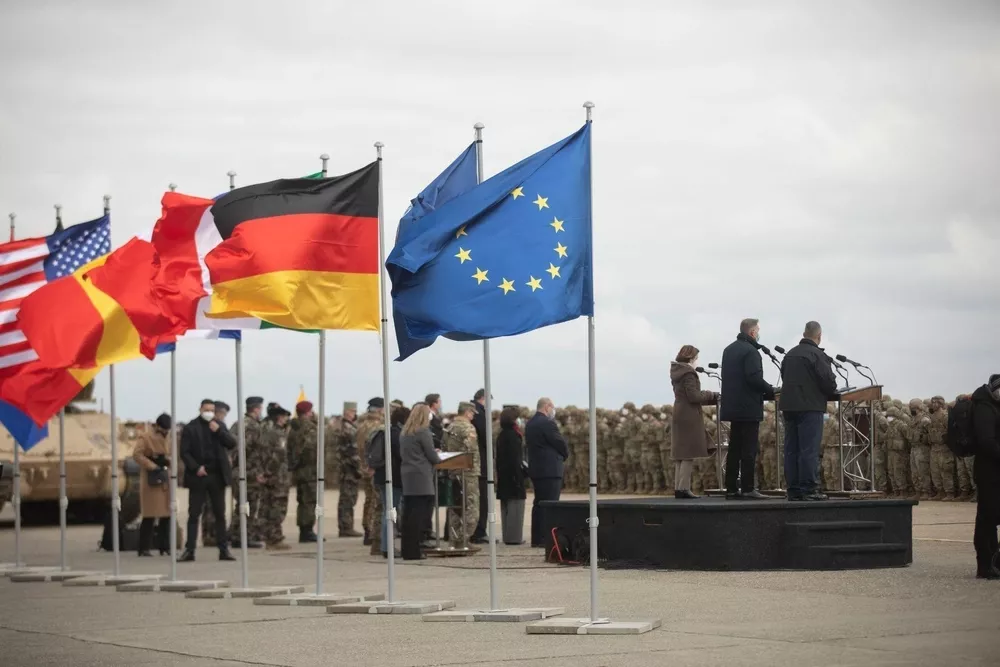
Strategic Importance
The Americans were not satisfied with the base in Deveselu. In response to the war in Ukraine in 2014 and Russia's annexation of Crimea, the United States and Romania began building a military base near the Black Sea city of Constanta. In March of this year, work began on the Mihail Kogălniceanu base, which will be larger in area than the famous US Ramstein base in Germany. The base, to which Romania will invest about 2.7 billion dollars and whose area is about a third larger than Ramstein, will accommodate ten thousand soldiers and their family members. Aircraft, drones, and hangars will be stationed there. Operations in the Black Sea, as well as in the Balkans and the Middle East, will be managed from there.
At the Mihail Kogălniceanu base, in addition to Romanians, NATO member forces will also be stationed. British aircraft have already been deployed. This year, France deployed surveillance radars in Romania after doing so in Moldova. The French, historically close to Romania, have also sent troops there.
Moscow has no doubt that this is because of Russia. In March, Andrey Klimov, Deputy Chairman of the Federation Council Committee on Foreign Affairs, stated that the Mihail Kogălniceanu base is "anti-Russian" and that it "will be among the first targets for retaliatory strikes" if Russia and NATO go to war. The base is "a threat to Bucharest," and "the NATO suicide club is dragging ordinary civilians into such adventures," Klimov said.
From just a portion of the recent military and political activities in Romania that we have listed, it is clear how important this country is for Russia-NATO relations. Russia wants a new government in Bucharest, and the United States wants the continuation of the current policy. Therefore, it is in the Kremlin's interest for Georgescu to win the elections, and in Washington's interest for that not to happen. The citizens of Romania are now choosing between two significantly different policies.
Komentari (0)
Prijavite se za komentiranje
PrijavaJos nema komentara. Budite prvi!
Minuta
Sve →Iz drugih kategorija

High Representative Not Elected: Germans, French and British Against Americans, New Attempt at End of June

ČOVIĆ WITHOUT MERCY: How Those Who Brought Ademović to Office Created a Political Hell for Him



Sunny Saturday, quite warm



Tragedy in Albanian resort: Two minors drown












