
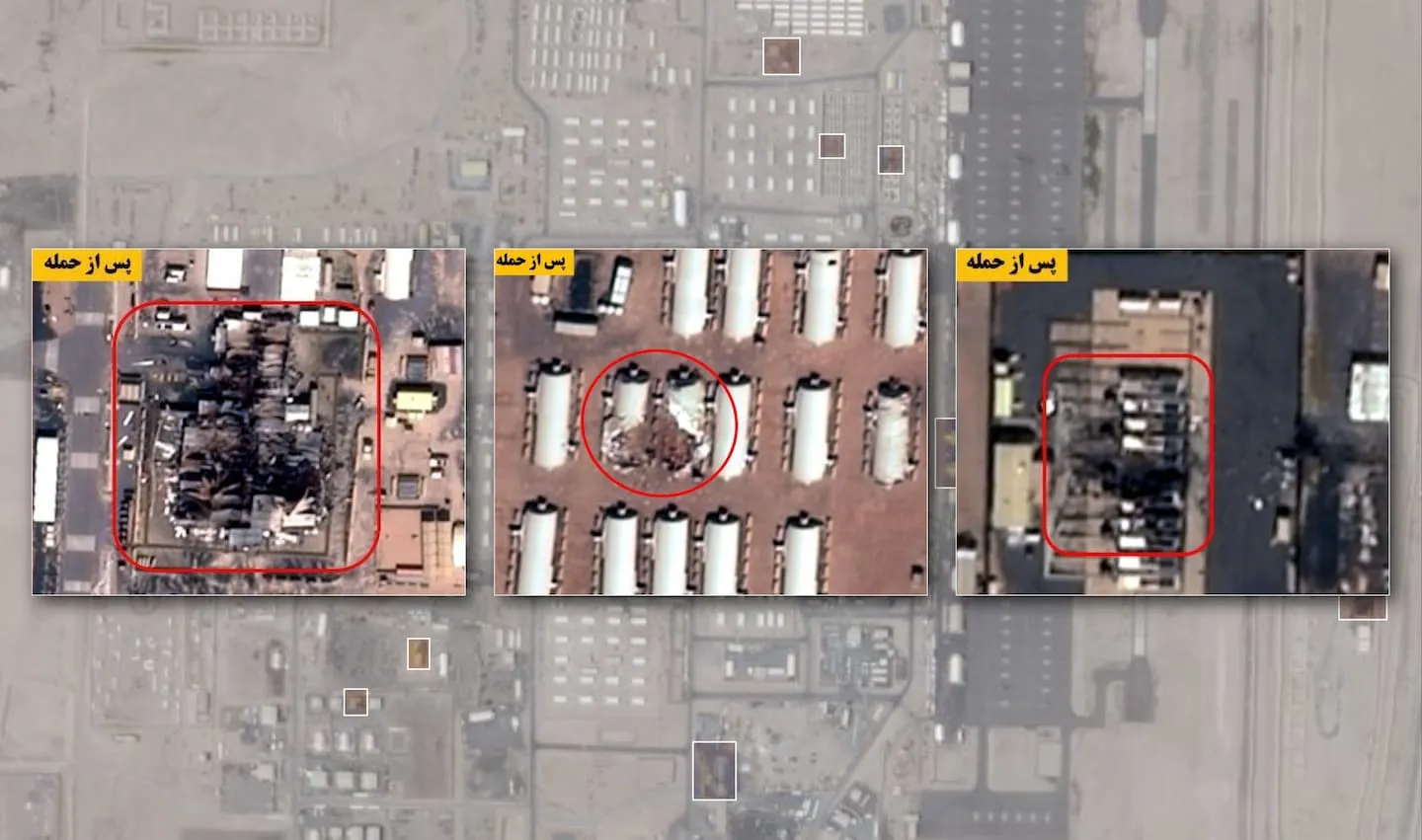
(Patria) - Iranian airstrikes have damaged or destroyed at least 228 objects and pieces of military equipment at US bases across the Middle East since the start of the war.
An analysis of satellite imagery by the Washington Post revealed that hangars, barracks, fuel depots, aircraft, and key radar and anti-aircraft systems were hit.
The scale of destruction is incomparably greater than what the US government has publicly acknowledged so far, reports Index.hr.
Due to the constant threat from the air, some US bases have become too dangerous to occupy, leading commanders to withdraw most personnel out of range of Iranian missiles early in the war.
Since the conflict began at the end of February, seven soldiers have been killed in attacks on US facilities in the region – six in Kuwait and one in Saudi Arabia – while more than 400 have been wounded, the US military confirmed.
Although most of the wounded quickly returned to duty, at least 12 soldiers sustained severe injuries, according to anonymous US officials.
Access to satellite imagery of the Middle East is currently extremely difficult.
The two largest commercial providers, Vantor and Planet, have complied with the request of their largest client – the US government – to limit, postpone, or completely ban the publication of imagery from the region for the duration of the war.
This blockade, imposed in the second week of the conflict, has prevented an independent assessment of Iranian attacks.
However, Iranian state agencies have regularly published high-resolution satellite images on social media since the very beginning to prove the damage inflicted on US targets.
The Washington Post analyzed over 100 such images and confirmed the authenticity of 109, comparing them with those from the European Copernicus system and available Planet archives. They found no evidence of Iranian manipulation of the photos.
The analysis collectively identified 217 destroyed or damaged objects and 11 pieces of military equipment across 15 US military bases in the region.
Experts conclude that the Americans have severely underestimated Iranian capabilities, failed to adapt to modern drone warfare, and left their bases unprotected.
- The Iranian strikes were incredibly precise. There are no craters indicating misses anywhere – says retired US Marine Corps Colonel and Center for Strategic and International Studies fellow Mark Cancian.
The Washington Post previously revealed that Russia provided intelligence to Iran for attacks on US forces.
The photos show that the attacks devastated numerous barracks, hangars, and depots in more than half of the US bases covered by the analysis.
- The Iranians deliberately targeted personnel buildings to cause mass casualties. They didn't just hit equipment, fuel, and infrastructure, but also soft targets – gyms, mess halls, and barracks – states William Goodhind, a researcher from the "Contested Ground" project.
A satellite hub at Al-Udeid base in Qatar, parts of the "Patriot" anti-aircraft system in Bahrain and Kuwait, a power plant at Camp Buehring in Kuwait, and five fuel depots were also hit. More than half of the total damage was recorded at the 5th Fleet base in Bahrain and three bases in Kuwait.
US officials suspect that the bases in Bahrain and Kuwait suffered so much because those countries allowed the Americans to launch offensive attacks from their territories, including the use of powerful HIMARS rocket systems.
Experts agree that US vulnerability is the result of several key mistakes.
Kelly Grieco from the Stimson Center institute says the US underestimated how well Iran knew the layout of US infrastructure. Furthermore, US and Israeli anti-aircraft systems were already dangerously depleted.
Estimates suggest that the US military fired at least 190 THAAD and 1060 Patriot interceptors from the end of February to the beginning of April, consuming more than 40 percent of its pre-war stockpiles.
- They do an excellent job of shooting down missiles, but the cost in expended missiles is enormous – explains British military analyst Justin Bronk.
In addition, the military failed to defend against kamikaze drone attacks, a lesson they should have learned from the war in Ukraine.
A particular problem is the lack of bunkers to protect soldiers and equipment. For example, the command center in Kuwait, where six Americans died in an Iranian drone attack, had almost no aerial protection.
In Saudi Arabia, an aircraft worth hundreds of millions of dollars was destroyed because it was consistently parked in the same, unprotected location.
The US Central Command (CENTCOM) declined to comment specifically on these findings, stating only that damage assessments are "complex and sometimes misleading."
However, one US official admitted that the damage at the 5th Fleet headquarters was "extensive" and that the main command has already relocated to a base in Florida. It is unlikely that the military will return in large numbers to bases in the Middle East "anytime soon."
- We have moved from an era of invisibility to a time when the entire battlefield is completely transparent. We feel like we should be attacking, but right now, around these bases, we are solely fighting a desperate defense – said retired Air Force officer Maximilian Bremer.
Komentari (0)
Prijavite se za komentiranje
PrijavaJos nema komentara. Budite prvi!
Minuta
Sve →Iz drugih kategorija

High Representative Not Elected: Germans, French and British Against Americans, New Attempt at End of June

ČOVIĆ WITHOUT MERCY: How Those Who Brought Ademović to Office Created a Political Hell for Him



Sunny Saturday, quite warm



Tragedy in Albanian resort: Two minors drown












