
(Patria) - One of the activities that has most felt the shortage of skilled labor on the market is the transport sector. It is increasingly difficult to find qualified drivers in the Bosnian and Herzegovinian market, and companies involved in the transport of both goods and passengers are feeling the direct consequences.
“The Employers' Association in the Federation of Bosnia and Herzegovina has long been warning about the problem of the shortage of skilled labor in BiH and proposing solutions to overcome this problem. Transport is one of the branches most affected by the shortage of qualified workers. Attempts to hire people registered with the employment services with appropriate qualifications have not yielded results. Almost every week, our members from the transport sector warn us about the problem of driver shortages. The owner of a company engaged in goods transport recently told us that he is forced to operate at 70 percent capacity because there is no one to drive the trucks for goods transport,” says Adnan Smailbegović, president of UPFBiH.
The shortage of drivers in goods transport also affects other industrial branches, which are now waiting longer for the raw materials necessary for production or for the dispatch of finished products to customers.
“One of the ways we could alleviate the problem with
goods transport is to utilize the capacities of the Railways of FBiH to a greater extent than has been the case so far. Rail transport could take over the transport of goods in those parts of BiH where rail traffic functions,” says Smailbegović.
According to the director of the Railways of FBiH, Enis Džafić, this company is
a generator of economic development in Bosnia and Herzegovina.
“More than 70 percent of the economy in BiH relies on the work of our company. The capacities of the Railways of FBiH are significantly utilized, but we always have room and reserve capacities for new potential clients. The energy sector in the country largely depends on the Railways of FBiH. We ensure the smooth functioning of the energy sector in BiH by regularly supplying the Tuzla and Kakanj Thermal Power Plants with the necessary quantities of coal from our mines in FBiH. We also ensure the smooth flow of goods in exports and imports for the companies: Arcelor Mittal Zenica, Gikil Lukavac, Sisecom soda Lukavac, Natron Hayat Maglaj, Cementara Kakanj, Cementara Lukavac, Belisar – Studen Agram Brčko, Holdina Sarajevo, Hifa Oil Tešanj, Vispak Visoko, Klas Sarajevo, Solana Tuzla, Penny Sarajevo, Alternativa Sarajevo, Cibos Ilijaš, Fortin Tešanj, and other users of railway services with whom we have contractual cooperation.
The destinations for goods traffic in exports and imports from BiH are: Croatia, Slovenia, Serbia, Hungary, Poland, Czech Republic, Bulgaria, Romania, Slovakia,” says Džafić.
He emphasizes that the railway sector directly contributes to the further growth and development
of the aforementioned companies, as well as our entire economy, which has positive effects on the employment of citizens and the filling of budgets at all levels, from state, federal, cantonal to municipal.
“Rail transport is most suitable for the transport of bulk cargo, especially bulk goods (coal, ore, coke, stone aggregates, bauxite, scrap iron, and other goods) that we transport for the aforementioned clients, and goods that require protection from atmospheric influences (soda, raw sugar, grains, and other packaged goods).
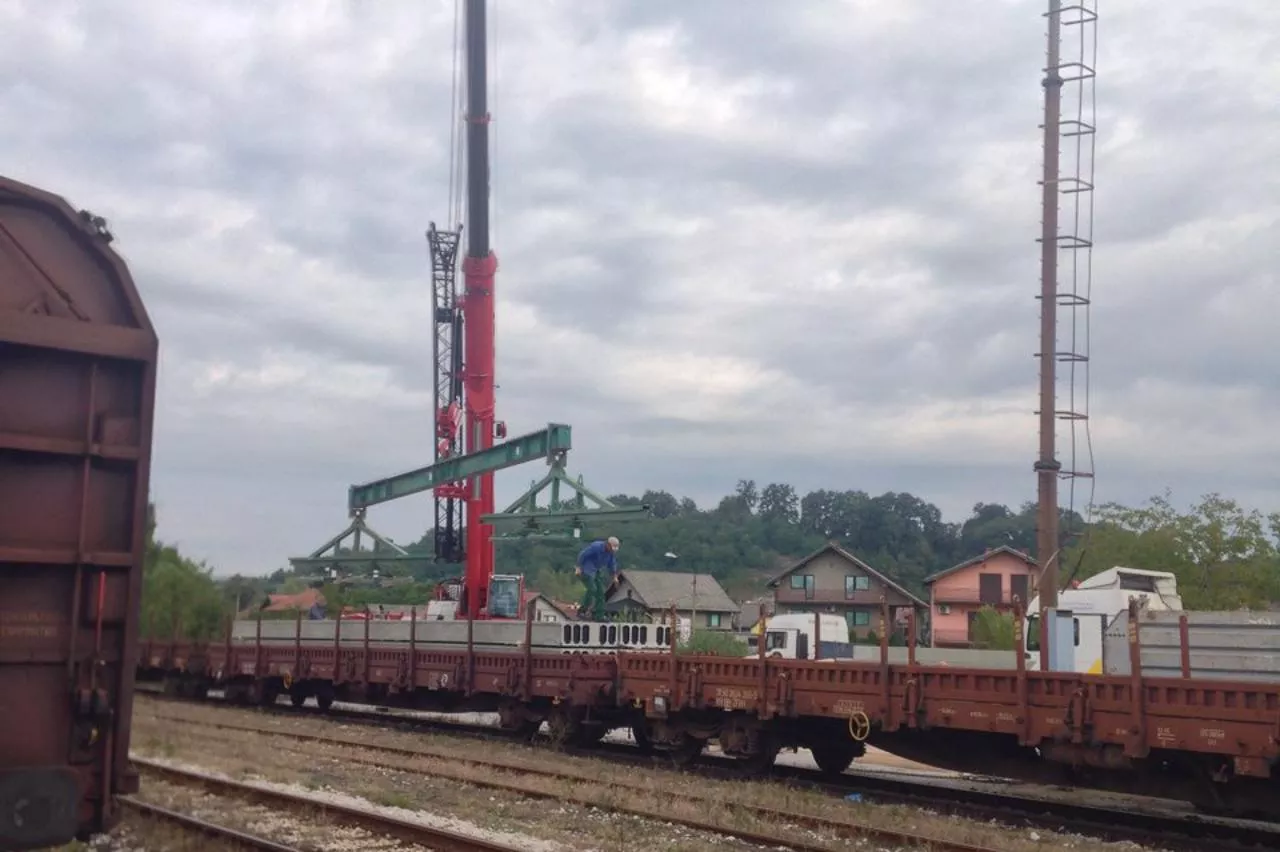
We particularly highlight the availability of flat wagons intended for the transport of containers and long and oversized shipments.
ŽFBiH strives through its commercial policy to achieve better wagon utilization in container traffic. This year, an increase of 65 percent in this type of transport has been recorded compared to the same period last year. ŽFBiH currently has two container terminals (Sarajevo and Tuzla) with the necessary transshipment machinery, which provide sufficient support for the further development of this type of transport,” points out Džafić.
He emphasizes that the Railways of FBiH can fully respond to the demands of the economy in FBiH, which was also demonstrated during the corona crisis, when the functioning of the economic system in FBiH was ensured.
“A positive aspect of rail transport is maximum safety and
reliability. The advantages of rail transport undoubtedly lie in the safe,
planned, and economical transport of bulk cargo over long distances,
the built infrastructure to large clients, access to the port of Ploče and ports on the Sava River, and the possibilities for developing intermodal transport, which our long-term clients have recognized. Furthermore, railways are the most environmentally friendly mode of transport, as they involve reducing harmful gas emissions, less noise, and other harmful impacts,” says Džafić.
According to statistical data for the first six months of this year, the Railways of FBiH achieved a total increase in workload of 12 percent, expressed in net-ton kilometers in 2023 compared to 2022.
They emphasize that ŽFBiH Sarajevo stands at the service of all economic entities that
are interested in safe and reliable transport under market-acceptable and
competitive conditions.
Komentari (0)
Prijavite se za komentiranje
PrijavaJos nema komentara. Budite prvi!
Minuta
Sve →Iz drugih kategorija

High Representative Not Elected: Germans, French and British Against Americans, New Attempt at End of June

ČOVIĆ WITHOUT MERCY: How Those Who Brought Ademović to Office Created a Political Hell for Him



Sunny Saturday, quite warm



Tragedy in Albanian resort: Two minors drown












