
By: Armin Sijamić
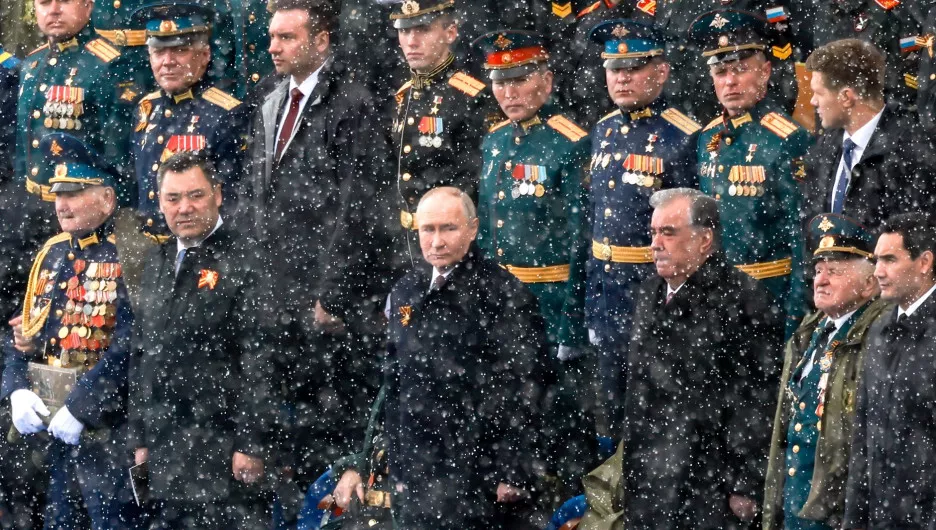
Yesterday, Russia marked Victory Day, one of the most important holidays in Russia today. The May 9th celebrations should be a remembrance of the victory in World War II and a display of Russian military power, but the last two years have turned into something the Kremlin never dreamed of.
Russia under Vladimir Putin proudly remembers the Soviet Union's victory over Nazi Germany in 1945. In the victory over the Nazis and their allies, the USSR suffered the greatest sacrifice of all European nations, losing 27 million people.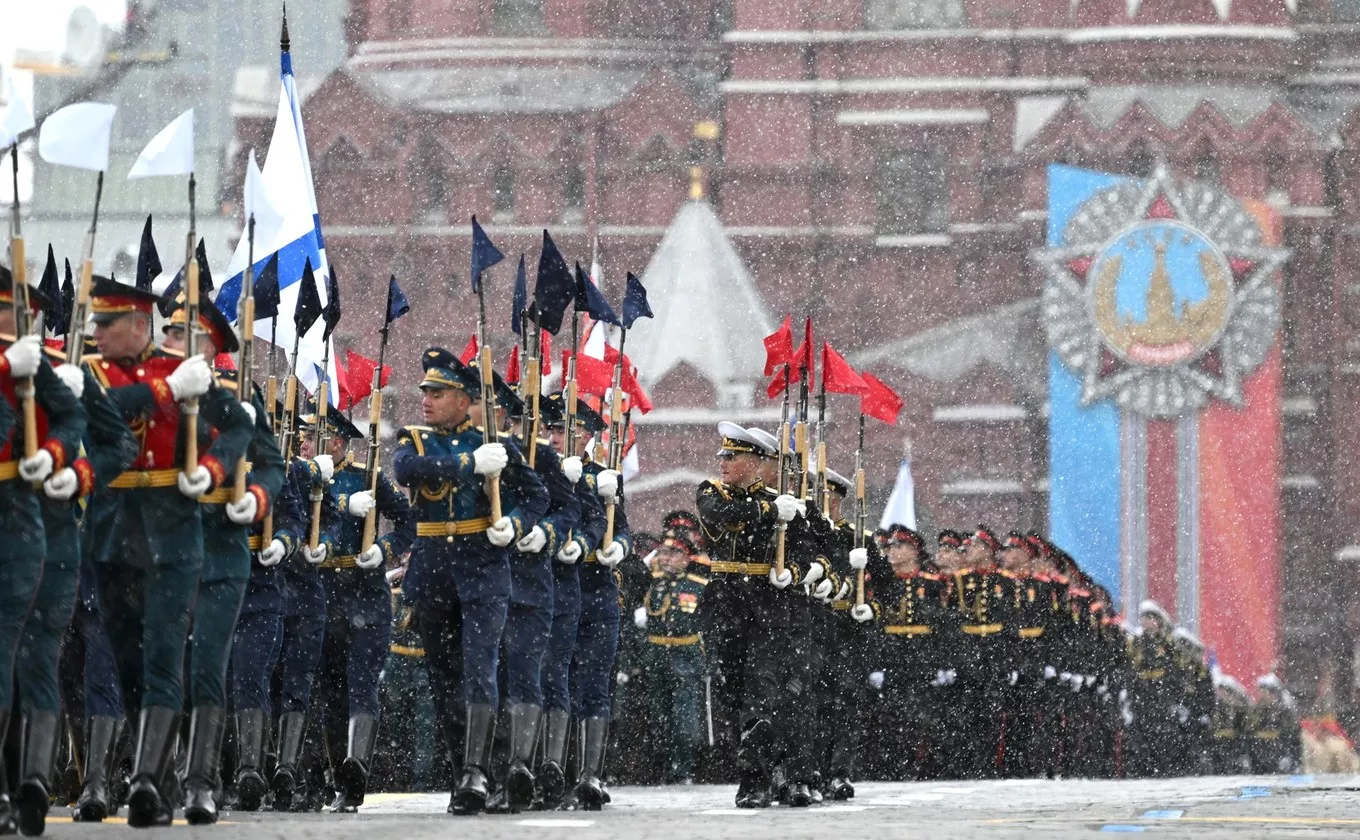
Since Putin came to power, special attention has been paid to this day in Russia, with the military parade on Moscow's Red Square being the central part of the celebration. His predecessor Boris Yeltsin did not mark this day with a grand parade in the early years of his rule, and then very modestly towards the end of his term. During the USSR, a large military parade was not organized every year, but was tied to jubilee years, such as 1965, 1985, or 1990.
With Putin's rise to power, the parade became a kind of exhibition of Russian military equipment, as it often featured the most modern technology Russia could sell and use to intimidate its opponents. But last year's parade was a sign of a new era in Russia, a country becoming increasingly isolated, even as its army achieves certain successes in Ukraine. The aggression against a neighboring country has deterred many from appearing in places where Putin is, especially from a parade that once had guests from all over the world.
Only friendly countries
"No, hostile countries will not be invited to the parade for the third year in a row. They have not been invited since 2022, because the regimes in those countries are pursuing, let's phrase it as hostile policy, that's the term that has been introduced, but in fact, they are pursuing an aggressive policy towards our country, formulating it as inflicting a strategic defeat, and we are formulating it as a hybrid war," said Maria Zakharova, spokesperson for the Russian Ministry of Foreign Affairs, a few days before this year's parade.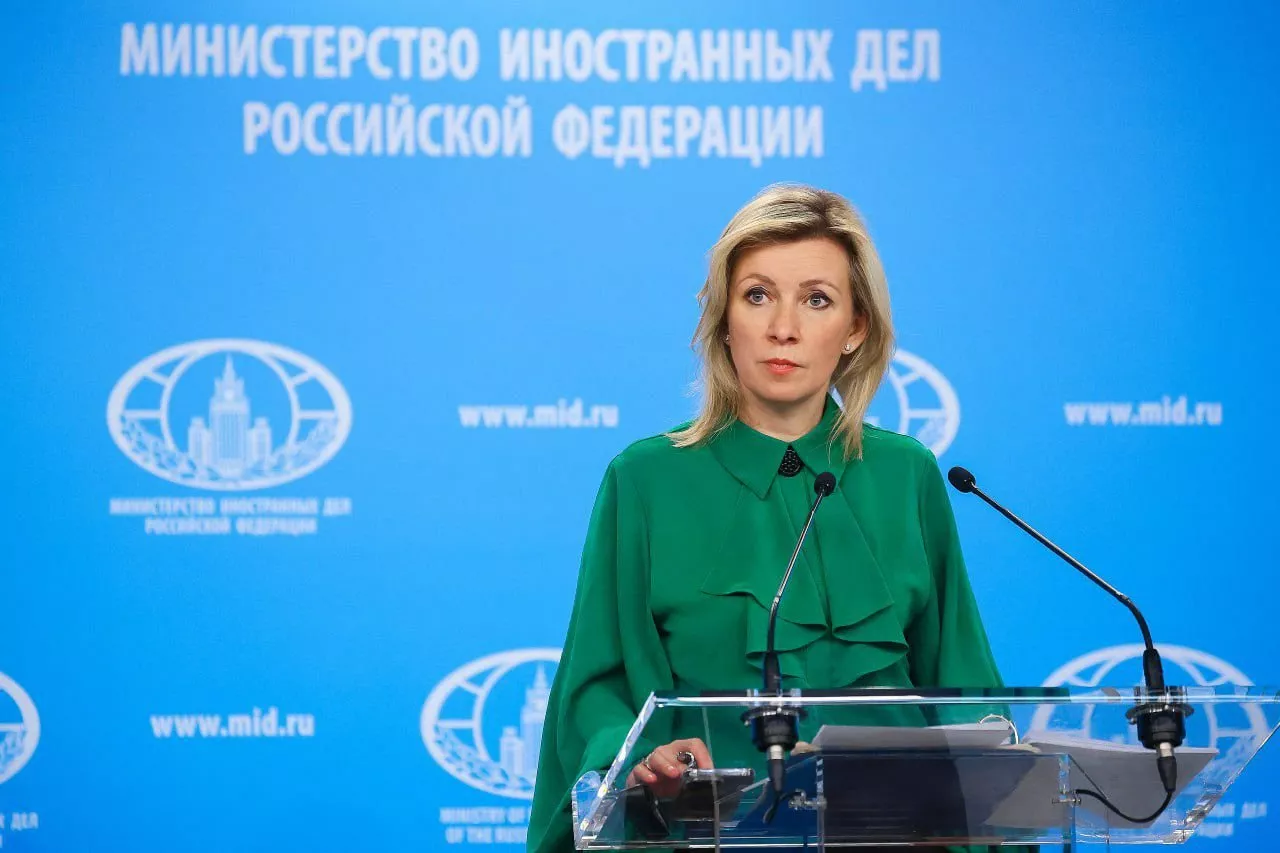
How many invited "friends" politely declined the invitation and did not come is not known to the public. But the list of presidents who attended is known to the public. According to the Russian agency TASS, the attendees were: President of Belarus Alexander Lukashenko, President of Kazakhstan Kassym-Jomart Tokayev, President of Kyrgyzstan Sadyr Japarov, President of Tajikistan Emomali Rahmon, President of Turkmenistan Serdar Berdimuhamedov, President of Uzbekistan Shavkat Mirziyoyev, President of Cuba Miguel Diaz-Canel, President of Laos Thongloun Sisoulith, and President of Guinea-Bissau Umaro Sissoco Embaló.
So, besides Lukashenko, whom Moscow is pressuring to join Belarus to Russia, the presidents of Central Asian countries, who contributed to the defeat of the Nazis, and three others from the rest of the world appeared at the parade. This is certainly not what pleases Moscow and the president on an international wanted list.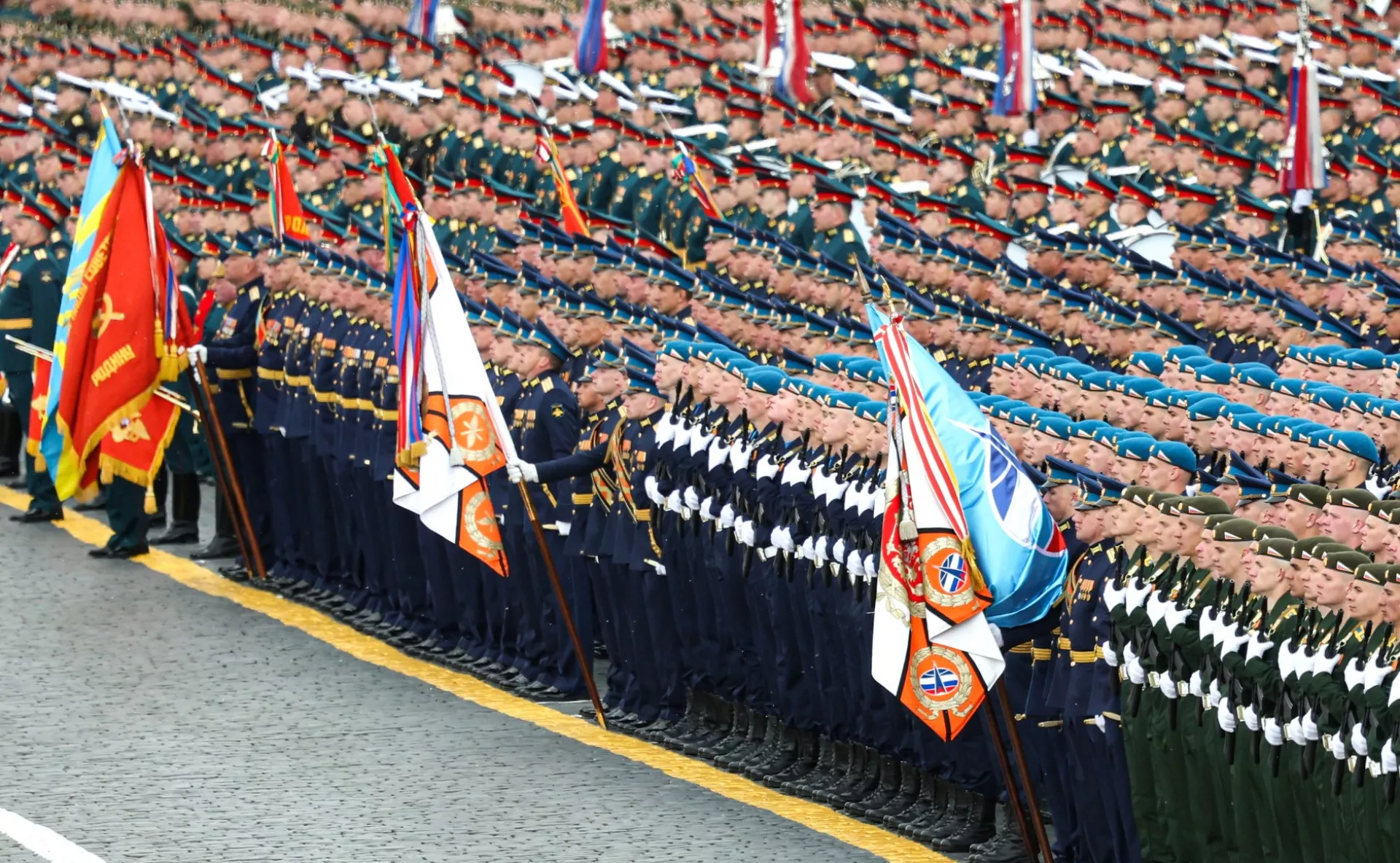
As this parade loses its original idea, the remembrance of those who defeated the Nazis, it is likely that it was also understood as an event to send messages to Russian rivals, and for that reason, they refused to come. Another event from Moscow supports this theory. Namely, an exhibition of captured military equipment from Ukraine was organized, and the flag of the country of origin was attached to each piece. Thus, equipment from the United States, Germany, Australia, and others was displayed at the exhibition.
Shadow of past parades
Those who followed the parades in Moscow will remember that the 2005 and 2015 parades were particularly impressive. Yesterday's was not like them, but rather like last year's. The parade marking the 79th anniversary of the victory seemed to be waiting for different times, perhaps a jubilee to be as grand as in the USSR era, or for the war in Ukraine to end.
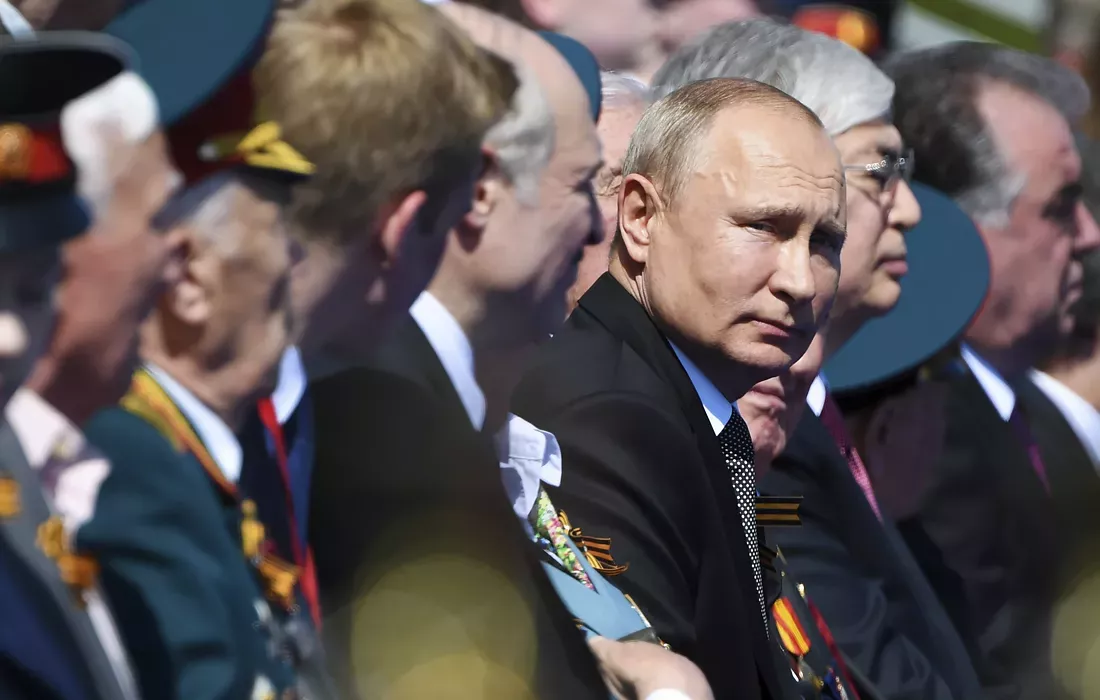
Like last year, the T-34 tank, a symbol of victory over Nazi Germany, passed through the square, followed by Tigr-M and VPK-Ural armored vehicles, Iskander-M missile systems, S-400 Triumph missile launchers, and Yars intercontinental ballistic missiles. At the end of the column were Bumerang armored personnel carriers. Fifteen SU-30SM, MiG-29, and SU-25 aircraft flew over the square.
Some ironically noted on social media that this was all the equipment Russia currently doesn't need in the war in Ukraine, alluding to some sources claiming that Russia has lost about 2,000 tanks in the aggression against the neighboring country. Tank units were a symbol of the power of the Russian ground forces.
Celebrations were also held across Russia. Russian media report that parades were held, in addition to Moscow, in 27 cities and a total of 300 locations. According to the Russian Ministry of Defense, 90,000 military personnel and 60,000 from the security sector participated in these ceremonies, along with 2,500 pieces of equipment and 121 aircraft.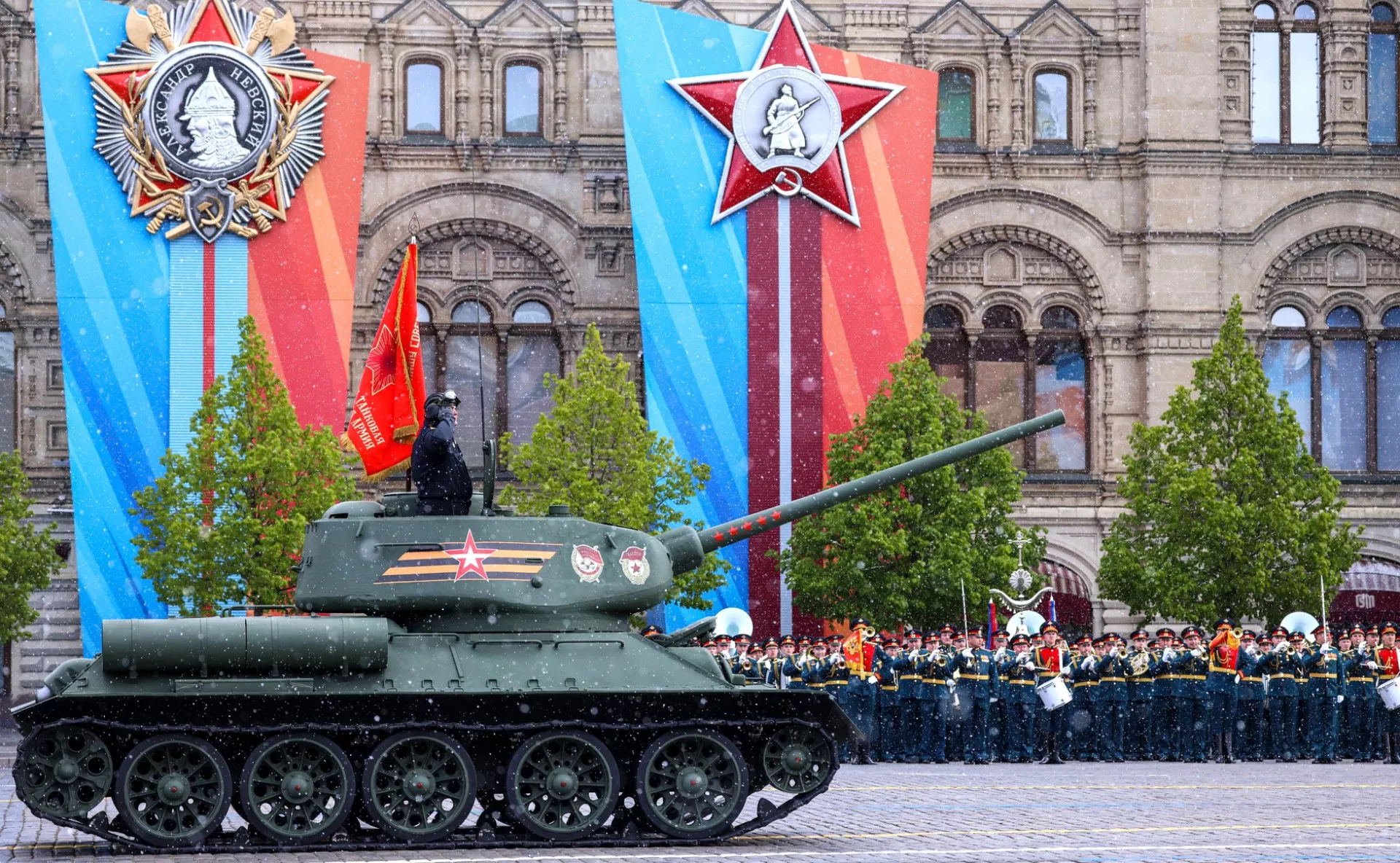
The West as an enemy
The parade was once again used to send messages to the West. "Revanchism, mockery of history, and the desire to justify the current followers of Nazism are part of the general policy of Western elites, inciting new regional conflicts, inter-ethnic and inter-religious conflicts, and containing sovereign, independent centers of world development," Putin said in his address on Red Square.
In addition to the senseless linking of present-day Ukraine, Nazism, and the West, Putin "mocked history," or rather, the truth. "In the first years of the Great Patriotic War, the USSR fought alone against Nazism while the whole of Europe worked for Hitler," Putin said, distorting universally known facts.
Namely, on August 23, 1939, Germany and the USSR signed the "Ribbentrop-Molotov Pact," or non-aggression pact. Hitler attacked Poland on September 1 and de facto divided it with Moscow, and on September 3, France and the United Kingdom declared war on Berlin. It was not until June 22, 1941, that Germany attacked the USSR. In December of the same year, Berlin declared war on the United States, whose troops would eventually reach Germany, just like the Soviet ones.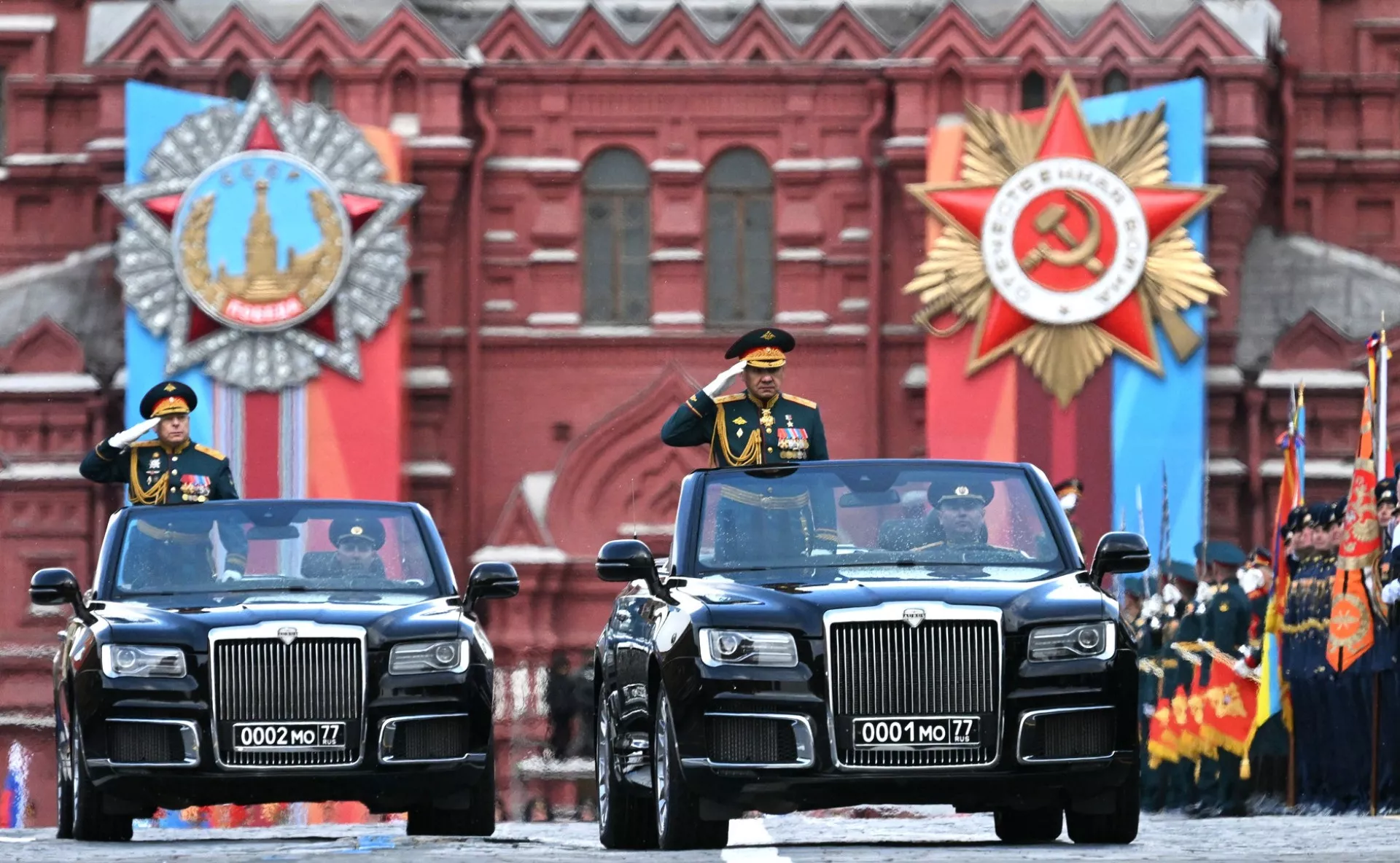
"Russia will do everything to prevent a global confrontation. At the same time, we will not allow anyone to threaten us. Our strategic forces are always combat-ready," Putin said. "Russia is currently going through a difficult, pivotal period; the fate of the homeland, its future depends on each of us," he added.
Putin also said on Tuesday, when he took the oath for his new six-year presidential term, that Russia is going through a "difficult" and "pivotal period." Just as he has claimed since the beginning of the aggression against Ukraine, Putin blamed the West for it, promising the people victory. What he did not say was how Russia got into such a situation, how long the difficulties would last, where that turning point leads, what price ordinary citizens would pay, and what the guilt of those leading the country is.
Komentari (0)
Prijavite se za komentiranje
PrijavaJos nema komentara. Budite prvi!
Minuta
Sve →Iz drugih kategorija

High Representative Not Elected: Germans, French and British Sabotaged Americans, New Attempt at End of June

ČOVIĆ WITHOUT MERCY: How Those Who Brought Ademović to Office Created a Political Hell for Him



Sunny Saturday, quite warm



Tragedy in Albanian resort: Two minors drown












