
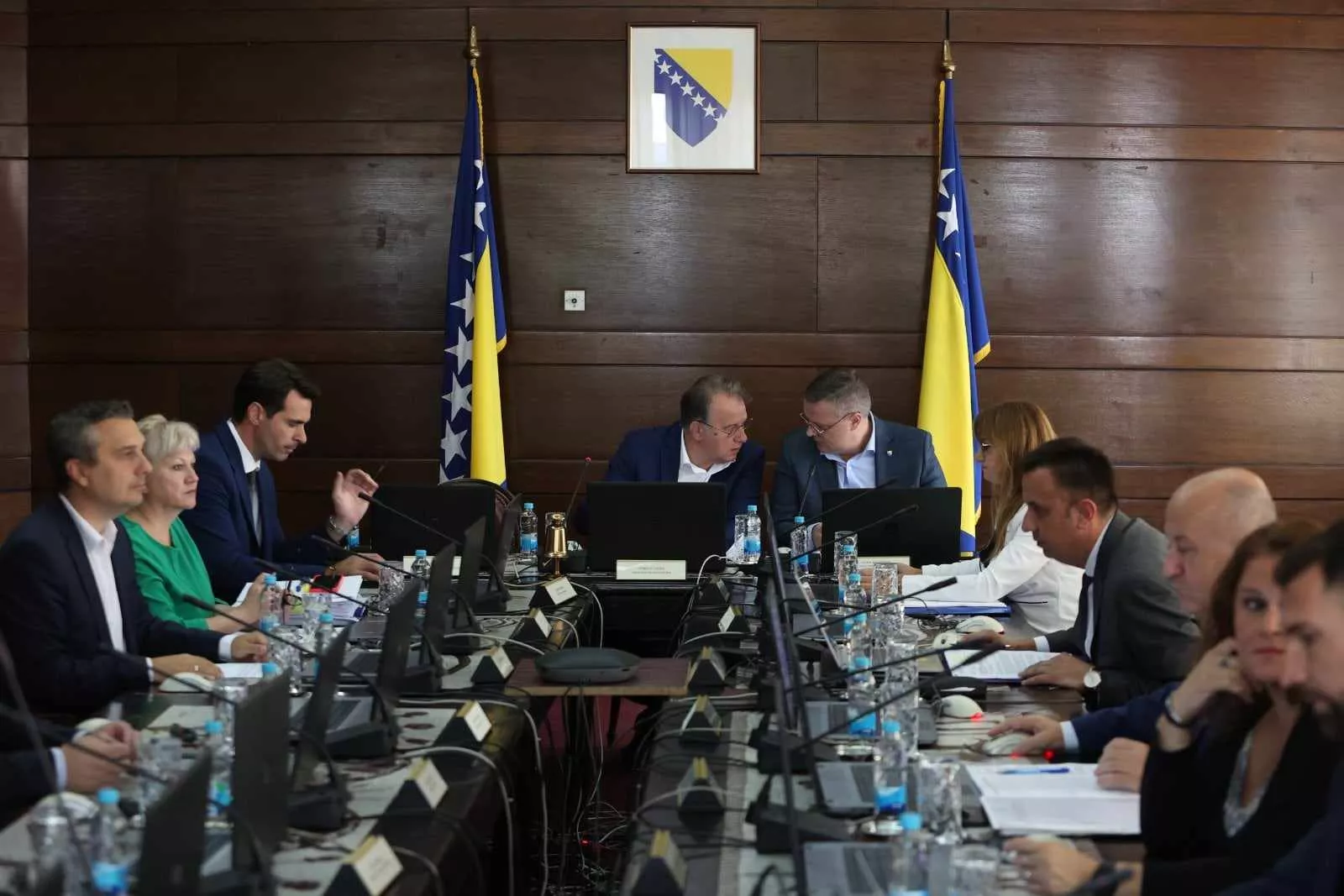
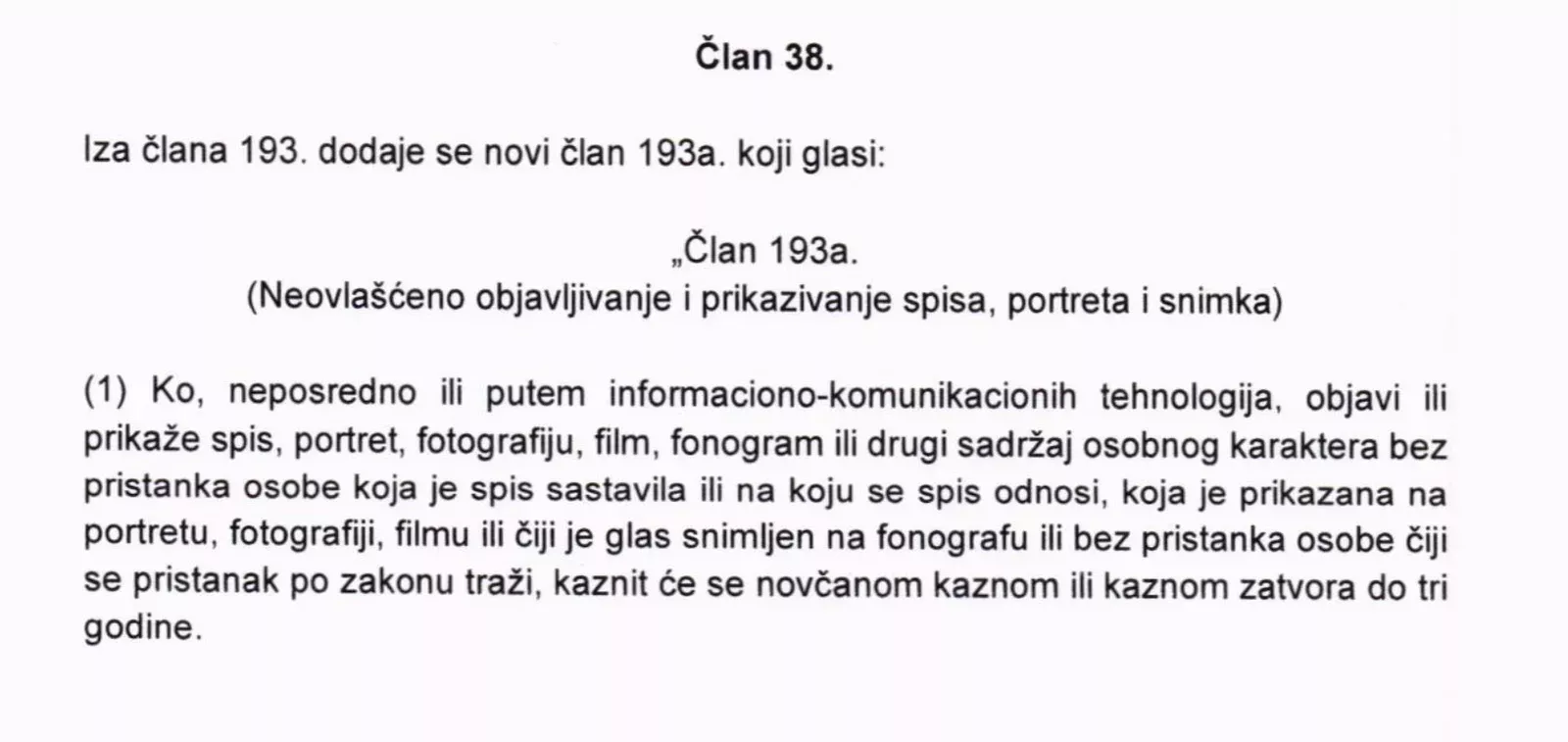
A prison sentence of three years could be imposed on anyone who “directly or through information-communication technologies, publishes or displays a document, portrait, photograph, film, phonogram or other content of a personal nature without the consent of the person who composed the document or to whom the document refers, who is depicted in the portrait, photograph, film or whose voice is recorded on the phonograph, or without the consent of the person whose consent is required by law”.
The first paragraph is, in fact, a quoted provision of the proposed amendments to the Criminal Code of the Federation of Bosnia and Herzegovina, which the Government of the Federation of Bosnia and Herzegovina submitted to the parliamentary procedure in December last year, writes Istraga.ba.
This provision is copied from the Criminal Code of the Republika Srpska.
“Whoever publishes or displays a document, portrait, photograph, video recording, film or phonogram of a personal nature without the consent of the person who composed the document or to whom the document refers, or without the consent of the person depicted in the portrait, photograph, video recording or film or whose voice is recorded on the phonogram, or without the consent of another person whose consent is required by law, and such publication or display has had or could have had harmful consequences for the personal life of that person, shall be punished by a fine or imprisonment for up to two years”, states the Criminal Code of the RS.
Nermin Nikšić and the parties of the Troika, in cooperation with the HDZ, are now taking over the legal acquis of the Republika Srpska and want to insert an identical provision into the Criminal Code of the Federation of Bosnia and Herzegovina, with the prison sentence in the Federation of Bosnia and Herzegovina being even harsher. Instead of two years in the RS, the maximum sentence in the Federation would be – three years in prison.
What does this mean in practice?
Given that the proposed amendments do not clearly state to whom and to what these provisions apply, prosecutors in the FBiH will be able to interpret the disputed provision at their discretion. Here is a more detailed explanation.
The first part of the provision states “whoever publishes”, which means that this publication can include everyone, including journalists whose primary job is publishing. It further states – whoever publishes or displays “a document, portrait, photograph, film, phonogram or other content of a personal nature without the consent of the person who composed the document or to whom the document refers, who is depicted in the portrait, photograph, film or whose voice is recorded on the phonograph, or without the consent of the person whose consent is required by law” shall be punished by a fine or imprisonment for up to three years.
The proposed law does not specify what a document is. A document, for example, could be a contract for the purchase of real estate by an official in BiH, which would mean that by publishing that contract, without the prior consent of the minister, a journalist could be criminally prosecuted. Or, for example, publishing a photograph of defendants arriving at court would be punishable if the journalist or photojournalist does not have the prior consent of the defendant or their defense attorney.
Commenting on the provisions of the RS Law, lawyer from Banja Luka Jovana Kisin-Zagajac told Nezavisne novine: “Just as we criticized the other articles and the way they are defined, or insufficiently defined, the criticism stands for this article as well, whereby, of course, we do not criticize the legislator's intention to protect the right to private life, but rather the insufficiently clear definition of what falls into this sphere and what does not”.
She believes the problem is that the article itself is vague, leaving a lot of room for the prosecutor to determine whether a criminal offense has been committed or not.
“Ultimately, this will depend on whether someone's private life has actually been violated or not. If the circumstances of the case indicate that a certain document or recording that was made does not encroach on someone's private life, then, in my opinion, there should be no basis for criminal prosecution”, Kisin-Zagajac pointed out.
The FBiH Government copied the disputed provision and submitted it to the Parliament of the Federation of Bosnia and Herzegovina for adoption. These provisions, in effect, threaten journalists if they publish confidential documents that, for example, relate to the private property of officials in BiH.
Komentari (0)
Prijavite se za komentiranje
PrijavaJos nema komentara. Budite prvi!
Minuta
Sve →Iz drugih kategorija

High Representative Not Elected: Germans, French and British Sabotaged Americans, New Attempt at End of June

ČOVIĆ WITHOUT MERCY: How Those Who Brought Ademović to Office Created a Political Hell for Him



Sunny Saturday, quite warm



Tragedy in Albanian resort: Two minors drown












