
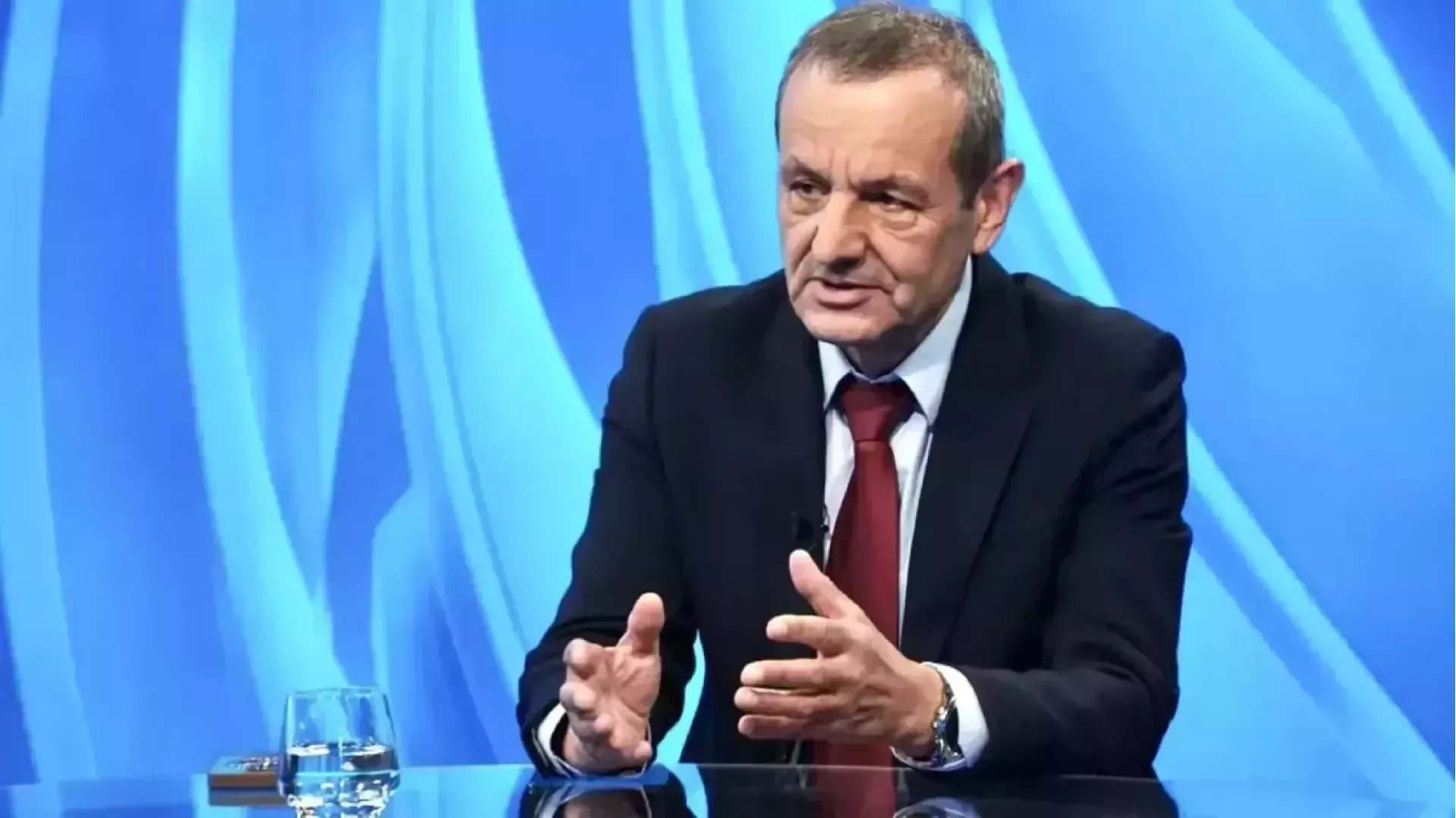
Written for NAP: Prof. Dr. Hazim Bašić, member of the Presidency of Krug 99
In his recent public appearances, it is clear that the High Representative Christian Schmidt's narrative is characterized by avoiding a precise political stance, diplomatic ambiguity, unclear expression, and insufficient decisiveness in confronting nationalist and anti-democratic tendencies in BiH. Although the role of the High Representative is to assist in the post-war construction of a functional, democratic state, his messages often give the impression of a passive observer rather than an active facilitator of democratic development.
His statements, wrapped in diplomatic phrases and a regular dose of confusion, show that he does not understand the real political and legal situation in Bosnia and Herzegovina, and will be analyzed through his answers to several key current issues.
First and foremost, in his addresses at two important conferences (the one in Dayton on the occasion of the 30th anniversary of the signing of the peace agreement and at the recently held PIC session), Schmidt has completely uncritically launched the non-existent so-called 'Croat question' into the public sphere. With this, the High Representative contributes to establishing the fabricated problem of so-called 'legitimate representation' in the political discourse. Numerous meetings between Schmidt and the Croatian Prime Minister may indicate that a tendency to emphasize this particular issue is not excluded. It would be interesting to hear his answer to the question: How would he apply the model of 'equal rights of peoples' in Germany?
Second, when he speaks about the rulings of the European Court of Human Rights (ECtHR), the High Representative systematically omits to mention all 5+1 rulings. He almost always mentions only the ruling in the Sejdić-Finci case (even avoiding the summary English title for all these cases: Sejdić-Finci Case Law). A later analysis of his positions, expressing support for the HDZ BiH policy, will reveal that this is not accidental either. It is worth recalling the fact that he actively fought against the ruling in the case of Dr. Slaven Kovačević vs. BiH.
Answer to the question about three federal units - substantial appeasement of HDZ
Here is the High Representative's answer to the question of what he thinks about the HDZ's proposal for federalizing the country (with full understanding of all the translator's struggles): "We haven't discussed that. We've only seen that it's something that needs further work, and we've seen that there is considerable willingness within the international community, and not just within the international community, but also among others, to participate and help. We don't need to reinvent the wheel every day. We just need to look at what has already been considered and perhaps adapt those solutions. Perhaps that could be a way to include a solution for the decisions of the European Court of Human Rights."
The answer is full of ambiguities ('perhaps', 'something that needs work', 'some adaptation', 'but also among others', 'to include') which gives room for HDZ's long-standing strategy of creating a third entity, without clear resistance from the OHR. Instead of clearly rejecting proposals that lead to further ethno-territorialization of the country, Schmidt uses language that can encourage HDZ to continue with these demands, all under the guise of the European path.
Finally, Schmidt literally repeats HDZ's incorrect linking of ECtHR rulings with ethnic entities! This is a dangerous substitution of theses; all rulings call for civic equality, not a new territorial organization of the state. The truth is that in the case of ethnic division of the country into three entities, the ruling in the Sejdić-Finci case would be automatically satisfied. Hence Schmidt's reduction of the entire package of rulings to just one, the Sejdić-Finci case. Coincidence? The president of HDZ BiH has repeatedly stated that 'federalization' would automatically resolve all ECtHR rulings, which is only partially true.
Therefore, although he claims not to have discussed this topic with HDZ, the High Representative literally presents their strategy: let's federalize the country to implement the ECtHR rulings! However, one ruling, that in the case of Dr. Slaven Kovačević, is a thorn in the side. It could not be implemented by federalizing the country, as it requires a single electoral unit when electing members of the BiH Presidency. Hence the energetic fight by both Schmidt and both HDZs to abolish it.
"Let's wait and see" - rhetoric of powerlessness
When asked about unblocking political processes in Bosnia and Herzegovina, Schmidt says: "Let's wait and see... everyone needs to take responsibility... we can't wait forever." This statement shows an avoidance of personal responsibility and a passing of the buck to the abstract 'international community' and 'others'. Instead of a concrete plan or deadline for action, which is a fundamental part of his mandate, Schmidt uses rhetorically empty and discouraging phrases for citizens who have been suffering blockades for years. He even made completely contradictory statements in a very short period: "Time is running out. We don't have weeks, months, years to see what will happen. I won't wait forever, now is the time to act," only to immediately state afterwards: "I am here, so let's wait and see."
The answer to the question related to so-called 'European laws' is also interesting, where he completely shifted the focus to the topic of financing: "As for the laws that need to be passed at the state level, the Law on the HJPC, the Law on Courts, without money, however, nothing can happen. I think the state must provide more money so that it can fulfill its obligations, and that is something we are all working on intensively." For a long time, there have been extensive debates around these two laws concerning various aspects: reducing state competencies, not including the Venice Commission's remarks, the location of the Appellate Council, ... but no one in the discussions has ever mentioned a problem with financing these fundamental state institutions.
Why doesn't the High Representative talk about the European dimension of these laws? His answer is another example of technocratic evasion, where instead of a decisive fight for an independent judiciary, Schmidt focuses on fiscal technicalities. The integrity of judicial institutions, corruption, their ethnicization are political problems, not budgetary ones, and require strong political support, which Schmidt has not offered.
In these answers, C. Schmidt shows a tendency to obscure real problems instead of taking a clear political stance. Furthermore, he appeases ethno-national elites, especially HDZ BiH, by normalizing their demands for additional entity divisions.
If the High Representative truly wants BiH to become a functional democratic state, he must clearly reject ideas of new entities and strengthening ethnic divisions, openly support the principles of civil society and all ECtHR rulings. Finally, he should stop hiding behind the 'international community' and start concretely using the powers he has. Otherwise, he will be remembered as another diplomat who, consciously or not, helped preserve the status quo and prevent the genuine democratization of Bosnia and Herzegovina. Isn't that enough reason for his replacement?
Instead of being firm, transparent, and principled, as would be expected from a person tasked with preserving and strengthening democracy, Schmidt uses ambiguous and unclear rhetoric, which in the BiH context can also mean passive complicity in policies that dismantle the state.
Komentari (0)
Prijavite se za komentiranje
PrijavaJos nema komentara. Budite prvi!
Minuta
Sve →Iz drugih kategorija

High Representative Not Elected: Germans, French and British Against Americans, New Attempt at End of June

ČOVIĆ WITHOUT MERCY: How Those Who Brought Ademović to Office Created a Political Hell for Him



Sunny Saturday, quite warm



Tragedy in Albanian resort: Two minors drown












