
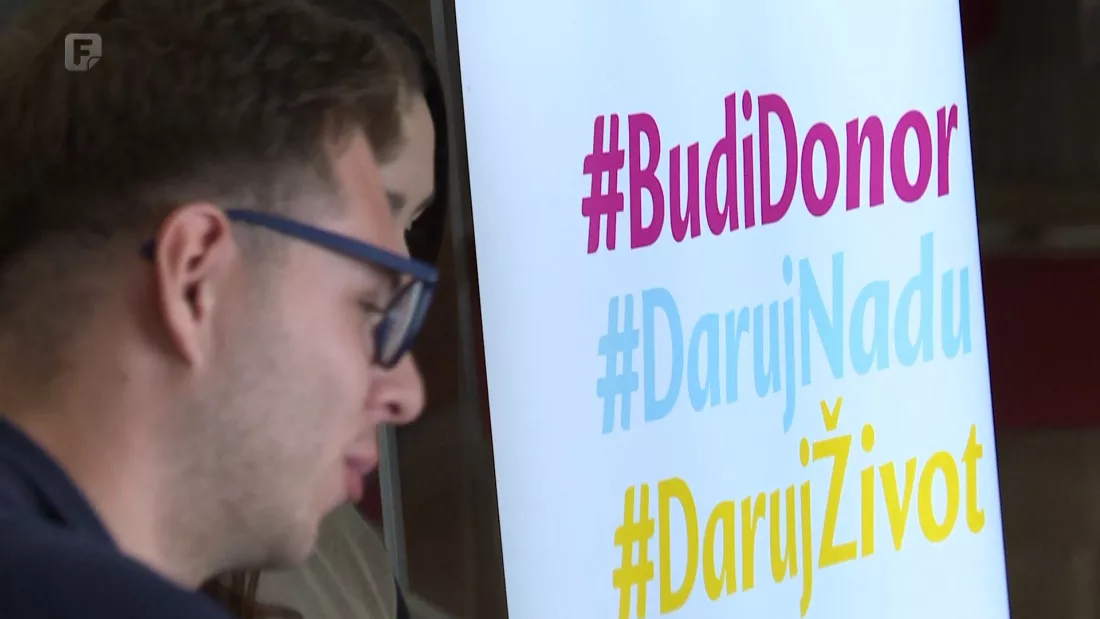
(Patria) - Another European Organ Donation Day has passed. A devastating fact remains that in our country in the 21st century, hundreds of patients die each year waiting for a transplant. And if there were donors, they could have been given a chance at life.
Let us be humane, urged Reis-ul-ulema Kavazović and the Archbishop of Vrhbosna Vukšić, who called organ donation a charitable act. They clearly emphasized that saving lives is not a threat to faith by symbolically signing donor cards.
Adnan Fazlagić fought for his life for five years, after a heart attack took away his freedom of movement. In Slovenia, thanks to a donor, he received a new heart.
“My life from the transplant until today and, I hope, in the future, as much as possible, is completely the same as that of all other people. All my abilities have returned, including movement and work capacity. Since 2017, I have been back at my workplace,” he stated for Federal Television.
Marija Jarak from Mostar and Danijela Majstorović from Banja Luka, far from home, received a new heart and a chance at life.
“After five months in Austria, I returned to Mostar and continued my life completely normally,” says Marija.
“My donor was an ideal donor. Fifteen years younger than me. And if it weren't for his donated stem cells, I wouldn't be alive,” emphasized Danijela.
Saving lives requires donors, and doctors are happy when they appear. Professional staff and medical equipment in Bosnia and Herzegovina are not questionable, but for a functional donor system, administrative and social obstacles need to be overcome.
“We haven't had a cadaver for nine months, and I think there is an error or inactivity here, something is happening with the so-called transplant coordinators,” says Damir Rebić, head of Nephrology at the Clinical Center of the University of Sarajevo.
“In the last ten years or so, we have had a significant stagnation in this field. I think this is not so much a matter of organization as it is a matter of disorganization,” assesses Ismet Gavrankapetanović, director of the General Hospital “Prim. dr. Abdulah Nakaš”.
Without active registries, accredited laboratories, and transplant coordinators, there is no progress in this field. Although three years ago a team from Spain offered concrete recommendations for improving the system, including the professionalization of coordinators, they have not yet been implemented.
“We exerted positive pressure on the Ministry of Health of the Federation of Bosnia and Herzegovina, which will update the managements in Tuzla and Sarajevo to activate or change them, forming new candidates for transplant coordinators who will be more diligent,” emphasizes Rebić.
There is no lack of diligence, nor will to strengthen transplant medicine. The goal is to join Eurotransplant. After 14 years, a step forward.
“We managed to send a letter of intent to EU Transplant that Bosnia and Herzegovina, as a unified state, wants to join the Eurotransplant network,” says Dubravka Bošnjak, Minister of Civil Affairs of Bosnia and Herzegovina (HDZ BiH).
Access to the prestigious European international organ exchange network would give hope to citizens waiting for this chance at life. Great expectations are also placed on cooperation with centers in Croatia and Slovenia.
Without system support, there is no donation – says Halima Rešić, president of the Donor Network in Bosnia and Herzegovina.
The support of religious communities is extremely important for reducing prejudices and misconceptions.
“Organ donation can be classified in the first category of permanent charity, because it is a permanent good deed that will remain behind us, dedicated to life by saving people's lives. I believe this is the pinnacle of charity we can do,” stated Husein ef. Kavazović, Reis-ul-ulema of the Islamic Community of Bosnia and Herzegovina.
“Nothing on this earth is as great as serving human life, enabling someone who is endangered or sick to prolong their life - whether through blood donation or organ donation. That is truly a noble deed,” emphasized Mons. Tomo Vukšić, Archbishop of Vrhbosna.
Adnan, Marija, and Danijela remind us that every signature on a donor card can start a new pulse of life. Many have lost the battle. Humane gestures will save human lives.
Komentari (0)
Prijavite se za komentiranje
PrijavaJos nema komentara. Budite prvi!
Minuta
Sve →Iz drugih kategorija

High Representative Not Elected: Germans, French and British Sabotaged Americans, New Attempt at End of June

ČOVIĆ WITHOUT MERCY: How Those Who Brought Ademović to Office Created a Political Hell for Him



Sunny Saturday, quite warm



Tragedy in Albanian resort: Two minors drown












