
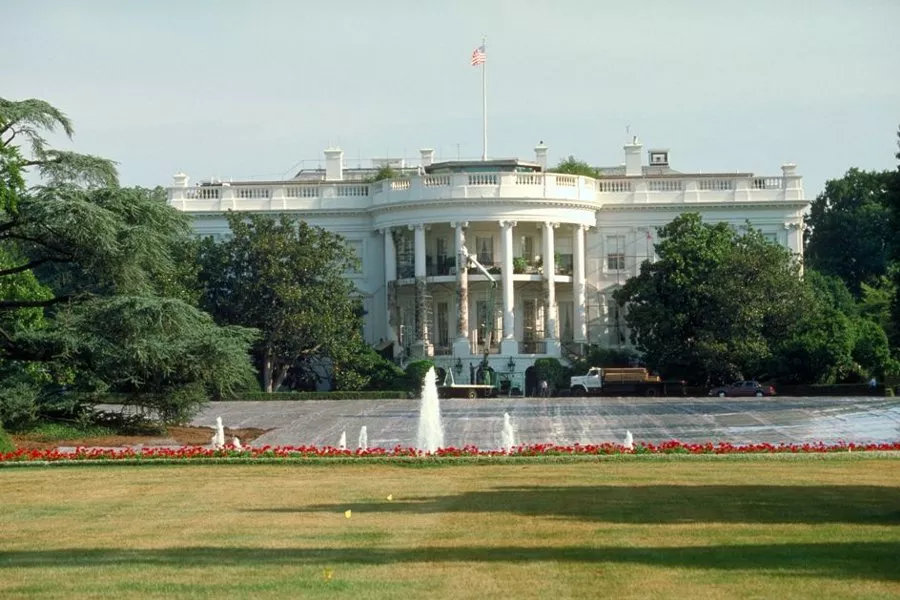
(Patria) - US President Donald Trump ordered the reintroduction of tariffs on dozens of trading partners, as part of his fundamental strategy to reshape global trade in favor of the American economy.
However, in a slight reprieve, the White House announced that the measures would take effect in a week, rather than this Friday as previously expected, AFP reported this morning.
Tariffs are a demonstration of raw economic power that Trump says will put American exporters in a stronger position while boosting domestic production by preventing imports.
But the strong approach has raised fears of inflation and other economic consequences in the world's largest economy. With questions hanging over the effectiveness of bilateral trade agreements already reached, including those between the European Union and Japan, the outcome of Trump's plan remained uncertain.
Trump's new measures in an executive order increased tariffs on dozens of economies to a rate of 41 percent.
Frantic negotiations
Most of these new tariff increases were first announced in April when Trump imposed a minimum tariff of ten percent on goods from almost every country in the world, citing unfair trade practices and American deficits. However, Washington then postponed the implementation, amid a frantic series of negotiations, with announcements of new tariffs and agreements with some partners.
On Thursday, Trump announced that he was postponing tariff increases on products from Mexico, a major US trading partner. The ninety-day postponement followed talks with his counterpart Claudia Sheinbaum.
The seventy-nine-year-old Republican has made tariffs a key part of his protectionist brand of far-right policy. On Thursday, he claimed that the American economy "has no chance of survival or success" without tariffs.
While Trump has announced an increase in tariff revenue since the beginning of the year, economists warn that tariffs could fuel inflation.
Proponents of his policy argue that their impact will be one-off, but analysts are awaiting further economic data to assess the more lasting effects.
China in question
Among those who managed to reach agreements with Washington were Vietnam, Japan, Indonesia, the Philippines, South Korea, and the European Union. The United Kingdom also reached a pact with the United States, although it was not initially targeted by higher "reciprocal" tariffs.
Washington has not finalized an agreement with neighboring Canada, but Trump has reached an agreement with Mexico to maintain the existing 25 percent tariff on its products.
However, Canada received a 35 percent tariff under Trump's new executive order.
An exemption for goods entering the country under the North American Free Trade Agreement remained in place, according to the White House. But goods transshipped to avoid the 35 percent tariff would face even higher levels.
Canada's trade relations with the United States were once again threatened after Prime Minister Mark Carney announced plans to recognize the state of Palestine at the United Nations General Assembly in September.
China was excluded from the latest drama, with a deadline of August 12, when tariffs could return to a higher level.
Washington and Beijing have imposed mutual tariffs on goods, bringing them to triple-digit levels before both countries reached an agreement in May to temporarily reduce these tariffs. The superpowers are now working to extend the truce.
Tariffs for Bosnia and Herzegovina
Trump also imposed tariffs on Bosnia and Herzegovina this morning, First Post reported.
Bosnia and Herzegovina is at the upper end of the list in terms of the height of the imposed tariffs. At the top of the list are Syria with 41%, Laos and Myanmar with 40%, Switzerland with 39%, Iraq and Serbia with 35%, Algeria, Bosnia and Herzegovina, Libya, and South Africa with 30%.
Last month, Trump sent an official letter to the Chairwoman of the Presidency of Bosnia and Herzegovina, Željka Cvijanović, stating that he would impose "a 30% tariff on all products coming into the US for Bosnia and Herzegovina".
In Trump's initial decision in April, Bosnia and Herzegovina faced a 35 percent tariff.
Explaining the high tariff rates for the aforementioned countries, First Post states that Trump said in a statement this morning that some countries have agreed or are on the verge of agreeing to significant trade and security commitments with the United States, while others, as he said, have remained without negotiations with the US or have "offered terms that, in my opinion, do not sufficiently address the imbalances in our trade relations or have not sufficiently aligned with the United States on economic and national security issues".
Komentari (0)
Prijavite se za komentiranje
PrijavaJos nema komentara. Budite prvi!
Minuta
Sve →Iz drugih kategorija

High Representative Not Elected: Germans, French and British Sabotaged Americans, New Attempt at End of June

ČOVIĆ WITHOUT MERCY: How Those Who Brought Ademović to Office Created a Political Hell for Him



Sunny Saturday, quite warm



Tragedy in Albanian resort: Two minors drown












