
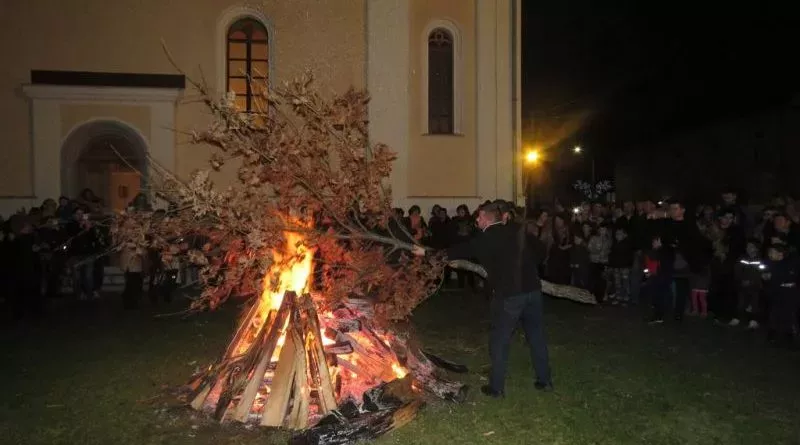
(Patria) - Orthodox believers, whose church follows the old Julian calendar, celebrate Christmas, the birth of Jesus Christ, on January 7. It is preceded by the Nativity Fast, which lasts from November 28 to January 6. The main goals of the fast are: glorifying God and his saints, and cleansing the soul and body from physical and mental passions. The fast involves prayers and acts of charity, abstaining from bad thoughts, desires and deeds, as well as abstaining from meat and dairy products.
Christmas marks a moment of change in nature, the end of a cycle that lasted a year and the beginning of a new vegetation period. The last day before Christmas and also the last day of the Nativity Fast is Christmas Eve.
On that day, and in some regions also the day before, people go to the forest and bring a branch of a young oak or holm oak tree, which is first greeted with: "Good day to you, badnjak" and sprinkled with grain. On Christmas Eve, according to Orthodox custom, all debts and borrowed items are returned.
The badnjak is brought into the house on Christmas Eve. In the past, part of it was used to light a fire, and when it burned out, it was taken to the stables and pens, while the other part was kept for the polaznik, who would light it on Christmas Day itself. This custom is still observed in some places today, while in urban areas the badnjak log or branch is bought at the market and brought into the house even a day or two earlier. Many decorate it with fresh or dried fruit and candies, and place gifts for loved ones underneath it.
The church has given a ritual meaning to the burning of the badnjak – warming around the badnjak symbolizes warming with love of the present household members, as everyone celebrates this holiday in their own home.
Straw (symbolizing the straw on which Jesus Christ was born, and by bringing it into the home, God's blessing is brought in) is an integral part of celebrating Christmas Eve. According to old customs, it was brought into the house together with the badnjak and spread on the floor under the table, where it remains throughout the Christmas period. In many regions, people even had dinner on it on Christmas Eve. Today, in urban areas, the straw is symbolically tied with a red thread to the badnjak.
For Christmas Eve, a lenten meal is prepared: dried peppers stuffed with vegetables, only rice or beans, lenten sarma made from soy and onion, lenten beans, cabbage pie in some regions, sometimes potato pie or walnut pie, fish, potato salad, bean and onion salad, along with nuts and dried fruit, baked pumpkin, compote, lenten strudels and small pastries.
Komentari (0)
Prijavite se za komentiranje
PrijavaJos nema komentara. Budite prvi!
Minuta
Sve →Iz drugih kategorija

High Representative Not Elected: Germans, French and British Sabotaged Americans, New Attempt at End of June

ČOVIĆ WITHOUT MERCY: How Those Who Brought Ademović to Office Created a Political Hell for Him



Sunny Saturday, quite warm



Tragedy in Albanian resort: Two minors drown












