
Interviewed by: Delvin Kovač
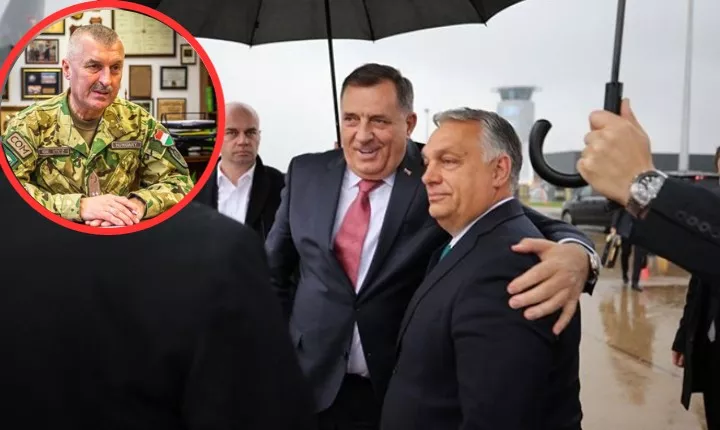
Hungary takes command of the EUFOR Althea mission in Bosnia and Herzegovina from January 1, 2024, under the "baton" of Major General Laszlo Sticz. This was confirmed yesterday by Hungarian Defence Minister Kristof Szalay-Bobrovniczky.
What are Hungary's motives, what was the mandate of their Austrian predecessors, is BiH now in danger, how much can we rely on EUFOR, and why are we not keeping pace with our neighbours who are arming themselves to the teeth? These are the questions answered in an interview for the Patria News Agency by military analyst Nedžad Ahatović.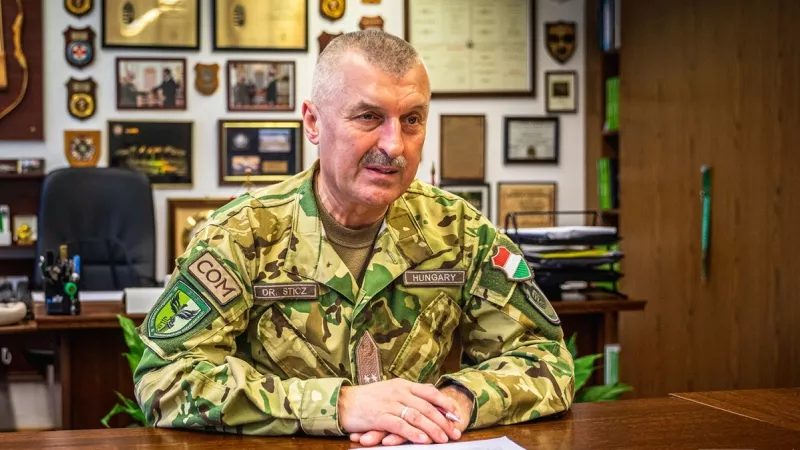
Sticz: Will take over the "baton" of Althea
How do you view the announcement of Hungary taking command of the Althea mission? How dangerous is this for Bosnia and Herzegovina?
Ahatović: Given that Hungary has decided not to develop bilateral cooperation with Bosnia and Herzegovina, but only with one part of it - the entity of Republika Srpska, thereby underscoring the aspiration of that part of Bosnia and Herzegovina for independence, and given the statements of Hungarian Prime Minister Viktor Orban regarding Bosnia and Herzegovina, there is justified suspicion among the BiH public about the objectivity of managing Operation Althea by Hungarian Major General Laszlo Sticz.
A justified question that can therefore be asked is - will he be more in the service of that secessionist policy of Russian satellites in Bosnia and Herzegovina, and less in the service of the peace stabilisation operation Althea, at least within the framework of a professional soldier.
How do you view the period during which Austria was at the helm of EUFOR in BiH, what might be particularly highlighted, and what in your opinion are the main motives of the Hungarians?
Ahatović: The Austrians, as always, were on track to bring the Althea mission to an end without too much fanfare, but circumstances changed over time, which unfortunately was not noted in Vienna as a necessity to monitor EUFOR activities.
The motives for Hungary taking over Althea can be viewed from several angles. The primary motive is to achieve dominance in the problematic Balkans in relation to Croatia and Serbia, both of which are competitors with Putin in the East, while Croatia is also a competitor in Brussels and Washington in the West.
In political terms, for Prime Minister Orban it is important to position himself as dominant in this part of the world and to have allies in his policy of non-participation in blaming the Russian Federation for the obvious aggression against Ukraine.
In the Balkans, he has two such allies - Vučić and Dodik, so it is only right that he also looks after their interests, the primary of which is that Serbia has not known its real state borders for over 200 years.
Ahatović: Serbia has not known its borders for 200 years
Can BiH generally rely on EUFOR in the event of an outbreak of conflict, especially now that it will be led by Hungarians, whose Prime Minister Orban we know has certain views on BiH, maintains good relations with secessionist Dodik, but also with Russian President Vladimir Putin?
Ahatović: The Dayton Peace Agreement ties the EUFOR mission in BiH with specific competencies that prescribe broad powers, especially for the mission commander, who is responsible for calling in reinforcements and involving NATO if necessary.
However, regardless of who is at the head of EUFOR, in general, BiH should not rely on them. Bosnia and Herzegovina has its own security system like any European country, and it should be developed and invested in, but this is not being done due to those political currents that hold a veto and use it for the partition of the country.
Nevertheless, our state, according to the Constitution and the laws in force, represents a unique, indivisible, independent, and sovereign state, for whose security the competent institutions, ministries, and bodies responsible by law should primarily care. All those who wish to help us in this are welcome.
The Council of Ministers of BiH did not make a decision yesterday on allocating funds for the procurement of American helicopters. Ministers from Republika Srpska voted against. While our neighbours are arming themselves (we know Serbia is armed to the teeth, Croatia is acquiring "Rafale" fighter jets) - BiH is doing almost nothing in this regard. How do you view this?
Ahatović: Regardless of the UH-1H Huey II helicopters themselves, which of course need to arrive as soon as possible, Bosnia and Herzegovina must catch up with its neighbours in arming as soon as possible, otherwise we will need more resources for this purpose.
Any obstruction of this process is detrimental to the security of our state, and any politician who does so does it deliberately, with the aim of undermining the defence system of BiH.
How else to explain such a decades-long stance that has no justification other than political, which endangers all citizens of BiH with such an irresponsible approach.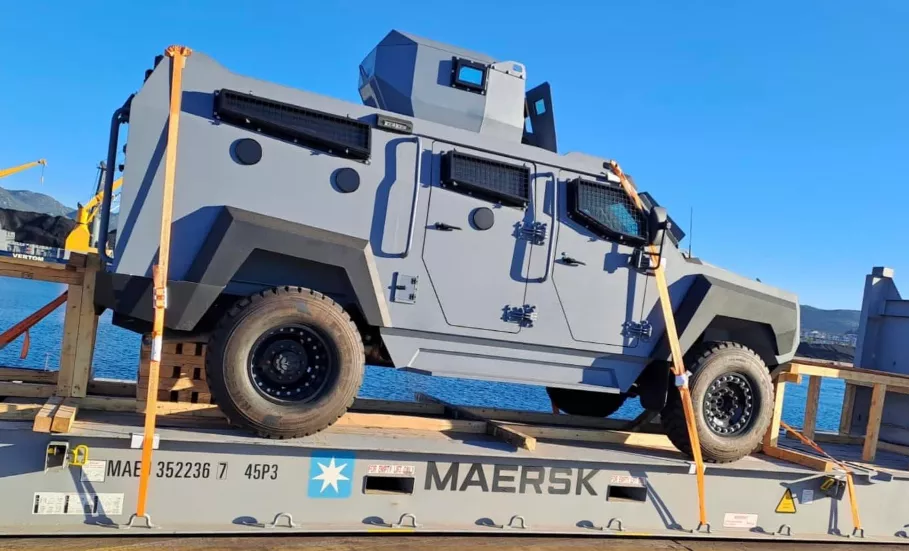
The Tuzla Canton Ministry of Interior will be equipped with four armoured vehicles
It seems that the only bright example in all this is the Government of Tuzla Canton (TK), which has taken concrete steps to equip its police forces by procuring four armoured personnel carriers. Can the rest of Bosnia and Herzegovina learn from their example?
Ahatović: It can, but this process should be approached systematically, establishing standards at the level of the Ministry of Interior of the Federation of BiH, although every procurement and investment in security is a necessity, not a luxury, and every procurement, no matter how small, in that sector should be welcomed and that example followed.
Komentari (0)
Prijavite se za komentiranje
PrijavaJos nema komentara. Budite prvi!
Minuta
Sve →Iz drugih kategorija

High Representative Not Elected: Germans, French and British Against Americans, New Attempt at End of June

ČOVIĆ WITHOUT MERCY: How Those Who Brought Ademović to Office Created a Political Hell for Him



Sunny Saturday, quite warm



Tragedy in Albanian resort: Two minors drown












