
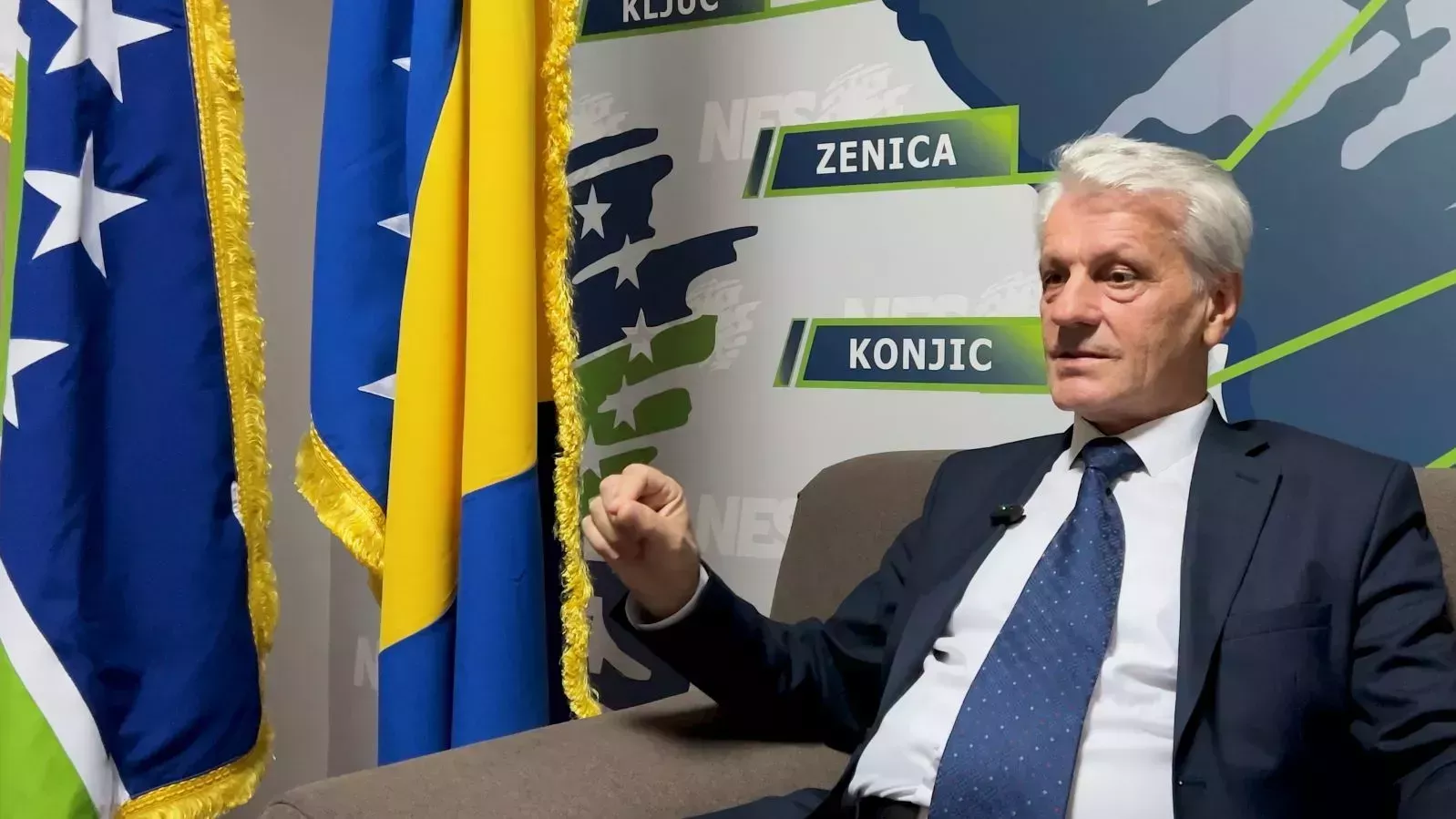
By: Enver Išerić, member of the Presidency of NES
In his authorial text of August 6, 2024, Jozo Pavković answered many questions that the President of Serbia, Aleksandar Vučić, brought up after 29 years. He spoke about how easy it was for Croats to defeat the Republika Srpska Krajina when they went against civilians with tanks led by the American ambassador.
In this case, I have no intention of delving into the analysis of events before, during, and after Operation Storm, or the reasons why the Serbs rejected the Z-4 peace plan. There is a high probability that the Serb leaders in Croatia, i.e., RSK and Serbia, were naive and rejected the plan that, as Pavković claims, "gave Serbian Krajina a state within a state." But there are other possibilities. One of them is a possible agreement between the leaders of Croatia and Serbia, which also included a solution for Bosnia and Herzegovina.
It is interesting that Vučić claims that the Croatian Army fought against civilians and that these tank attacks were led by the American ambassador in Croatia.
Where did the Serbian army in RSK disappear so quickly? How was it then possible for the Croatian Army to suffer certain losses in that operation? Probably from civilians.
It was as it was, but that operation to liberate the occupied parts of Croatia and Bosnia and Herzegovina was carried out based on the Split Agreement, which entailed military cooperation between the Army of the Republic of Bosnia and Herzegovina and the Croatian Army of the Republic of Croatia in liberating the occupied parts of Bosnia and Herzegovina and Croatia.
It might be good for Aleksandar Vučić, if he claims that the American ambassador led the tank attacks on RSK, to answer the question of why the American administration stopped the Army of the Republic of Bosnia and Herzegovina from liberating the occupied parts of Bosnia and Herzegovina, right before Banja Luka?
Pavković concludes his text with the statement that the American diplomat sympathized with the Serbian refugees, even though his leaders had previously rejected the Z-4 plan. "If they had accepted it, they would have had 'RSK' in the Republic of Croatia, a more powerful state than Republika Srpska in BiH. And today, it would not be debated whether Galbraith entered Knin in a tank or got out of it by tractor."
What is disputable in this text is precisely this conclusion, which suggests that the entity Republika Srpska is a state. Well, Mr. Pavković should know that this is not the case and never will be. Regardless of the fact that the leadership of HDZ BiH suggested to the leadership of RS to protect RS, from which they expelled almost all Croats and Bosniaks during the aggression against Bosnia and Herzegovina, Republika Srpska is not and never will be a state. And the entity Republika Srpska is not just an entity of the Serb people. That should be clear to all of us. There is a ruling by the Constitutional Court of Bosnia and Herzegovina which established that all three constituent peoples are constituent throughout the entire territory of the state and must enjoy the same rights. Therefore, RS is not an entity solely of the Serb people, just as the Federation of Bosnia and Herzegovina is not an entity solely of Bosniaks and Croats, as some still think and claim.
Even in the Washington Agreement, which is invoked by those who support RS and their secessionist policies and who advocate for and desire a third entity, it is emphasized that the Federation is established on the territory of the Republic of Bosnia and Herzegovina with a majority of Bosniaks and Croats, and that the decision on the status of the territory with a majority Serb population will be made within the framework of peace negotiations. And those areas with a majority of Bosniaks, Croats, and Serbs are not the areas that make up these two entities today. There were many municipalities in both entities that were predominantly inhabited by Bosniaks and Croats in RS or Serbs in the Federation of BiH. What we have today as a demographic/people/national situation is the result of aggression, war crimes, and genocide. And that will have to be corrected. No one should recognize it as a fait accompli.
After that came the Dayton Peace Agreement, which established two entities, thereby practically invalidating all previous solutions and decisions of the rebel bodies of the so-called Serb Republic of Bosnia and Herzegovina and the Bosniak-Croat Federation. The Dayton Peace Agreement removed any possibility of dividing the state or its further territorial disintegration on an ethnic basis. It should be particularly noted that after both the Washington Agreement and the Dayton Peace Agreement, numerous judgments were made by the International Criminal Tribunal for the former Yugoslavia, which proved joint criminal enterprises aimed at dividing the state of Bosnia and Herzegovina.
In addition, a ruling was made by the Constitutional Court of Bosnia and Herzegovina on constitutionality, and after that ruling, no one has the right, can, nor will be allowed to claim a certain territory for only a certain people. This will not happen, regardless of how much support or what kind of instructions come from Zagreb or Belgrade, centers where the ideas of joint criminal enterprises and the division of our state were created and elaborated.
Komentari (0)
Prijavite se za komentiranje
PrijavaJos nema komentara. Budite prvi!
Minuta
Sve →Iz drugih kategorija

High Representative Not Elected: Germans, French and British Against Americans, New Attempt at End of June

ČOVIĆ WITHOUT MERCY: How Those Who Brought Ademović to Office Created a Political Hell for Him



Sunny Saturday, quite warm



Tragedy in Albanian resort: Two minors drown












