

By: Armin Sijamić
Bashar al-Assad is a Syrian past. But his departure is a beginning for some other actors and processes. What do neighboring Arab states expect after Assad's plan and is the Middle East entering a new phase, returning to the settings of the Arab Spring?
The Syrian Arab Republic has likely ceased to exist, as the new authorities in Damascus desire a different worldview. Forces led by Hayat Tahrir al-Sham (HTS), formerly Syrian Al-Qaeda, do not want a secular state.
Since Syria is divided on many grounds (religious, national, sectarian...), insisting on the supremacy of any religious or any group can be a prelude to conflicts. Let's note that one of the causes of the rebellion against Assad was that the regime favored the minority Alawites.
How the new government will respond to these dilemmas will be known quickly. The transition of power will not last forever, and problems do not wait. These decisions can affect a large part of the Arab world.
A look at the region
When a series of uprisings against the then Arab rulers began in Tunisia in December 2010, the potential for reshaping the region was seen in a short time. Some wanted to change the government out of a desire for better living conditions, they sought democracy, they were tired of autocrats...
Some others wanted to use it for their geopolitical goals, riding on the people's dissatisfaction. Armed rebellion from outside was generously supported, even with direct military interventions. Let's take the example of Syria and Libya. The government was overthrown in Egypt, Tunisia, and Yemen. Bahrain, where the majority Shiites rebelled against the ruling Sunni dynasty, was removed from the news in much of the West, and war began in Iraq, Yemen, and Syria.
With Assad's fall, things could start moving again. The new government in Syria is a cause for alarm not only for Russia and Iran, but also for some Arab states, even though they disliked Assad and worked towards his removal.
Most were not upset by Assad's departure, but the consequences of his fall were. Power was taken over by forces influenced by the Muslim Brotherhood, which now has its stronghold in Turkey and Qatar. The Muslim Brotherhood has been declared a terrorist organization in Egypt, Saudi Arabia, Bahrain, and the United Arab Emirates.
In the Egyptian uprising of 2011, Hosni Mubarak was overthrown, and in the elections, the people gave their trust to Mohamed Morsi, who was backed by the Muslim Brotherhood. Morsi was then overthrown, and General Abdel Fattah el-Sisi took his place.
Arab Uprising for the Second Time?
It is precisely el-Sisi who is one of those who fears for his rule, at least according to The Washington Post. This American media wrote last Saturday that the authorities in Egypt, Jordan, Saudi Arabia, and the United Arab Emirates fear popular uprisings, following the example of Assad's overthrow.
The fear might have been detected when some Arab states decided to bring Assad back into regional Arab flows, trying to bring Syria closer to the Arabs. In Syria at that time, the strongest players were Iran, Russia, Turkey, and the United States, all non-Arab states. Now Israel has replaced Iran, and Russia is on its way out. Thus, Syria is slipping away from the Arabs even without Assad in power.
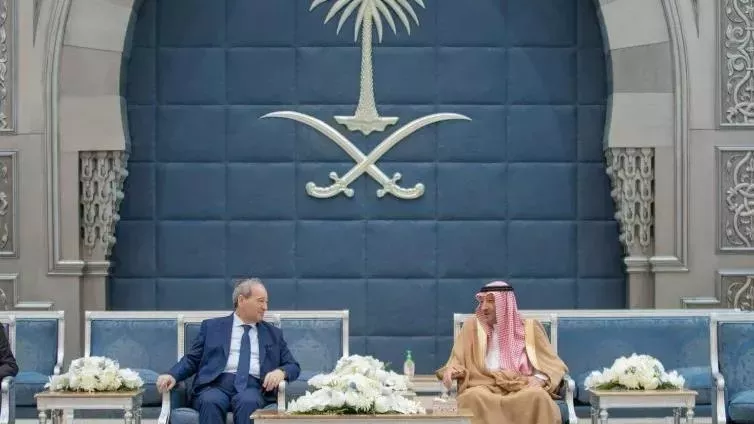
Saudi Arabia accompanied Assad's fall with, among other things, statements that sounded unusually direct for reactions from Riyadh. In one from about ten days ago, Riyadh speaks of "sisterly" Syria and a "brotherly" people, alluding to common Arab origin.
Riyadh says it will respect the decisions of the Syrians and calls for the preservation of "Syria's unity and the cohesion of its people, in a way that protects it from sliding into chaos and division." Riyadh states that "The Kingdom affirms its support for all that would achieve the security and stability of sisterly Syria in a way that preserves its sovereignty, independence, and territorial integrity," and calls for help to "overcome the devastation that the brotherly Syrian people have suffered for many years, which has claimed the lives of hundreds of thousands of innocent people and displaced millions, during which foreign militias have devastated Syria, imposing external agendas on the people of Syria," adding that "the time has come" for "Syria to regain its rightful place in the Arab and Islamic world."
A day later, Riyadh condemns Israel's occupation of the buffer zone in the Golan Heights and says Tel Aviv is showing determination to sabotage Syria's chance to restore stability. The occupation of territory "confirms Israel's continuous violation of international law and its commitment to sabotaging Syria's chances of regaining its security, stability, and territorial integrity." This statement came before the new government officially rebelled against the Israeli incursion into Syria.
The UAE has been even more direct. "The nature of the new forces, their affiliation (with the) Muslim Brotherhood, their affiliation with Al-Qaeda, I think these are all indicators that are quite worrying," recently stated Anwar Gargash, former Minister of Foreign Affairs and current presidential advisor.
In neighboring Iraq, fears are particularly pronounced, as the current leader of HTS, Abu Mohammad al-Golani, was a member of Al-Qaeda (Al-Nusra) and ISIS, where he fought against American forces, the Iraqi government, Shiite and pro-Iranian militias, and Syrian and Iraqi Kurds. In Iraq, they fear conflicts between the new Syrian authorities and pro-Iranian Shiite militias, which would push them into a new (sectarian) war. Al-Golani, or Ahmed Hussein al-Sharaa by his real name, was part of a group that carried out terrorist attacks, including suicide bombings. For this reason, he spent five years in an American prison in Iraq.
Although the new government from Damascus announces that it wants peace, it is clear that goodwill will not last forever and that the Middle East will sooner or later explode over some issue. It should not be forgotten that among the ranks of the armed groups that overthrew Assad are many foreign citizens. Their actions are under special attention, whether they return to their country of origin or wish to expand their "revolution," because the caliphate they fought for extends beyond Syria. In addition, the states that stood behind them may have new demands.
Caution towards the uprising persists in Jordan, Syria's neighbor. Jordan has long supported the rebellion against Assad, and then tried to mend differences. The risk for Jordan from mass uprisings is growing due to the fact that millions of Palestinians live there - generations born in refugee camps. Their uprising, especially in the context of the war in the Gaza Strip since October 7, when Hamas attacked Israel, may be hanging in the air, despite the authorities' best intentions. Part of the new government in Damascus and Hamas have an ideological connection.
One Step Forward, One Step Back
But even without the Palestinian refugees, things are getting complicated, as one bloc strengthens, pushing back two others. The victory in Syria of forces backed by Turkey and Qatar, and the defeat of (pro)Iranian forces, has directly spilled over to those Arab states that the Muslim Brotherhood sees as a threat.
It should be recalled that only in 2021, after almost four years of severed ties, did Saudi Arabia, Egypt, the United Arab Emirates, and Bahrain extend a hand to Qatar again, after previously accusing Doha of inciting uprisings during the Arab Spring and aiding the Muslim Brotherhood. Qatar established contact with the new government in Damascus; it was against Assad and did not hide it.
Assad's fall came after a period of rapprochement in the Middle East. In a short time, Iran and Saudi Arabia opened dialogue, Turkey and Egypt did the same, Assad's Syria was readmitted to Arab forums, the war in Yemen was stopped, negotiations were held on normalizing relations between Riyadh and Tel Aviv after Abu Dhabi and others did so, corridors were projected to connect the European Union and India via the Middle East...
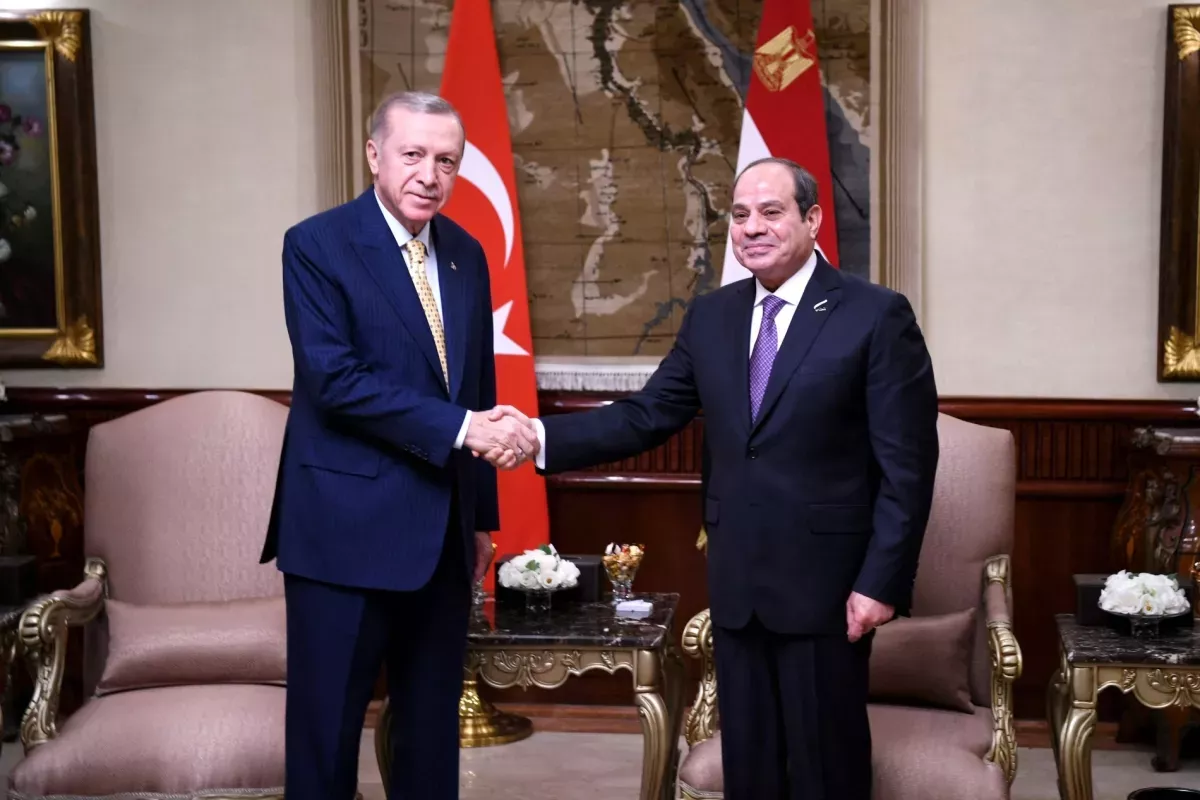
Hamas's attack on southern Israel in October last year shifted things in another direction and triggered a series of chain reactions. Fourteen months later, the Middle East is not the same, and a new redistribution of spheres of influence is underway.
Komentari (0)
Prijavite se za komentiranje
PrijavaJos nema komentara. Budite prvi!
Minuta
Sve →Iz drugih kategorija

High Representative Not Elected: Germans, French and British Sabotaged Americans, New Attempt at End of June

ČOVIĆ WITHOUT MERCY: How Those Who Brought Ademović to Office Created a Political Hell for Him



Sunny Saturday, quite warm



Tragedy in Albanian resort: Two minors drown












