
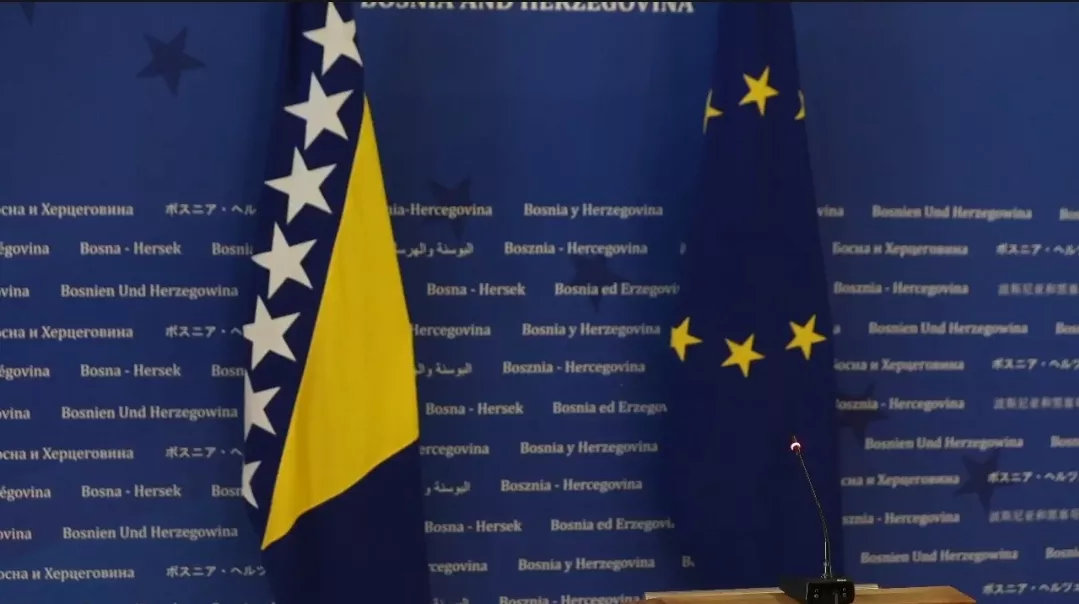
(Patria) - Enlargement is one of the most successful policies through which the European Union promotes stability and prosperity across the continent. Opening accession negotiations is a significant milestone for any country aspiring to join the European Union, marking the beginning of a structured process that prepares the country on its path to membership to fully adopt the common rights and obligations binding on all EU member states. The entire body of EU regulations, i.e., the legal acquis, is known by the French term ‘acquis communautaire’ or simply ‘acquis’ (which roughly translates as “the common achievements of the European Community”).
What does the legal acquis contain?
European Union member states agree to be guided by a set of common rules and pool their sovereignty in key areas where they determine it is in their interest. In this way, they are stronger together, more present internationally, and contribute to maintaining high standards on important issues such as human rights, the rule of law, democracy, the environment, product safety, anti-monopoly rules, energy, and other areas.
For the purposes of accession negotiations, the legal acquis is currently divided into 35 chapters. The chapters are thematic, such as freedom of movement for goods, freedom of movement for workers, freedom to provide services, freedom of movement of capital, etc. Each country wishing to join the EU is given a rational framework for work while aligning its legislation with the legal acquis.
The European Commission adopted a revised methodology in 2020 to make the enlargement process even more credible, predictable, and dynamic, with stronger political guidance.
Under the new methodology, the chapters of the legal acquis are divided into six clusters (fundamentals; internal market; competitiveness and inclusive growth; green agenda and sustainable connectivity; resources, agriculture and cohesion; external relations). Negotiations for each cluster are opened in full after the country meets the conditions for opening.
It is important to note that the cluster on fundamental reforms, which includes the rule of law, the functioning of democratic institutions, and public administration, is opened first and closed last. The EU is a union of values and ‘fundamentals’ are – as the name itself says – the most important element of the accession process.
After the green light from the Council, what are the next steps?
After the European Council gives the green light for the start of accession negotiations, the next step is to agree on the negotiating framework, i.e., the guidelines and principles for conducting accession negotiations. The European Commission drafts the negotiating framework for the EU and submits it to the Council for adoption. The conclusions of the European Council from March 2024 specify that BiH, before the adoption of the negotiating framework, must fulfill all relevant steps set by the European Commission in October 2022 when candidate status was recommended.
Bosnia and Herzegovina, like any other country opening accession negotiations, must also establish its own negotiating structure, negotiating mandate, and framework. First of all, decisions need to be adopted on: 1) coordination between executive bodies, 2) the role of the Parliamentary Assembly of BiH; 3) the involvement of external experts, civil society, and the business community; 4) a transparency and communication strategy.
It is also crucial that Bosnia and Herzegovina appoints a chief negotiator, who leads a team of non-partisan experts and is chosen by consensus. Accession negotiations require the country to harmonize common internal positions and speak with one voice.
The negotiating framework is adopted by both sides at the first Intergovernmental Conference between EU member states and the country that has applied for membership. This is when accession negotiations formally begin.
How ready is BiH currently for EU membership? How aligned is it with the legal acquis?
The level of alignment of Bosnia and Herzegovina with the acquis and preparedness for EU membership in various policy areas were assessed in the Commission's Opinion on its EU membership application from 2019 and in the accompanying Analytical Report, and subsequently evaluated in annual progress reports. The latest Report on BiH was published in November 2023.
The first step in accession negotiations involves the European Commission, together with the country that has applied for EU membership, conducting a formal process of screening (the so-called screening).
This assesses how prepared the country is for EU membership according to the chapters of the legal acquis and clusters. As part of the screening process, Bosnia and Herzegovina is expected to present its National Programme for the Adoption of the Acquis (NPAA) to the European Commission. The screening process will also provide preliminary indicators of issues that will arise during the negotiations.
The findings of the screening are published in a Screening Report that provides an analytical framework for the negotiations.
How long do accession negotiations last?
The EU accession process involves several phases, including establishing the negotiating framework, the Intergovernmental Conference to open negotiations, the screening process, opening benchmarks, negotiations by clusters, i.e., chapters, the Commission's Opinion on readiness for membership after the conclusion of negotiations, the consent of the European Council and the European Parliament for the admission of the applicant country, and the ratification of the accession treaty in each EU member state.
Although there are several steps, the timeframe for meeting each milestone depends solely on the capacity and readiness of the country to make progress.
What support does the EU offer during accession negotiations?
In her annual State of the Union address in September 2023, European Commission President Ursula von der Leyen spoke about the need to respond to a ‘historic call’ by completing the European Union through enlargement. As the most consistent and loyal partner of Bosnia and Herzegovina, to which it has also provided the most significant assistance, the EU remains committed to supporting Bosnia and Herzegovina's progress on its European path and in meeting the membership criteria.
Support will continue in the form of financial assistance, technical support, and strategic advice. Bosnia and Herzegovina can also benefit from the Growth Plan for the Western Balkans, which allocates over 2 billion KM for the country, along with key reforms that will boost investment, growth, and jobs. Under the Growth Plan, Bosnia and Herzegovina will have the opportunity for stronger integration into the single European market, bringing significant benefits for the economy and citizens.
Komentari (0)
Prijavite se za komentiranje
PrijavaJos nema komentara. Budite prvi!
Minuta
Sve →Iz drugih kategorija

High Representative Not Elected: Germans, French and British Against Americans, New Attempt at End of June

ČOVIĆ WITHOUT MERCY: How Those Who Brought Ademović to Office Created a Political Hell for Him



Sunny Saturday, quite warm



Tragedy in Albanian resort: Two minors drown












