
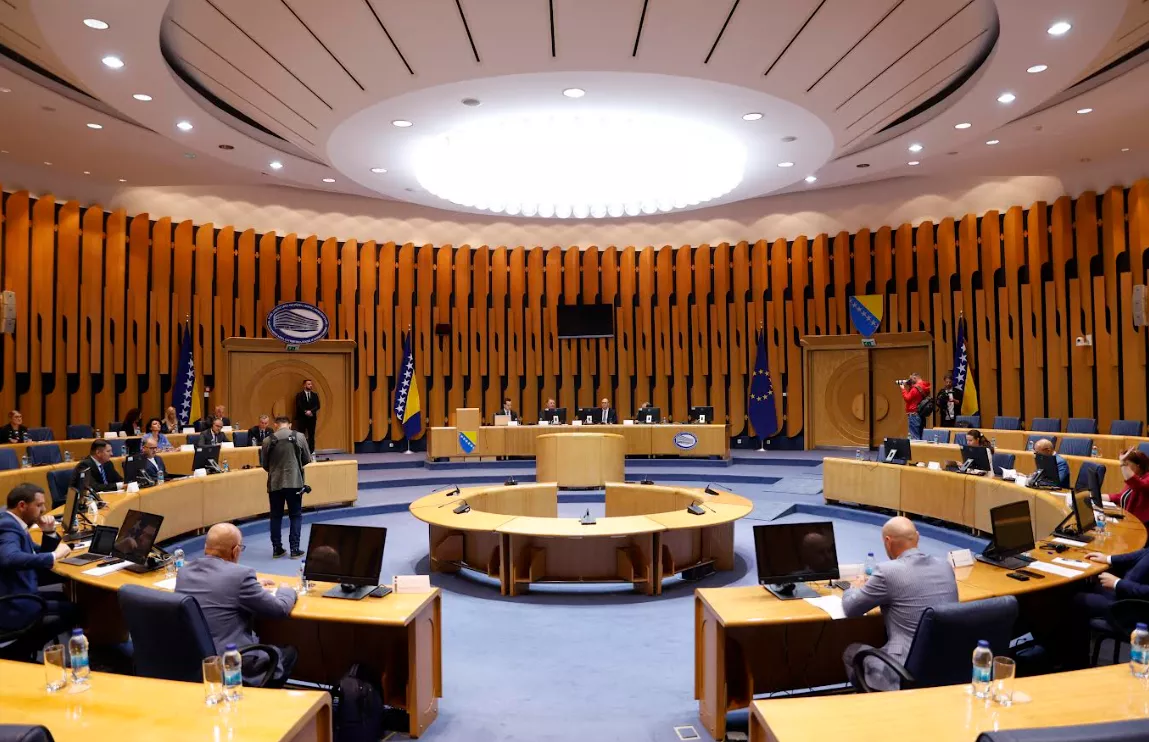
(Patria) - A discussion on the current state of relations between Bosnia and Herzegovina and the European Union (EU) began in the Parliamentary Assembly of Bosnia and Herzegovina (PABiH), co-chaired by Zdenko Ćosić and Davor Ivo Stier, marking the start of the 7th meeting of the EU-Bosnia and Herzegovina Stabilisation and Association Parliamentary Committee (SAPC).
Members of this joint parliamentary body, tasked with reviewing all aspects of EU-BiH relations, fostering dialogue between parliamentarians, and improving relations between the PABiH and the European Parliament, were welcomed by the Deputy Speaker of the House of Peoples of the PABiH, Kemal Ademović. He reminded attendees that EU membership is one of the two top priorities in Bosnia and Herzegovina's foreign policy and assessed that, given the circumstances, significant progress has been made in parliamentary cooperation between the PABiH delegation and the European Parliament.
Ademović briefly summarised the steps BiH has taken since receiving candidate status, highlighting that, in addition to adopting reform laws, the country has signed a cooperation agreement with FRONTEX in the past two years to protect BiH's borders and prevent illegal migration, as well as an agreement with EUROJUST, thereby strengthening its capacities to fight organised crime, corruption, terrorism, and illegal migration with EU assistance. Assessing that improving the security situation in BiH contributes to the collective security of the entire European continent, Ademović emphasised the extension of the EUFOR/ALTEA mission's mandate, which expires on November 2 this year, as the most important aspect of maintaining security in BiH at this moment. He called on European members of the United Nations Security Council to contribute to achieving this strategic goal, which ensures a stable environment in BiH.
Ademović urged his colleagues in the PABiH to show determination in adopting the remaining laws from the list of 14 European Commission priorities and to appoint a chief negotiator, with the aim of BiH officially opening negotiations and beginning institutional and operational work in the EU accession process.
The Head of the EU Delegation to BiH, Ambassador Luigi Soreca, also delivered an introductory address, expressing gratitude to members of the European Parliament for their continued support of BiH in the European integration process. Speaking about BiH's European path, Ambassador Soreca stated that, despite the EU's doors being wide open, not much has been done in BiH recently. He warned that it is urgently necessary to restart the European integration process and, in the interest of BiH's citizens, avoid deeper tensions and political divisions.
He specifically warned of the need for BiH to adopt the Reform Agenda by September 30 and activate funds from the EU Growth Plan, noting that if this is not done, BiH will lose, as he put it, an additional 10 percent of funds intended for concrete projects, jobs, investments, and, especially, young people in BiH.
Parliamentarians were also addressed by the Director of the Directorate for European Integration, Elvira Habota, who spoke about the results of the recently held meeting of the EU-BiH Stabilisation and Association Committee, which concluded that attention should be shifted from internal political issues in BiH to European matters and focused on fulfilling the remaining conditions from the European Commission's Opinion.
In the parliamentary discussion, which included SAPC Co-Chairs Davor Ivo Stier, German MP Jan-Peter Warnke, Deputy Chair of the PABiH Delegation to the SAPC Mia Karamehić-Abazović, Šefik Džaferović, Radovan Kovačević, Slovak MP Katarina Roth Nevedalova, and SAPC Co-Chair Zdenko Ćosić, the goodwill and desire of all participants for Bosnia and Herzegovina to join the EU were highlighted.
The need for continued political dialogue between BiH institutions and the EU was emphasised, as well as the need to lower tensions in society, avoid confrontational rhetoric, and create an atmosphere in which BiH could fulfil the remaining conditions and make progress on the path to EU membership.
In the second part of today's SAPC meeting, discussions will focus on fulfilling the 14 key priorities and eight steps from the European Commission's Opinion, as well as developments related to finalising the Reform Agenda with the aim of activating funds for BiH from the EU Growth Plan for the Western Balkans.
A discussion is also planned on the impact of the political, constitutional, legal, and security situation in BiH on the European integration process, as well as an exchange of opinions and views on the situation in BiH 30 years after the signing of the Dayton Peace Agreement.
Participants of the 7th SAPC meeting in Sarajevo are expected to adopt a Joint Statement by SAPC Co-Chairs Zdenko Ćosić and Davor Ivo Stier.
Komentari (0)
Prijavite se za komentiranje
PrijavaJos nema komentara. Budite prvi!
Minuta
Sve →Iz drugih kategorija

High Representative Not Elected: Germans, French and British Against Americans, New Attempt at End of June

ČOVIĆ WITHOUT MERCY: How Those Who Brought Ademović to Office Created a Political Hell for Him



Sunny Saturday, quite warm



Tragedy in Albanian resort: Two minors drown












