
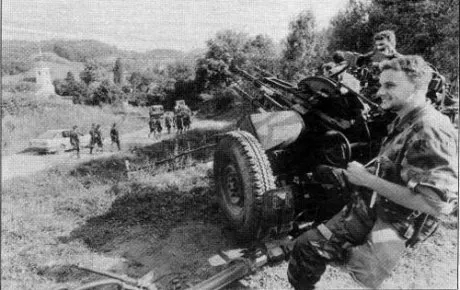
(Patria) - Operation Maestral was the first significant operation of the combined forces of the HV, HVO, and Army of BiH in western Bosnia, in which larger areas of western Bosnia were liberated, including the towns of Drvar, Šipovo, Jajce, Bosanski Petrovac, Bosanska Krupa, and Ključ. Operation Maestral actually consisted of two connected offensives. It lasted from September 8 to September 17, 1995.
Based on the Split Agreement between Croatia and the Federation of BiH of June 22, 1995, a few weeks after Operation 'Storm' and after the repelled counterattack by the Army of Republika Srpska from the direction of Drvar, during which the HV and HVO liberated additional square kilometers in the direction of Drvar, the focus of the Croatian army's actions returned to Bosnia and Herzegovina.
The international community did not cause problems, as it was the best way to force Bosnian Serbs to sit at the negotiating table without demanding additional conditions. Together with the Army of BiH forces, Croatian forces began planning the liberation of as much territory as possible in southwestern Bosnia. The IV and VII Guards Brigades were preparing to continue their advance towards Banja Luka. The concept of the operation was bold and envisioned breakthroughs on two operational axes from Bosanski Grahovo towards Drvar and from Glamoč towards Jajce.
Due to the repetition of the massacre at Sarajevo's Markale market on August 28, 1995, NATO air forces launched a strong campaign of air strikes against Bosnian Serbs called 'Operation Deliberate Force' during the night of August 30, 1995. The Army of Bosnian Serbs was severely disrupted. In this opportune moment, while the eyes of the world were on the sky and the damage to the Serbs around Sarajevo was being counted, the military headquarters of the ABiH, HV, and HVO exploited the moment of VRS helplessness and launched a joint offensive.
The liberation operation began on Friday, September 8, from the direction of Glamoč and Kupres - the first Serb lines were easily broken, and the strategically important peak of Veliki Vitorog, 1906 meters above sea level, fell into the hands of the VII and IV Guards Brigades. From this peak, a wide area from Kupreško Polje and Glamoč all the way to Šipovo, Jajce, and Mrkonjić Grad was controlled. Facing the Croatian forces were 7 light infantry, poorly staffed Serb brigades, one motorized brigade, and two armored battalions of the 2nd Krajina Corps of the VRS.
At the same time, the V Corps of the Army of BiH, under the command of General Atif Dudaković, launched offensive operations from the direction of Bihać towards the Grmeč mountains and Bosanski Petrovac, and towards Bosanska Krupa. The VII Corps of the Army of BiH, under the command of General Mehmed Alagić, launched a fierce attack on Donji Vakuf.
Concurrently, the Army of BiH also launched operations towards other strategic areas. Thus, on Monday, September 11, 1995, the strong, strategically important Serb stronghold of Vozuća on the road between Banovići and Zavidovići fell, and in the following days, almost the entire Ozren mountain fell into Bosniak hands.
The next day, Tuesday, September 12, 1995, forces of the IV Guards Brigade of the HV occupied the town of Šipovo, and the VII Guards Brigade occupied the strategically extremely important Mliništa pass on the road between Glamoč and Mrkonjić Grad.
The following day, Wednesday, September 13, 1995, was extremely successful - the VII Guards Brigade occupied Drvar, and the IV Guards Brigade occupied the predominantly Croatian town of Jajce. The Croatian flag was raised over the Pliva waterfalls, which meant for Operation 'Maestral' what the flag on the Knin Fortress meant for 'Storm'. On the same day, Donji Vakuf also fell into the hands of the VII Corps of the Army of BiH.
On the southern front, the HV and HVO captured several hills from which the city of Trebinje could be monitored. On September 15, 1995, units of the V Corps of the Army of BiH occupied Bosanski Petrovac, and the next day, September 16, the town of Ključ fell. The following day, Sunday, September 17, the V Corps liberated Bosanska Krupa. In the following days, the V Corps occupied the wider area in the direction of Bosanska Otoka, Prijedor, and reached the vicinity of Sanski Most, which would be captured less than a month later.
After seven days of fighting, the operation concluded. An area 100 kilometers wide and 25 kilometers deep was captured and liberated, which included the important Oštrelj and Mliništa passes. Between the HV and Banja Luka, only the town of Mrkonjić Grad remained, which was captured in Operation Southern Move (October 8-12, 1995). The vital Serb stronghold, Banja Luka, became the realistic next target, the liberation of which would have meant the total defeat of Serb forces in BiH.
In addition to the destruction of infrastructure, logistics, and command systems by NATO air forces, the Croat-Bosniak offensive chipped away at Republika Srpska's territory piece by piece and brought thousands of refugees who flowed in columns towards Prijedor and Banja Luka. The 2nd Krajina Corps of the VRS was almost completely shattered and forced to flee. Serb morale was very low, and panic reigned in Banja Luka and throughout Republika Srpska. However, the widely captured areas were not densely populated before the war - these were mountainous, difficult-to-access areas, so the number of refugees in relation to the captured territory was not large.
Komentari (0)
Prijavite se za komentiranje
PrijavaJos nema komentara. Budite prvi!
Minuta
Sve →Iz drugih kategorija

High Representative Not Elected: Germans, French and British Sabotaged Americans, New Attempt at End of June

ČOVIĆ WITHOUT MERCY: How Those Who Brought Ademović to Office Created a Political Hell for Him



Sunny Saturday, quite warm



Tragedy in Albanian resort: Two minors drown












