
By Armin Sijamić
The great British politician Winston Churchill is credited with the saying that whenever a problem is not to be solved, a commission should be formed. A part of today's European leaders, who are far from the brilliance of the great Churchill, could be attributed the saying that when you don't know how to solve a problem, then export it to a poor neighborhood that has convinced itself that official Brussels is infallible.
Thirteen months have passed since Giorgia Meloni came to power. The Prime Minister of Italy, who was quickly "repackaged" by the Western media from an extreme right-winger who loves Benito Mussolini into a cooperative conservative politician, has largely dealt with the issue of migrants since then, which is understandable.
Italy is facing a record influx of illegal migrants from Africa. It is estimated that by the end of the year, the number of arrivals could reach around 181,000, the highest number recorded since 2016. Reception centers are full. In some places, the number of migrants has surpassed the local population. Services are working overtime, and citizens are demanding the peace they had and are entitled to. One of Meloni's main pre-election promises was that Italy would stop illegal migration, or at least limit it, and distribute the burden to other European Union member states. That plan failed.
Germany rejected Rome's proposal to stop funding organizations that rescue migrants in the Mediterranean Sea, and several countries are refusing to distribute the burden within the union.
Reflex of Imperial Policy
As the plan failed with "friends" within the EU, Rome turned to its neighbors, reminiscent of the first half of the last century when the country's military power was directed towards North Africa and the Balkans. This time, Rome did not use the army, but planned that "friends" outside the union would help the large and rich Italy with money and the promise of EU membership.
Meloni tried to keep migrants in Tunisia, and the authorities there were promised hundreds of millions of euros in aid and loans from the International Monetary Fund. Tunisia is on the verge of collapse. Political instability is at its peak, the opposition accuses President Kais Saied of ruling by decree, inflation is around eighty percent, the country is approaching bankruptcy, and the city of Sfax is the place from which the largest number of African migrants head to Italy.
In that port city, the local population clashes with migrants. After one incident, illegal migrants ended up in the desert, fleeing the crowd or were expelled there by local authorities. Previously, Saied accused "hordes" of migrants of violence and a "conspiracy" of population replacement.
The agreement with Tunisia is still far from being realized, and even when it is realized, it will not solve all the problems. Therefore, Italy turned to another side – to Albania, which wants to help its overseas friends, according to Prime Minister Edi Rama.
Between Duty and European Guantanamo
At the beginning of this week in Rome, Meloni and Rama reached an agreement for Italy to build two centers for migrants in Albania. According to Meloni, the centers are expected to open in the spring and should accommodate 36,000 people annually, specifically those intercepted at sea who do not reach the shores of Italy. In Albania, they would wait for Italy to respond to their asylum requests, and the plan does not apply to pregnant women, children, and vulnerable individuals.
Therefore, Italy would bring thousands of young people who would be held in centers by Albanian forces, or allowed to move around the country. Riccardo Magi, leader of the Italian liberal party +Europa, has no doubt which of the two options would prevail, describing the plan as "terrifying" and calling the centers "a kind of Italian Guantanamo." He added, "This is an illegitimate agreement: Italy cannot send people rescued at sea to a country outside the EU, as if they were packages or goods."
Belind Kellici from the Albanian Democratic Party criticized the "lack of transparency" surrounding the agreement.
"This is a betrayal of Albania and the greatest disloyalty Rama could have shown our country," Kellici said.
"The biggest anti-Albanian today is called Edi Rama, who expels hundreds of thousands of young people from the country every year to replace them with illegal immigrants," he added.
Rama, who leads a party that originated from the communist party, says that Italy helped Albanians after the fall of the communist regime in Albania and that it is a "debt" that "cannot be repaid" and that "if Italy calls, Albania will answer."
Former President and Prime Minister of Albania, Ilir Meta, said that Rama is a "friend of criminal organizations" and "involved in international scandals" and that with the agreement he is "saving his own skin." Meta added that he is against the agreement because refugee centers "from Greece to Italy, through Spain and Northern Europe... attract violence. Camps will greatly increase xenophobia in a nation that always wants to welcome, but cannot bear such a burden."
Exporting Problems to New Members
Meloni said that although Albania is not an EU member, it "already behaves like one" and added that she believes "Albania, for all intents and purposes, is a European country" and expressed support for Albania's accession to the EU.
"That is one of the reasons why I am proud that Italy has always been one of the countries that support enlargement to the Western Balkans," Meloni said. She stated that the agreement with Albania could serve as a model for EU member states and those that are not, and that it represents "a bold European spirit," adding that the European Commission is aware of it and has no objections.
Rama said that Italy is not the only EU country that has proposed such an agreement. He says that the biggest obstacle to implementing the agreement signed in Rome will be that Albania does not have agreements with some African countries on the repatriation of migrants whose asylum applications in Italy are rejected.
From the above, it is clear that EU countries are looking for others to host migrants they do not want. Logically, these could be countries on the borders of the union, so those that want membership could host people that EU members do not want. This political, security, legal, and ethical contortion shows the state of affairs within the EU, and could also show the state of affairs in aspiring member countries.
In recent months, policies towards migrants have been changing in several Western countries, and ways to stop the influx are being sought. Pressured by the dissatisfaction of the domestic population, governments of several countries are trying to find solutions before the elections next year. One of them is the deportation of migrants to other countries that have no obligation to these people.
Thus, it may happen that ghettos surrounded by fences and guards are created on the borders of "free" Europe, while these countries and Brussels jointly "work" on the membership in the union of those for whom migrant centers financed by EU money, which, for example, Italy does not want or cannot establish due to local laws, are intended.
Opening centers in the Balkans to accommodate people going from Asia and Africa to the EU also means a new blockade of EU membership, and some technocrat might conclude that keeping such countries outside the union means that the migration issue is being "managed" successfully and that these countries will contribute more to Brussels' prosperity if they remain outside the union – while the "European path" lasts. But worse than that would be the fact that the European periphery is becoming a place where Brussels exports problems it created itself.
Komentari (0)
Prijavite se za komentiranje
PrijavaJos nema komentara. Budite prvi!
Minuta
Sve →Iz drugih kategorija
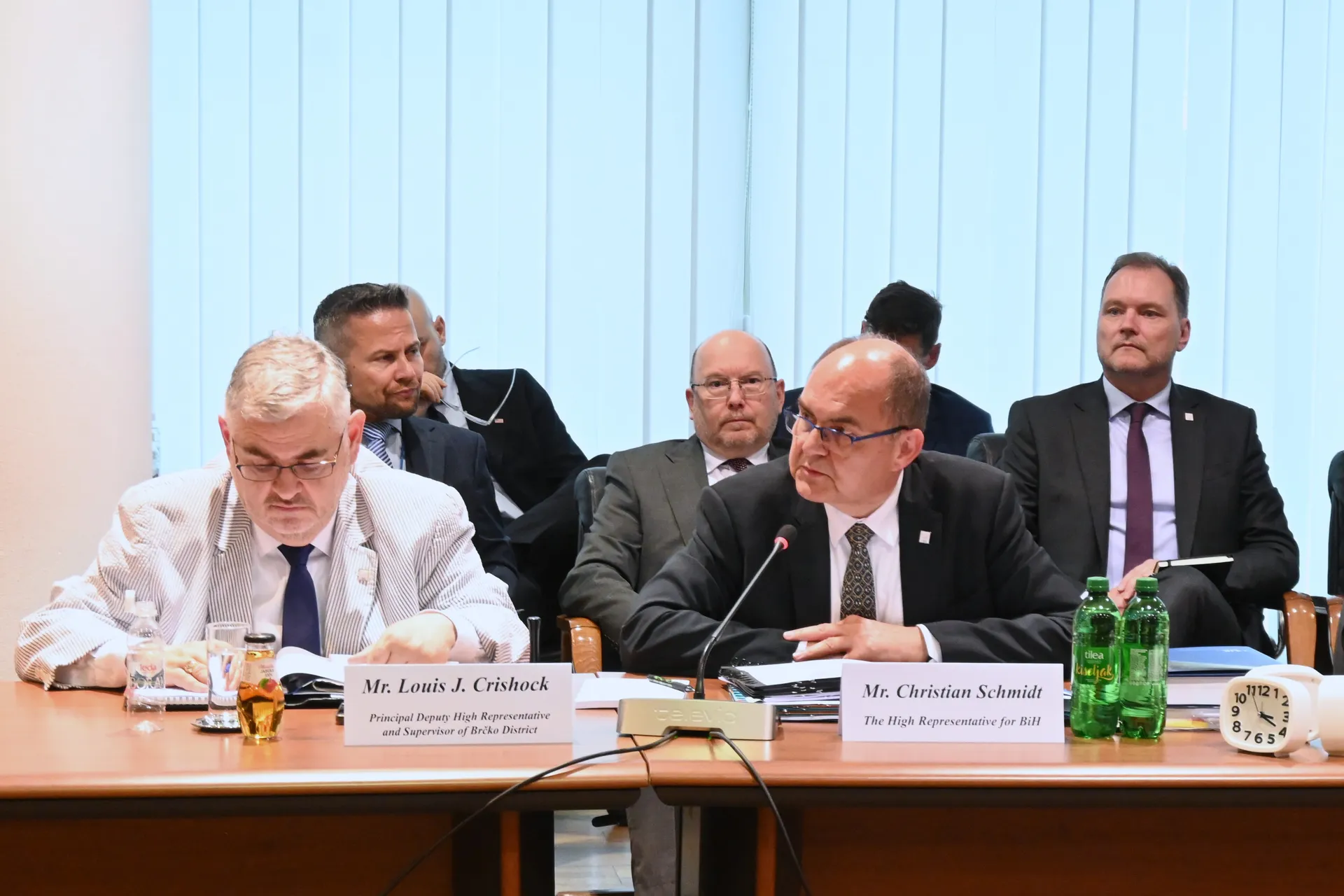
High Representative Not Elected: Germans, French and British Sabotaged Americans, New Attempt at End of June
ČOVIĆ WITHOUT MERCY: How Those Who Brought Ademović to Office Created a Political Hell for Him


Sunny Saturday, quite warm
Tragedy in Albanian resort: Two minors drown