
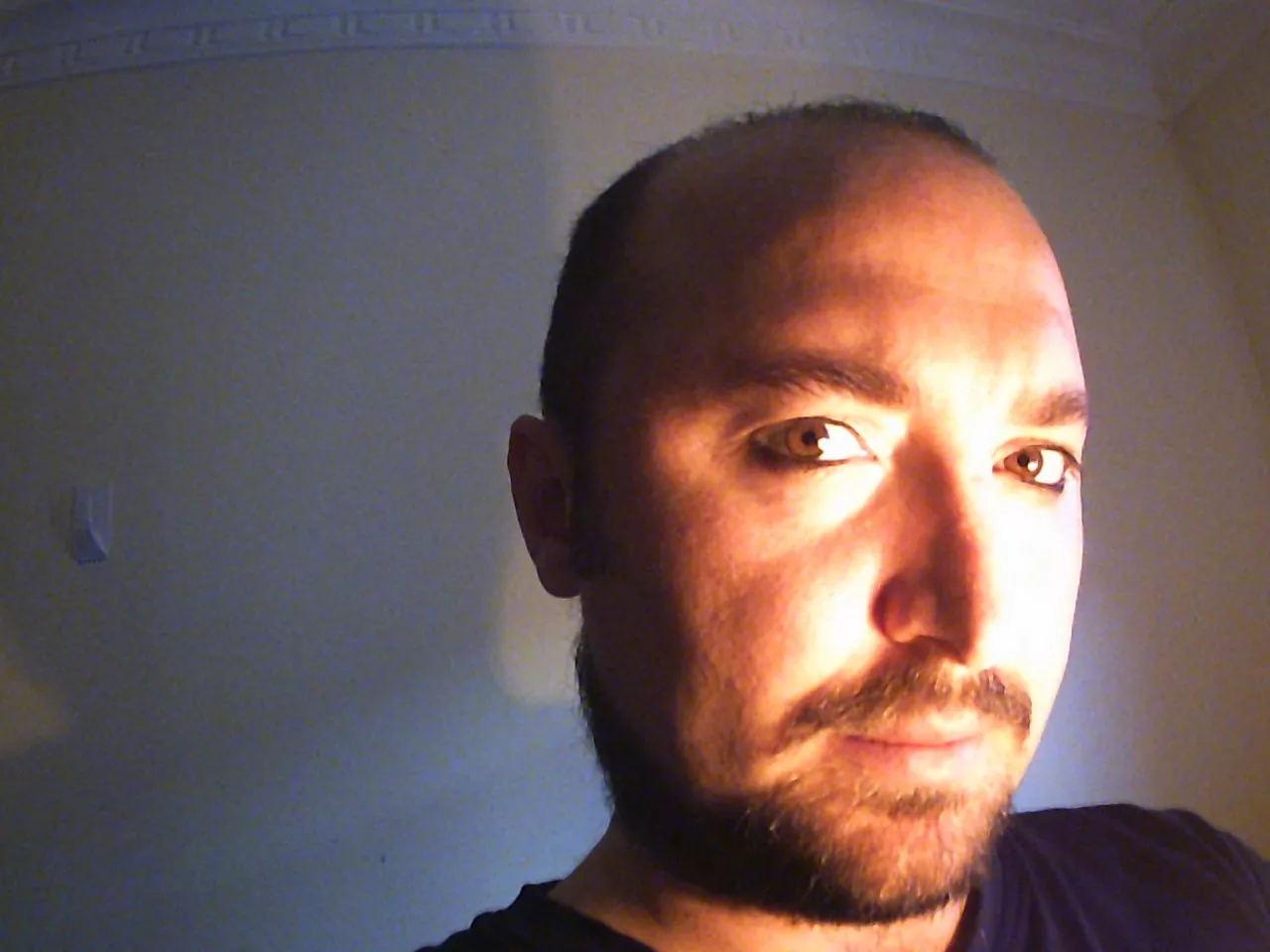
Interviewed by Armin Aljović
Bosnia is something else for me, the roar of a stream from childhood, snow, rain and the rustling of branches. This is what Saidin Salkić, one of the most popular artists in Australia, who came to that country after leaving Bosnia and Herzegovina as a refugee, says in an interview for the Patria agency. Salkić survived the Srebrenica genocide as a teenager, while his father was brutally killed. Memories of Bosnia live on today through his works.
Greek-Australian film director Bill Mousoulis, in a recent interview, describes Salkić as „the best Australian filmmaker and a multi-talented artist who has established himself in the peaceful environment of Australia“, while calling his films, such as Waiting for Sevdah (2017, 40 min), masterpieces.
Who is Saidin Salkić? We read what others write about you - from artist to multimedia artist - but what would you say about yourself?
- Saidin Salkić is a son, a father to his daughter. Saidin Salkić is an artist and a poet. A solitary and lucky man. There is a strange mystique of a person within himself through which and into which he travels, if he has the power and means to do so. Some things are clearer than others. Some of them are newly discovered. I think that is also the power of art, if it is true and intimate art, this self-discovery. There are also some things that are constant from those glorious days of childhood in which I still see myself as in a mirror and feel them within me. Sometimes I strongly feel my father within me, sometimes I run with Sevdah on the beach and sing to her 'Curo Hajro, ne varaj momaka...' while we splash and the rays of the sun that day, reflecting off the sea surface, fall on our eyes and faces. Strange are the dimensions of everything, those fireworks in the chest and in creativity... Thoughts are sometimes as intense as a waterfall... real, sharp, magical firecrackers. So discoveries are almost everyday. Also, in that way I resemble my childhood self, it somehow fell to me to mostly be alone, and every time I try not to be, I realize I was right to be. But it is not loneliness, but a temporal mosaic that can be filled and replenished with genuine love and work.
It would be better if they weren't there... but do your life scars influence your art in any way? Do they sometimes speak through the moving images you create?
- A person has no choice, if he is a person and an artist with full lungs and strength, but to influence himself with the greatest intensity he can. So it is completely natural and necessary that my life experiences influence me, not only in art but in every breath, every thought, every day. A person's life experiences are the foundation of moral integrity and identity. Only blind and incomplete people lack moral integrity and identity and have no aspiration to be and become such. My "scars" as you said, scream within me and from me every day. In my art, somehow officially, for history.
In one interview, you said that after the screening of the film "The Arrival of a Phoenix" at the Adelaide International Film Festival, a young man approached you, hugged you and said: “Life will never be the same again”. Is art a kind of resistance for you?
- Yes, and it is a big part of my self-discovery and proving myself. As I once said, for many years it was also a way of proving the greatness and beauty of my father. We all stand in history, in the mosaic of time, on the ground of this world which is neither understood nor comprehended. Headlessly we lose, actually they lose, the connection with themselves, obsessed and wrapped in madness caused by the essential misunderstanding of their own breath, and morality, fairness and happiness hidden somewhere in that breath. There is no excuse for that. Any attempt at an excuse for that is a waste of time, for those who would try it, and especially for those who would eventually listen to that story.
Your favorite part of your oeuvre and why?
- The other day I quite accidentally read a quote by an Irish film writer about Tarkovsky, whom they officially, at the top, placed on his film Voyage in Time. That same writer wrote a eulogy about my second film, calling it "a masterpiece... and the most intense film anatomy." It was somehow a pleasant feeling. Almost 85-year-old and perhaps Australia's greatest film pioneer John Flaus came out of retirement and compared my place in film history to Gertrude Stein's place in literary history, in terms of innovation and discovery. I don't know those things and I don't have time to think, I usually remember even the smallest unpleasantness much longer, but sometimes, when they happen, at least for a moment they warm your day and mean something. In a foreign land, it is much harder to break through the walls of ignorance around you. Cinema somehow helped me with that. Although I feel all parts of my art the same, it's just that now it's cinema, I believe. Sometimes it seems that the faster and more intensely you work, the less time there is.
You became famous in Australia. Is there still Bosnia in you today? What is it like – is it obscure...?
- Considering history and my life and experience, you might agree that Bosnia is perhaps most of all my country. But here I have also accepted that inevitable and sometimes dense melancholy and nostalgia, rather than now being in it and being exposed to what Bosnia is in its everyday life now. But Bosnia is something else for me, the roar of a stream from childhood, snow, rain and the rustling of branches. The roar on the river, bare little feet and happiness frozen and untouchable, full of laughter. Of course it is there.
Komentari (0)
Prijavite se za komentiranje
PrijavaJos nema komentara. Budite prvi!
Minuta
Sve →Iz drugih kategorija

High Representative Not Elected: Germans, French and British Against Americans, New Attempt at End of June

ČOVIĆ WITHOUT MERCY: How Those Who Brought Ademović to Office Created a Political Hell for Him



Sunny Saturday, quite warm



Tragedy in Albanian resort: Two minors drown












