
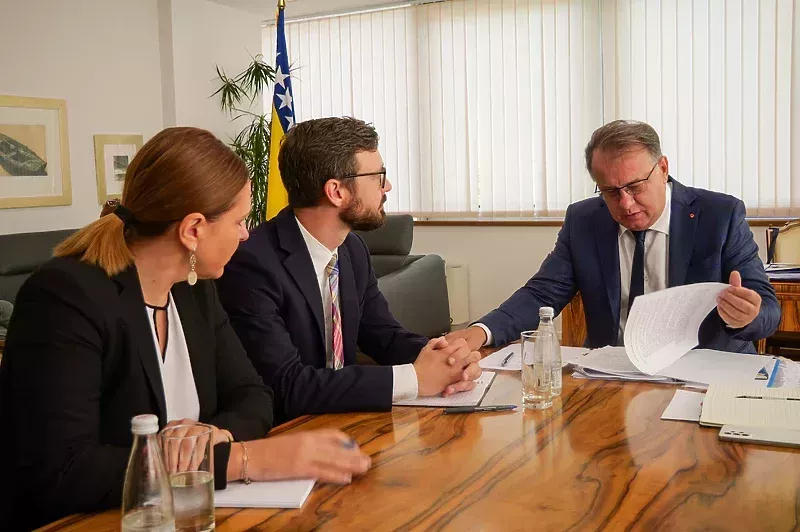
(Patria) - The fiscal situation across Bosnia and Herzegovina is deteriorating, and there are no signals from the authorities that they want to initiate talks on an arrangement with the International Monetary Fund, said the resident representative of that institution in BiH, Andreas Tudyka, in an interview with "Nezavisne novine".
He stated that the authorities of both entities should cut costs, as the deficit is increasing and there is a risk that debts may not be serviced.
According to the IMF's assessment, the RS was the first to fall into fiscal trouble, while the Federation even had a surplus, but about two years ago the situation began to worsen in the Federation as well, and now, as he says, both entities face the same problem.
Although, as he points out, they do not interfere in the internal affairs of BiH, they warn of the poor political situation in the country.
"The current political situation is not conducive to economic growth and the implementation of reforms. And if tensions continue, those prospects will be weaker," said Tudyka.
Explaining the decline of the Federation of BiH, he says:
"Here we will make a distinction between the entities. About two or three years ago, the Federation was in a better fiscal position, they even had a surplus. The RS already had a deficit at that time. Last year, the situation changed, and now both entities have growing deficits; the fiscal situation across the entire country has significantly worsened."
Asked how this came about, he said the roots lie in the times of the coronavirus pandemic, which caused an economic crisis worldwide.
As living costs increased and authorities began to "earn," it was decided to return some of the money to citizens.
"Since inflation increased living costs, governments wanted to help their citizens and began to increase social benefits. Some of these measures were a legal obligation, but others were not. Both types of expenditures are now here, and they will not go away. In the meantime, inflation has decreased and revenues are growing more slowly, but expenditures have remained. Given that we do not see plans to cut spending, authorities are forced to borrow more and more," explained the IMF head for BiH.
Read the full interview at this link.
Komentari (0)
Prijavite se za komentiranje
PrijavaJos nema komentara. Budite prvi!
Minuta
Sve →Iz drugih kategorija

High Representative Not Elected: Germans, French and British Against Americans, New Attempt at End of June

ČOVIĆ WITHOUT MERCY: How Those Who Brought Ademović to Office Created a Political Hell for Him



Sunny Saturday, quite warm



Tragedy in Albanian resort: Two minors drown












