
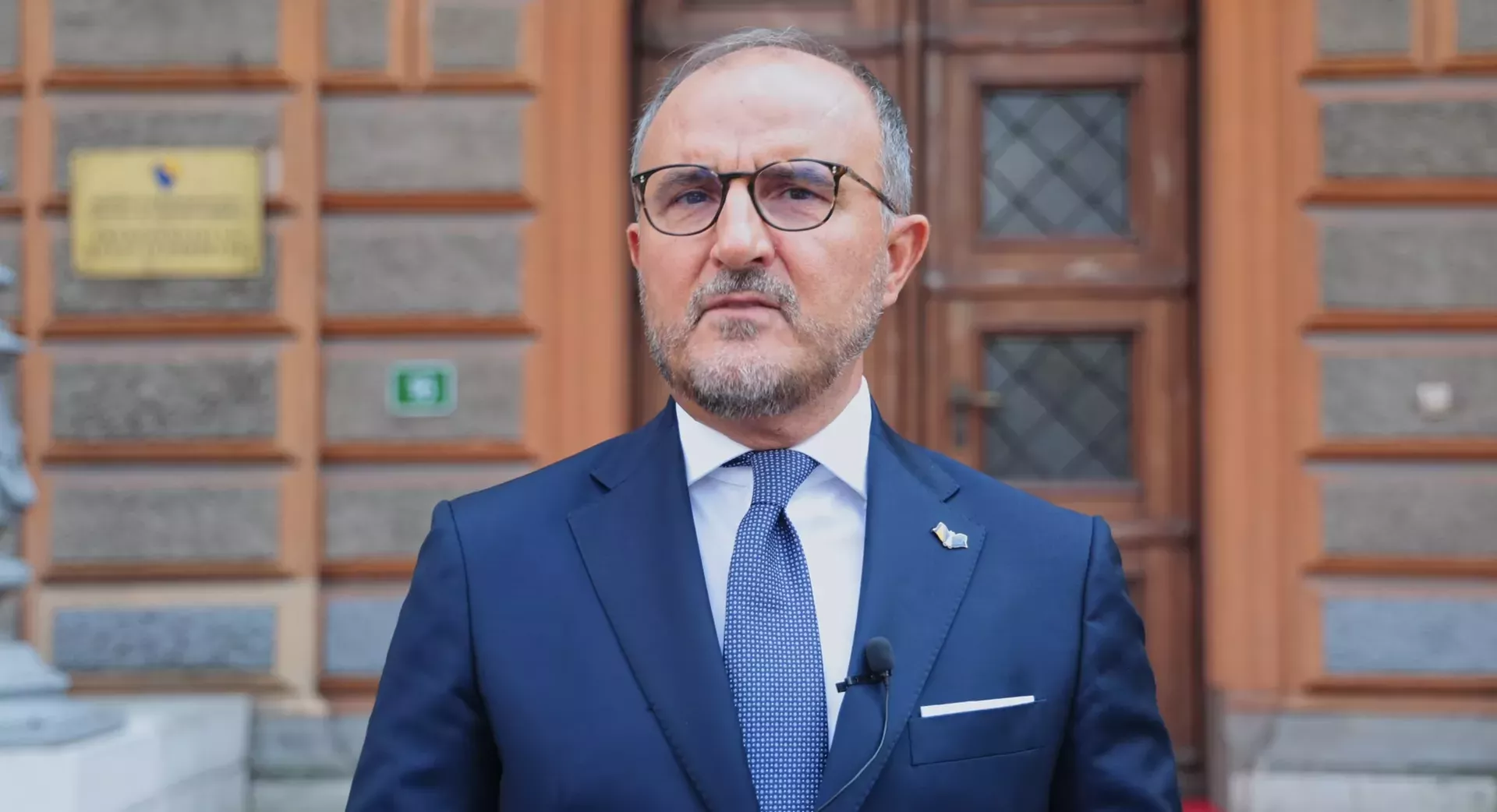
(Patria) - Two years ago, on March 21, 2024, the European Council gave the green light to open accession negotiations with Bosnia and Herzegovina. In an atmosphere of optimism, landmarks across the country were lit up in the colors of the European Union flag, with expectations of a new beginning. Today, two years later, the Head of the EU Delegation and EU Special Representative in BiH, Luigi Soreca, warns that this opportunity is not being utilized.
According to Soreca in a column, accession negotiations remain a key mechanism for resolving long-standing problems in Bosnia and Herzegovina.
“Negotiations are the most effective way to strengthen the functioning of the country's democratic institutions, ensure the rule of law, and improve living standards,” Soreca stated.
He points out that precisely such processes have yielded results in all other countries on the path to European Union membership.
Soreca warns that instead of accelerated progress, BiH risks a new stalemate.
“Two years later, it seems another missed opportunity is looming,” Soreca stated.
He emphasizes that the European Union wants Bosnia and Herzegovina as a member, but the key responsibility remains with the domestic authorities.
“We cannot want this country's membership more than the domestic authorities do,” Soreca stated.
He specifically warns of the concrete consequences of not implementing reforms.
“There is a very real risk that we will witness a reduction in funds for Bosnia and Herzegovina by 976.6 million euros within the Growth Plan,” Soreca stated.
These are funds intended for investments that, as he points out, could make a significant difference for citizens.
“Not seizing such opportunities is inexplicable, even irresponsible,” Soreca emphasizes.
In the context of changed geopolitical circumstances, Soreca points out that many candidate countries are making rapid progress.
“Some candidate countries have used the new geopolitical context for significant strides, while the same level of political will and ambition is lacking in Bosnia and Herzegovina,” Soreca explained.
Soreca emphasizes that the reform process is not imposed from the outside, but is in the interest of the citizens themselves.
“Countries that are progressing have not viewed reforms as demands from Brussels, but as foundations for a state that functions in the interest of its citizens,” Soreca stated.
He warns that without this, there is no stable economic development.
“Without reforms, economic growth remains insufficient, public trust weakens, and young people continue to leave,” Soreca wrote.
He also highlights the importance of the Growth Plan for the Western Balkans, particularly through economic integration with the EU.
“Joining the Single Euro Payments Area (SEPA) could significantly reduce the costs of cross-border transfers,” Soreca stated.
He adds that reforms can improve the business environment and attract investments.
“Citizens of Bosnia and Herzegovina deserve the same standards and opportunities as citizens across the European Union,” Soreca emphasizes.
Soreca says that now is a crucial moment for authorities to act.
“An election year should not be an excuse for inaction. EU-related reforms must be high on the political agenda,” Soreca wrote.
He reminds that some progress has been made in the past two years, including the adoption of the Reform Agenda.
However, he warns that implementation is lacking.
“Adoption on paper does not mean implementation in practice,” Soreca stated.
He also points out specific delays.
“Key steps are still unfinished, including the ratification of the Instrument Agreement and the Loan Agreement, as well as the appointment of a coordinator for the Reform Agenda,” Soreca stated.
Because of this, the funds are not yet available.
“Even the pre-financing of 68 million euros is still not available,” Soreca believes.
In conclusion, Soreca states that the European Union remains a partner, but cannot replace domestic authorities.
“The EU provides full support, but cannot be a substitute for domestic leadership,” Soreca believes.
He reminds that political actors have previously shown they can reach agreements when there is will.
“It is time to find that political will again,” Soreca stated.
Komentari (0)
Prijavite se za komentiranje
PrijavaJos nema komentara. Budite prvi!
Minuta
Sve →Iz drugih kategorija

High Representative Not Elected: Germans, French and British Against Americans, New Attempt at End of June

ČOVIĆ WITHOUT MERCY: How Those Who Brought Ademović to Office Created a Political Hell for Him



Sunny Saturday, quite warm



Tragedy in Albanian resort: Two minors drown












