
By Armin Sijamić
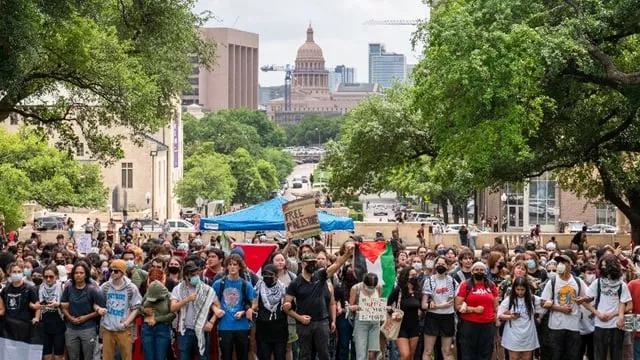
For weeks, protests unseen in decades have been taking place at American universities, including the most elite ones. In the United States, where the depoliticization of young people is a goal of political elites, these protests threaten to permanently change certain paradigms, or at least be etched into the memory of a generation that will play an important role in society in the coming years.
It was clear in the first weeks of the war that Joseph Biden and the US would pay dearly for the brutality of Israeli operations in the Gaza Strip when Tel Aviv decided to demolish entire neighborhoods in an attempt to eliminate a few Hamas members. Biden is already paying the price as he loses support among young people, progressive members of his Democratic Party, leftists, Muslims...
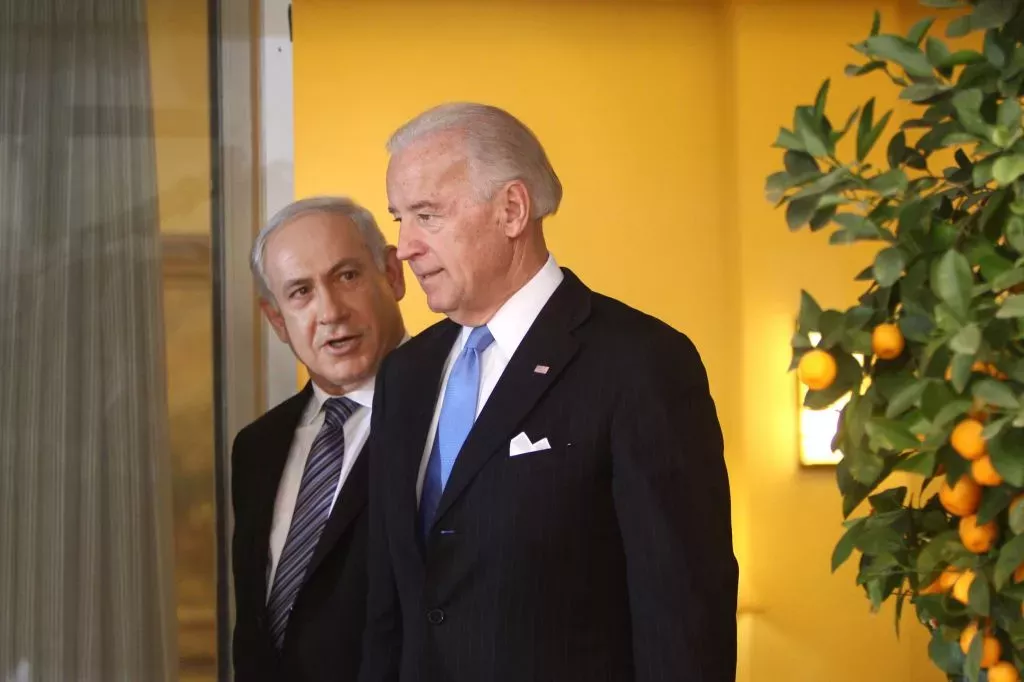
American media have calculated that without the support of young people, Biden could lose the election in the state of Georgia, which is considered one of the key states in the November presidential election. Almost sixty percent of young people voted for Biden four years ago, and he tried to repay them by canceling student debt for millions of Americans.
But more dangerous than the popularity of a politician is the rebellion on American campuses, from which future leaders are recruited. Some American students, by supporting Palestine, have put American authorities and university management structures to the test and have begun to criticize Israel, which is still unimaginable for some in the United States.
It all began at Columbia University in New York on April 18, when students set up a camp where they stayed day and night. Four days later, something similar happened at Yale, and then across the country, before the protests spread to universities in Amsterdam, Zurich, Paris, Berlin, Dublin...
The response of some university managements was brutal, with police, at the request of university administration, breaking up camps and making arrests, and some students will be expelled from college. Authorities in certain federal states joined in suppressing the protests, and in Texas, Republican Governor Greg Abbott told students that their demands would never be met.
There were also cases where pro-Israeli demonstrators physically attacked pro-Palestinian ones, as well as cases of attacks on Jewish students by pro-Palestinian demonstrators. But the students did not stop; the protests spread to Canada, Europe, and Australia. Leading media outlets are largely silent about the beatings and arrests of students, which indicates how significant a challenge the rebels have taken on.
Biden has been much more moderate in his statements than the Republicans, after ignoring the protests for a long time. The American president stated that students have the right to protest, but peacefully and without violence. This week's strike by university workers' unions at some universities, involving almost fifty thousand people, indirectly responded to Biden by claiming that student protests were peaceful until counter-demonstrators and instigators were allowed to cause unrest.
Elite universities and the rebellion of new leaders
The student rebellion has seriously worried some authorities in the United States. Numerous officials have criticized the students, including the Speaker of the US House of Representatives Mike Johnson, the aforementioned Abbott, and New York City Mayor Eric Adams, among many others.
Critics accuse students of antisemitism, Islamism, spreading religious and national hatred, vandalism, rebellion, and extreme leftist ideas, while police escort students from university campuses, and snipers watch over the camps from buildings. Some claim that individuals have been infiltrated among the students to commit violence and compromise the protests. Accusations of antisemitism are repeated, even though Jewish students and intellectuals who support the students are among the demonstrators.
The protests at Columbia University in New York have garnered the most public attention, as it is part of the Ivy League, a group of eight elite private educational institutions ranked among the best in the world. Among others, five founders of the USA and the author of its constitution, three presidents, ten Supreme Court justices, and hundreds of recipients of the most prestigious awards in science, education, writing, journalism, art... as well as some of the wealthiest people in the world, studied there.
At Brown University, another Ivy League member, students have achieved their biggest victory to date. In exchange for ending the protests, the university leadership pledged to consider severing ties with Israel, which is the main demand of the students, although the protests began in solidarity with Palestinian civilians being killed for months in the Gaza Strip. Students from Columbia were told that the administration had no intention of foregoing funds from Israel and suggested that the university help education and healthcare in the Gaza Strip.
The rebellions at Columbia, Brown, Yale, and similar institutions are particularly important because they are directly aimed at the way these institutions operate. Namely, Ivy League universities have billions of dollars at their disposal, received from donors worldwide, foundations, former students, or from their real estate and service provision. Columbia owns numerous properties in New York, and Harvard, the wealthiest university in the world, owns large parts of Boston and Cambridge.
Although these universities offer scholarships to gifted students, some students are children of those who previously attended these schools and have taken important positions in society. Members of the American elite are also bound by well-known (semi)secret societies such as the Skull and Bones Society at Yale, the Porcellian Club at Harvard, or the Ivy Club at Princeton. Thus, in the 2004 presidential race, voters chose between two members of the Skull and Bones society, George W. Bush and John Kerry, who, when asked about the society, replied that they could not say anything because it was a secret.
The world rests on the young
The protests by American students have already opened numerous questions, although they are not being discussed as much as they would be if, for example, Russian or Chinese students had occupied their universities and demanded their governments stop a war, change school funding, or express disagreement with the authorities.
American students are not giving up. Over 150 Yale students interrupted the diploma awarding ceremony while university president Peter Salovey was addressing the attendees. They turned their backs on Salovey, held up signs like "books, not bombs," and left the event while attendees applauded. The students demanded that the administration sever the university's ties with arms manufacturers and change its stance on Palestine. To avoid such situations, some universities have canceled such ceremonies.
In early May, the BBC reported that protests were taking place at at least 130 American universities and schools in 45 states and the District of Columbia. By early May, police had arrested more than 2,000 demonstrators in the United States.
The students' demand for universities to sever ties with Israel, Israeli companies, and those cooperating with them is an important political issue. Namely, dozens of American states have laws that prohibit boycotting Israel, and student protests will likely expand the list of these states.
Many protests have reminded people of earlier student protests, in which American universities led the way and ultimately achieved victory. In 1968, at Columbia, students demanded an end to the Vietnam War and an end to racial segregation in the United States, and the authorities responded with force. Four years later, at the same location, students again rebelled against the Vietnam War.
As early as 1985, Columbia students demanded that the university cease indirect investments in South Africa due to apartheid, naming the main building on campus after the future president of that country, Nelson Mandela, while he was still in prison. And finally, in 1996, a small group of students initiated protests demanding ethnic studies departments, to which the Columbia administration responded by hiring minority faculty and establishing Asian and Hispanic studies.
How successful American students will be this time is unknown, although history shows that in the aforementioned protests, they chose the side that eventually won. But regardless of how these protests end, American students, along with their colleagues in Europe and Australia, have taught a lesson in activism to their colleagues in the Middle East, Russia, China, and elsewhere. In times when wars and crises shake the world, they have shown that the West is still the most advanced part of the world in many areas, especially in education.
Komentari (0)
Prijavite se za komentiranje
PrijavaJos nema komentara. Budite prvi!
Minuta
Sve →Iz drugih kategorija

High Representative Not Elected: Germans, French and British Sabotaged Americans, New Attempt at End of June

ČOVIĆ WITHOUT MERCY: How Those Who Brought Ademović to Office Created a Political Hell for Him



Sunny Saturday, quite warm



Tragedy in Albanian resort: Two minors drown












